When you pick a drone LiPo battery, the S count is not just a small spec on the label. It changes voltage, current, heat, throttle feel, and even how long you stay in the air. If the S count does not match your frame and motors, you fight with hot parts, saggy power, and short missions. If it fits, the drone feels strong and predictable, even when you fly hard or carry a payload.
This guide looks at what 3S, 4S, and 6S truly mean for your drone. It shows how they change flight acts in everyday use. And it helps you pick a setup that suits your tasks. These range from small learners to big UAV systems.
What 3S, 4S, and 6S Mean in a Drone LiPo Battery
Before you tweak PIDs or worry about C rating, you need a clear idea of what the S count does to voltage and system behavior. Once you see that link, many other choices become easier.
How Cell Count Affects Voltage
In a drone LiPo battery, S stands for “series.” Each LiPo cell has a nominal voltage of about 3.7 V. When cells are in series, the voltage adds up while capacity in mAh stays the same:
- 3S drone LiPo battery ≈ 11.1 V nominal
- 4S drone LiPo battery ≈ 14.8 V nominal
- 6S drone LiPo battery ≈ 22.2 V nominal
A fully charged cell is about 4.2 V, so a full 6S pack reaches 25.2 V. Higher S count gives more voltage headroom under load and more potential RPM from the same motor KV.
A simple table helps you see the step in voltage clearly:
| Battery Type | Nominal Voltage (V) | Full Charge (V) | Typical Use Level |
|---|---|---|---|
| 3S | 11.1 | 12.6 | Entry drones, small builds |
| 4S | 14.8 | 16.8 | Freestyle, mid-size drones |
| 6S | 22.2 | 25.2 | FPV racing, industrial UAVs |
Typical Voltage Ranges During Flight
You never fly at nominal voltage all the time. Packs start near full and then drop down as you fly. In real use, you often see these ranges when you set voltage alarms:
- 3S: start around 12.6 V, land around 11.1–11.4 V
- 4S: start around 16.8 V, land around 14.8–15.2 V
- 6S: start around 25.2 V, land around 22.2–22.8 V
These values affect ESC ratings, motor safety, and how low you can go without hurting the pack.
Key Differences in Power, Heat, and Weight
Once you move from voltage numbers to flying, you care more about power feel, part temperature, and pack weight. This is where 3S, 4S, and 6S start to show clear character.
Voltage, Current, and Power Output
Power is roughly voltage times current. For the same thrust, a higher voltage LiPo battery for drones can run at lower current. If a 4S quad needs 60 A for a certain climb, a similar 6S build might need closer to 40 A.
Lower current usually means:
- Less heat in ESCs, wires, and the battery itself
- Less voltage sag when you punch the throttle
- More stable response late in the flight
That is why many demanding UAVs move to high-voltage drone battery systems, especially when missions run long or payloads are heavy.
Pack Weight and Frame Balance
More cells often mean a larger and heavier pack. A 6S pack with similar capacity to a 4S pack adds weight, and that weight affects:
- Hover throttle
- How fast the drone can change direction
- Landing behavior and stopping distance
If the frame, motors, and propellers are sized for the heavier pack, you still get smooth, controlled flight. If not, the drone can feel sluggish and waste energy just lifting the battery.
Voltage Sag and Throttle Feel
All LiPo packs sag under load. The key difference is how much. For the same current, a 6S pack drops a smaller share of its total voltage than a 3S pack. In your hands, that feels like:
- Firmer throttle at high power
- Less sudden drop in performance near the end of the pack
- More confidence during climbs, dives, and fast direction changes
On light 3S or 4S builds, sag may be small and barely visible. On heavier or very powerful drones, higher S counts help keep the feel steady.
Matching Motors and ESCs to S Count
Motor KV tells you roughly how fast the motor spins per volt. That means motor behavior changes a lot when you change S count:
- 3S builds tend to use higher KV motors
- 4S builds sit in the middle range
- 6S builds move to lower KV with more torque
ESCs must also be rated for the voltage. A 6S LiPo battery for drones on an ESC designed for 4S is a quick way to destroy hardware. Before changing S count, you need to check both KV and ESC limits.
Flight Performance and Use Cases
All these technical details show up in the way your drone behaves on a real flight day. The right S count depends on your skill level, your frame, and the jobs you expect the drone to do.
When 3S Makes Sense for Your Drone
A 3S drone LiPo battery fits small, gentle builds:
- Basic trainers for new pilots
- School or lab UAV kits
- Light camera drones flying at low speed
You get softer throttle, lighter packs, and easier handling. For learning and simple tasks, that calmer behavior is often a benefit, not a problem.
Why 4S Is a Popular Sweet Spot
For many pilots, 4S feels like home:
- Freestyle FPV quads
- Mid-size camera drones
- Mixed-use platforms where you want punch but not extreme speed
You get more thrust and better response than 3S, without the full complexity of 6S. Parts are widely available, and most common frames are happy with 4S packs.
Where 6S Fits Demanding Missions
When you move into racing, long-range flights, or industrial tasks, 6S starts to shine. The higher voltage and lower current help you keep:
- Lower ESC and motor temperatures
- Reduced sag on hard climbs
- Strong throttle feel across the pack
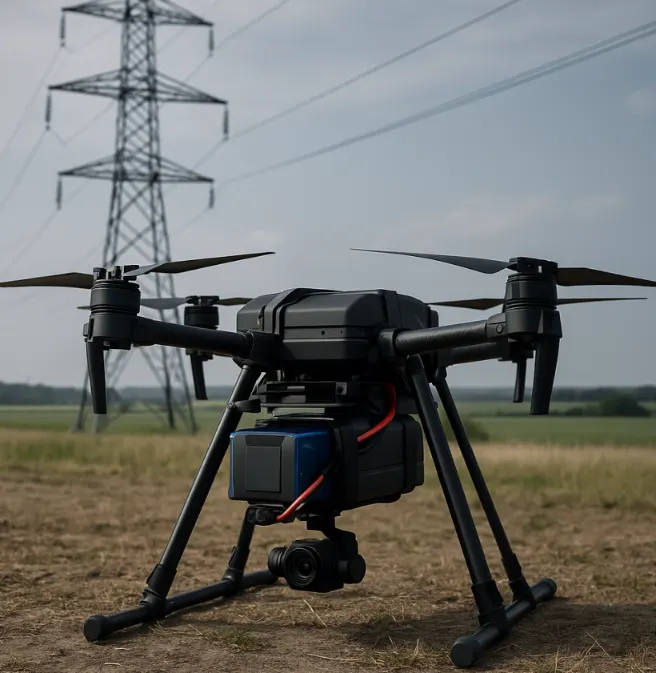
Mapping drones, inspection UAVs, agriculture platforms, and security drones often rely on 6S and similar UAV LiPo battery packs to carry sensors and gimbals while still hitting the required flight time.
To make the differences clearer, you can look at a quick summary:
| S Count | Main Pros | Main Cons | Best For |
|---|---|---|---|
| 3S | Light, gentle, low cost | Limited power and speed | Training drones, small educational builds |
| 4S | Good balance of power and weight | More heat than 6S at same power | Freestyle FPV, mid-size camera drones |
| 6S | Strong power, lower current, stable voltage | Heavier packs, higher part cost | Racing, long-range, industrial and payload UAVs |
How to Choose the Right Drone LiPo Battery Setup
You do not choose 3S, 4S, or 6S in isolation. The right S count fits the motors, the frame, the environment, and the mission. A simple thought process helps you reach a clean decision.
Match Voltage to Motor KV and Frame Layout
Start with the hardware you already have or plan to use. Motors need a KV that makes sense at the chosen voltage. A high KV motor on 6S can draw huge current and overheat quickly. The frame must hold the pack securely, with a center of gravity that does not cause strange tilt or wobble in flight.
Think About Mission Profile and Conditions
Next, look at the job. Short flights at low speed in open fields do not need a 6S setup. Long-range inspection, heavy payloads, or frequent flights in strong wind benefit from high-voltage drone battery systems that keep sag and heat under control. Temperature also plays a part; in hot climates, lower current helps parts stay within safe limits.
When Custom Drone Battery Solutions Make Sense
Sometimes, standard packs do not fit the airframe or the duty cycle. You may need a specific shape to fit inside a fuselage, a special connector harness, or a mix of capacity and discharge rate tailored to your mission. In these cases, it is worth talking about custom drone battery solutions so the pack follows your design, not the other way around.
About Shengya Electronic as Your UAV Battery Partner
Taixing Shengya Electronic Technology Co., Ltd, often called Shengya Electronic, focuses on lithium battery packs for drones and related equipment. The company brings cell selection, pack structure, and protection circuits together to support real UAV work such as mapping, power line inspection, and security patrols. Shengya Electronic works with multi-cell series packs, high-rate discharge, and matching battery management so that each pack fits a defined voltage platform and load profile. Packs go through capacity checks, cycle life tests, and safety tests for over-charge, short-circuit, and high current use. You can choose from standard UAV packs or request tailored voltage levels, harness layouts, and structural designs when your frame or mission profile needs something more specific. The aim is simple: give your drone a stable power base so your focus stays on the payload and the flight plan.
FAQ
Q1: Can you switch from 4S to 6S just by changing the drone LiPo battery?
A: You should not do that without checking the rest of the system. Motors, ESCs, and sometimes even the frame need to support 6S. If you plug a 6S pack into a setup built for 4S, you risk burning electronics. And you get a drone that is hard to control.
Q2: Does a higher S count always give longer flight time?
A: Not always. A higher S count can improve efficiency because the system draws less current. But pack weight also goes up. If the drone ends up too heavy, flight time can stay the same. Or even drop. You get the best result when you balance S count, capacity, and frame weight.
Q3: Which S count is better if you are just starting to fly?
A: For most beginners, 3S or a mild 4S setup is enough. Throttle is easier to manage. And the drone feels less “twitchy.” Once you are comfortable with basic maneuvers and crashes are rare, you can think about stronger 4S or 6S builds.
Q4: How can you tell a LiPo battery for drones is undersized for your build?
A: If you see heavy voltage sag on punch-outs, very hot packs after short flights, or a drone that feels weak even on fresh batteries, the pack may not match the motors and props. In that case, you might need a higher S count. Or a stronger C rating. Or a different capacity.
Q5: When should you look at custom packs instead of standard batteries?
A: If your drone has tight internal space, unusual mounting points, special connectors, or a mission that runs close to the limits of standard packs, custom designs make sense. At that point, working with a supplier like Shengya Electronic on shape, voltage, wiring, and safety features can save you time. And give you more reliable flights.