
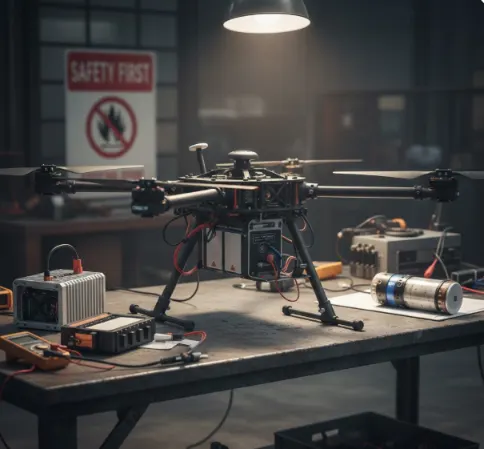
Choosing a drone battery is no longer a simple trade between “more capacity” and “less weight.” Real flights bring takeoff current spikes, voltage sag that triggers early low-voltage warnings, limited cooling inside tight frames, and charging habits that quietly cut service life. This guide compares LiPo, Li-ion, and semi-solid options so you can judge what is actually safer and what lasts longer in drone use.
What Makes Drone Battery Chemistry Different from Consumer Batteries
A drone battery faces harsher conditions than a phone or laptop pack. It must deliver high power instantly, then hold voltage steady while motors react to wind and payload changes, all within strict weight and space limits. Those constraints change what “safe” and “long lasting” really mean.
Power Density and Peak Discharge Demands in Drones
Most UAV missions include short bursts: takeoff, rapid climbs, fast yaw corrections, or payload activation. If a chemistry cannot handle peak current without a sharp voltage drop, you lose usable capacity because the aircraft hits voltage alarms earlier. That is why discharge capability and voltage stability matter as much as nominal capacity.
Thermal and Mechanical Stress in UAV Operations
Drones add two stressors many consumer devices avoid: trapped heat and vibration. Heat has fewer paths to escape in enclosed frames, especially near motors and ESCs. Vibration and occasional impacts also test weld quality, internal connections, and cell structure. A chemistry that tolerates heat cycling and mechanical stress typically delivers more predictable service life.
LiPo Drone Batteries: High Power, High Risk
LiPo remains common because it can deliver high burst power at a competitive weight. If you are searching for “6s battery lipo,” you are likely working with a platform that needs strong takeoff current and responsive control. The trade-off is that LiPo is less forgiving when charging, storing, or handling is inconsistent.
Why LiPo Delivers Excellent Power to Weight
A common question from new buyers is what is a LiPo battery and why it dominates performance drones. LiPo packs often use pouch cells that can be built into compact shapes and tuned for high discharge. For FPV, quick-response inspection drones, and heavier industrial UAVs, that power margin can be decisive.
Safety Limitations of LiPo Batteries
LiPo safety risk typically rises with physical damage, charging abuse, or poor storage habits. Pouch cells can swell when stressed or aged, and they are more sensitive to puncture than rigid formats. Overcharge, overheating during charge, or repeated deep discharge increases internal resistance and reduces tolerance over time. With disciplined processes, LiPo can be reliable; with inconsistent routines, issues appear faster.
Typical Cycle Life of LiPo in Drone Use
LiPo cycle life is driven by use pattern more than marketing claims. High C discharge, frequent fast charging, and deep discharge to low cutoffs shorten lifespan. In fleets, the real “end” is often earlier signs like swelling, voltage sag, or worsening balance, not just capacity numbers. Extending life usually means limiting depth of discharge and controlling pack temperature.
To specify correctly, clarify what is a 6S LiPo battery for your system. A 6S pack is six cells in series. Higher voltage can reduce current for the same power level, improving efficiency and voltage stability under load. For heavy-duty missions, a 6S high-voltage LiPo drone battery can be a practical option when you also define strict charging limits, storage voltage targets, and minimum in-flight voltage.
Li-ion Drone Batteries: Stability Over Raw Power
Li-ion batteries often win on safety margin and cycle life when extreme burst current is not the priority. They are commonly used for long-endurance platforms and steadier load profiles.
Structural Safety Advantages of Li-ion Cells
Many buyers ask what is a Li-ion battery used for in drones when LiPo is so widespread. Li-ion cells are frequently selected for improved mechanical stability and a more predictable aging curve. Cylindrical or prismatic housings can reduce swelling risk and improve tolerance to handling mistakes. That does not remove all risk, but it can reduce sudden failure from minor damage.
Cycle Life Expectations in UAV Applications
A drone li ion battery is often chosen when you cycle packs frequently and want longer replacement intervals. In moderate-load missions, Li-ion typically delivers more usable cycles before performance becomes unacceptable. The key is matching the pack design to your real current draw and thermal environment.
Trade Offs in Discharge Rate and Weight
Li-ion often has lower peak discharge capability than a high-power LiPo. To meet peak power demands, you may need more parallel cells, a different pack layout, or a mission profile that avoids sharp spikes. In some airframes, added weight or space can offset the endurance gain. In others, longer life and steadier behavior outweigh the compromise.
Semi Solid Drone Batteries: What Actually Changes
Semi-solid technology is often discussed as a safety and longevity upgrade, but the term is used loosely. Start with a clear definition and then judge the real benefits for UAV conditions.
What Semi Solid Battery Technology Is and Is Not
Before comparing, it helps to clarify what is a semi solid battery. In many cases, “semi solid” refers to designs that reduce free-flowing liquid electrolyte and use a more structured internal matrix. This is not always the same as fully solid-state technology. The practical impact is improved internal stability, which can reduce leakage pathways and internal movement under heat and vibration.
Safety Improvements Compared to LiPo and Li ion
In UAV discussions, the term semi solid battery is often tied to safer behavior under abuse conditions. Depending on the design, semi-solid cells may reduce leakage probability, lower flammability risk, and improve tolerance to puncture. Chemistry alone is not enough, though. Pack engineering, protection logic where applicable, and manufacturing consistency still decide real-world safety.
Cycle Life and Aging Behavior
Semi-solid approaches can also support more stable aging, especially in fleets. A more stable internal structure can slow degradation that leads to rising internal resistance and early voltage sag. If you need predictable behavior across many packs, semi-solid can be attractive, provided the supplier can control cell matching and batch variation.
Safety and Cycle Life Compared: LiPo vs Li ion vs Semi Solid
To compare fairly, use factors that directly affect drones: peak discharge, voltage stability, swelling behavior, and how aging shows up in flight time and alarms.
Table: Drone Battery Chemistry Comparison
| Factor | LiPo | Li-ion | Semi solid |
|---|---|---|---|
| Typical cell format | Pouch | Cylindrical or prismatic | Structured electrolyte designs |
| Peak discharge capability | Very high | Moderate | High |
| Thermal runaway risk | Higher if abused | Lower than LiPo in many cases | Often lower with stable designs |
| Swelling tendency | Higher | Lower | Lower |
| Practical cycle life in UAV use | Often lower under high load | Often higher at moderate load | Often higher with stable aging |
| Voltage stability under load | Strong with high power packs | Depends on design and current | Often strong when engineered for power |
| Best fit scenarios | FPV, high burst, heavy lift | Long endurance, moderate load | Industrial, fleet, safety focused missions |
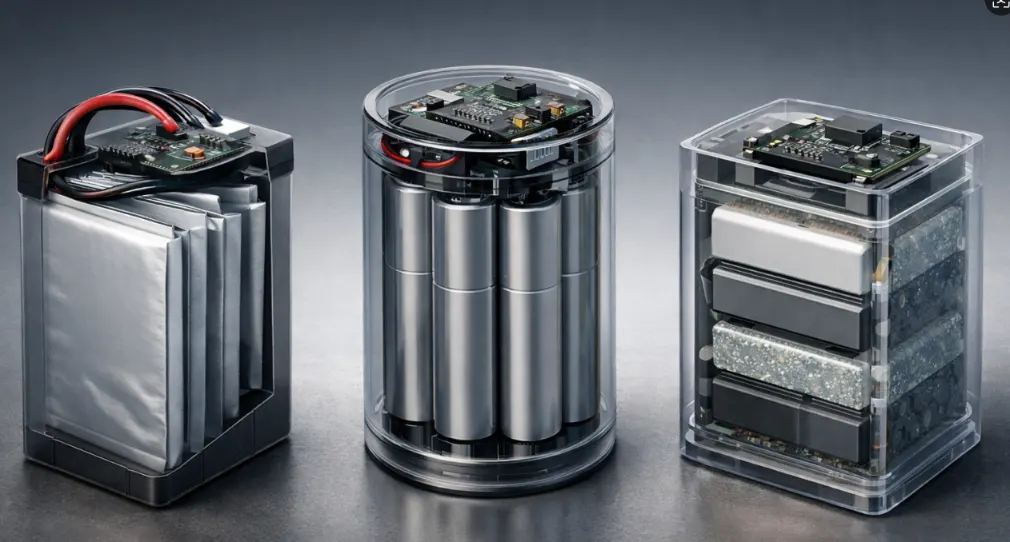
Which Battery Chemistry Is Actually Safer for Drones?
Drone safety is not only about ignition risk. It is also about failure behavior, detectability, and forgiveness when field routines are imperfect.
Failure Modes and Risk Profiles
LiPo can escalate quickly if a damaged pouch cell is stressed or if charging is inconsistent. Li-ion often degrades more gradually, with clearer warning signs like higher internal resistance and reduced capacity. Semi-solid designs aim to reduce sudden escalation by improving internal stability. For fleets, gradual failure modes are easier to manage because you can retire packs using measurable indicators.
Storage, Transport, and Compliance Impact
Safety also includes storage and logistics. Regardless of chemistry, disciplined packaging and documentation reduce shipping delays. For warehouses and remote sites, chemistries that tolerate storage better reduce performance surprises after idle periods.
Which Drone Battery Lasts Longer in Real Operations?
“Lasts longer” can mean longer flight time per charge or more usable cycles before replacement. In most operations, total lifetime energy delivered and reduced downtime matter more than a single impressive flight.
Depth of Discharge and Charging Strategy
Limiting depth of discharge extends life across all chemistries. Regularly draining to the lowest cutoff accelerates aging. Charge rate also matters: fast charging saves time but adds heat and stress. If you want a longer replacement interval, define a charging window, a storage voltage target, and temperature limits.
Consistency in Fleet Operations
Fleet performance depends on consistency across packs. A wide spread in capacity or internal resistance creates flight-time swings and maintenance overhead. Chemistry can help, but supplier process control often decides whether your fleet behaves predictably.
Choosing the Right Drone Battery for Your Application
The best choice is the one that matches your load profile, safety policy, and lifecycle cost target.
FPV and Performance Oriented Drones
If burst power and throttle response dominate, LiPo often remains the practical choice. Prioritize pack quality, conservative storage, and disciplined charging routines.
Long Endurance and Mapping UAVs
If your mission uses steadier current and you want fewer replacements, Li-ion can be a strong fit. Validate voltage stability under your real load and make sure the airframe can accommodate the pack format.
Industrial, Agricultural, and Fleet UAVs
If you operate daily, manage many packs, and care about risk reduction plus predictable aging, semi-solid becomes more relevant. When comparing options for OEM procurement, reviewing proven industrial drone battery solutions can help you focus on packs built for real UAV load profiles.
Conclusion
LiPo, Li-ion, and semi-solid batteries can all work for drones, but they win for different reasons. LiPo offers peak power with stricter discipline required. Li-ion often delivers steadier behavior and longer cycle life at moderate loads. Semi-solid approaches aim to improve safety behavior and aging consistency for industrial and fleet operations. When you choose based on your real discharge profile and charging habits, you reduce failures and lower lifecycle cost.
Shengya Electronic: Built for UAV Reliability in the Field
As a dedicated UAV battery manufacturer, Shengya Electronic designs battery packs for industrial and commercial drones with a focus on safety margin, voltage stability, and consistent cycle performance across production batches. Shengya emphasizes cell matching, process control, and pack-level engineering that fits UAV conditions such as peak discharge events, frequent cycling, and demanding environments, helping OEM and fleet customers achieve predictable lifespan and dependable performance.
FAQ
Q1: Which option is safest for drones, LiPo, Li-ion, or semi-solid?
A: Safety depends on how the pack is engineered and used, but semi-solid designs often aim to reduce leakage and abuse sensitivity, while Li-ion commonly offers more forgiving aging than high-power LiPo in moderate-load missions.
Q2: Does a 6S setup automatically mean longer flight time?
A: Not automatically. A 6S pack can improve efficiency by reducing current for the same power, but real flight time still depends on usable Wh, voltage sag under load, and how your drone’s low-voltage thresholds are set.
Q3: Why do LiPo packs swell even when capacity still looks OK?
A: Swelling can show up before large capacity loss because internal resistance rises and gas generation increases under heat, high C discharge, fast charging, or repeated deep discharge, which also causes more voltage sag in flight.
Q4: Can a drone Li-ion battery replace LiPo in any drone?
A: Not always. If your aircraft needs high peak current, a Li-ion pack may require different pack design or parallel count, and you must validate takeoff and maneuver performance to avoid early voltage alarms.
Q5: What is the best way to extend drone battery cycle life regardless of chemistry?
A: Control heat, avoid deep discharge, and use a disciplined charge routine. Keeping packs within a reasonable voltage window and avoiding high-temperature charging usually delivers the biggest real-world gains in lifespan.


