If you fly a drone for work or fun, you worry a bunch about how long it stays up. Nothing ruins the fun quicker than a low-battery beep right when the sun looks just right. When you check the average battery life of a drone, you look at stuff like parts, flying ways, and care. This guide shows you what shapes true flight time. And it tells you what to do, one step at a time, to get a few more minutes per pack.
You will also learn why battery grade and build count so much when flights get longer. And when loads get heavier.
What Is the Average Battery Life of a Drone?
Before you change anything, it helps to know what “normal” means. Various drone kinds have quite different times. Toy and tiny drones often fly for about 5–15 minutes. Usual home camera drones hit around 20–30 minutes. Pro and work models with bigger packs and better power setups can go 40 minutes, an hour, or even more in good spots. So if you get 18 minutes from a small flying machine, that might be near its real top. But a work drone made for maps or sprays that only flies 20 minutes with no load likely has an issue to fix.
Typical Flight Time by Drone Type
You can see it this way: small and light drones give you ease and cheap price but short trips. Mid-size and hobby pro ones sit in the center, often between 22 and 30 minutes. Top work or fixed-wing kinds, made with high energy batteries and good motors, may run from 40 minutes to over an hour when the job and sky are nice. Once you know where your kind fits in this basic list, it gets easier to tell if your pack is fine or fading slow.
Key Factors That Affect Drone Battery Life
If two folks fly like drones but one lands with 30% left and the other quits at 10 minutes, the gear is seldom the sole cause. A few main things softly push your drone battery life up or down on each trip.
Battery Capacity Voltage and Chemistry
Battery power is often checked in watt hours. It is the easy mix of voltage (V) and size (Ah). A 51.1 V 25 Ah pack has around 1277 Wh. If the drone takes a steady 1500 W in flight, you get near 50 minutes in perfect test rooms. Then less once safe space and drops kick in. Type and life span count too. Normal LiPo packs in drones often hold for about 150–250 charge rounds. Better Li-ion or half-solid kinds can hit 300–500 rounds or more when handled right.
Weight Payload and Mission Profile
Each added bit on the body makes motors push harder. The battery itself, holder, camera, can, or tool kit all add up. Heavy loads cut flights short, even if the pack seems big on the page. Quick, light check trips usually last longer than flights with a full can of spray or big LIDAR stuff.
Environment and Battery Age
Cool weather can trim real size, while hot spots speed up wear. Strong gusts make the drone battle to stay put, which uses energy quick. Over days, inner block in the pack grows. The same battery that once flew 30 minutes may only do 20 after a few hundred tough rounds.
How To Estimate Your Drone’s Real Flight Time
You do not need fancy gear to get a basic guess of what a pack can handle. A fast math bit already puts you near the right spot. And it helps you set up flights with more trust.
A Simple Way To Turn Watt Hours Into Minutes
First, check your pack tag and find voltage and amp hours. Times them to get watt hours. Then split by your drone’s usual power use. For case, if your setup takes about 800 W in still air and your pack has 800 Wh, the simple sum points to about one hour. In truth, you land sooner to keep a safe buffer. And to leave some power in the pack. So maybe 40–45 minutes. You can fix this number as time goes. Write down your normal drone flight time for a set load, heat, and job type. After some flights, the way shows clear. And setting up feels less like wild picks.
Practical Tips To Extend the Average Battery Life of a Drone
Most flyers do not need a fresh drone at the start. Tiny shifts in daily ways often add a few minutes per pack. And they keep batteries strong for more rounds.
Better Charging and Discharging Habits
Charge with a good balance tool. And give the pack time to chill after flight before you hook it up. Skip running cells down to near empty. Land when the screen shows around 25–30%. It seems careful but guards the mix. And it cuts voltage dip in the sky. Try not to push full speed all the time unless the job really calls for it. Easy moves usually take less flow than steady hard ups and quick halts.
Storage Maintenance and Preflight Checks
If you skip flying for a week or more, keep packs around 40–60% charge in a cool, dry spot instead of full. Look for puffy parts, cuts in the outer cover, or odd smells. Any hurt pack should stay on the ground. Before each trip, make sure cells match and links are clean. It takes a short time, but it beats going out to grab a wrecked body.
Common Mistakes That Kill Drone Battery Life
A few ways softly cut both flight time and total life. Many flyers have tried at least one of these sometime.
Habits To Avoid if You Want Longer Flights
Regularly flying until the battery alert yells at low digits, leaving packs full on a shelf for weeks, or keeping them in a hot car all day will all trim life quick. Mixing real old packs with new ones in multi-battery setups also hurts weak cells. Even using a strange cheap charger can make trouble because charge ways may not fit your cells at all. If you fix just one or two of these ways, you may spot steadier flights. And fewer “why is this pack so weak” times.
About Shengya Electronic High Energy Drone Battery Solutions
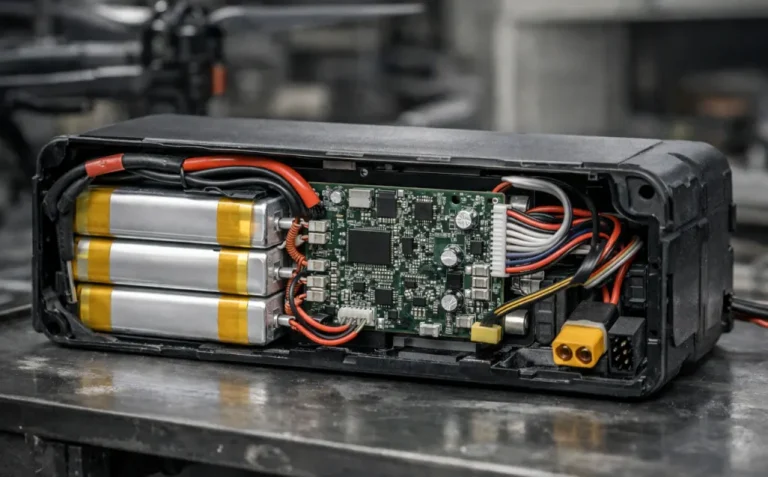
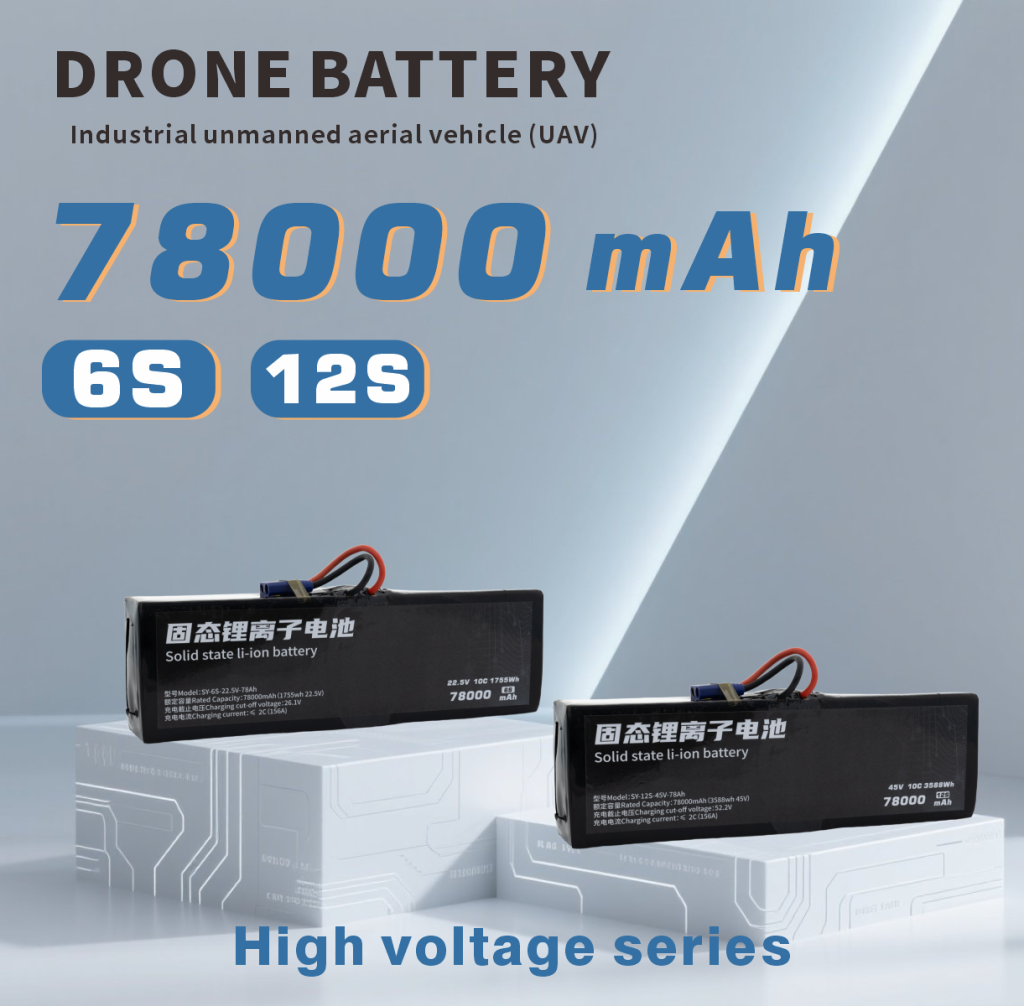
Taixing Shengya Electronic Electronic Technology Co., Ltd (Shengya Electronic) focuses on high energy lithium-ion soft pack cells and battery packs for drones and other demanding fields. The company, founded in 2017 in Jiangsu Province, works with semi-solid and solid-state technologies that aim for both high specific energy, with product lines reported around 190–350 Wh/kg, and long cycle life in the 800–1000 charge cycle range when used correctly. Shengya Electronic supplies packs in common multi-series formats such as 6S, 7S, 12S, 13S, 24S and 28S for aerial platforms that need long range, stable discharge, and reliable behavior in harsh jobs like inspection, surveying, firefighting support, and agriculture. The focus sits on consistency from cell to cell, strong safety design, and tailored pack layouts for different unmanned systems. For you as a drone user, that means more energy in the same weight class and a battery that can survive many working seasons when treated with care.
FAQ
Q1: How long does a drone battery last on average?
A: For most home models, a single pack usually gives about 20–30 minutes in calm weather with a light camera. Small toy drones often stop at 5–15 minutes, while larger industrial platforms can reach 40 minutes to over an hour when matched with high-energy packs and efficient props.
Q2: Is 30 minutes of drone flight time considered good?
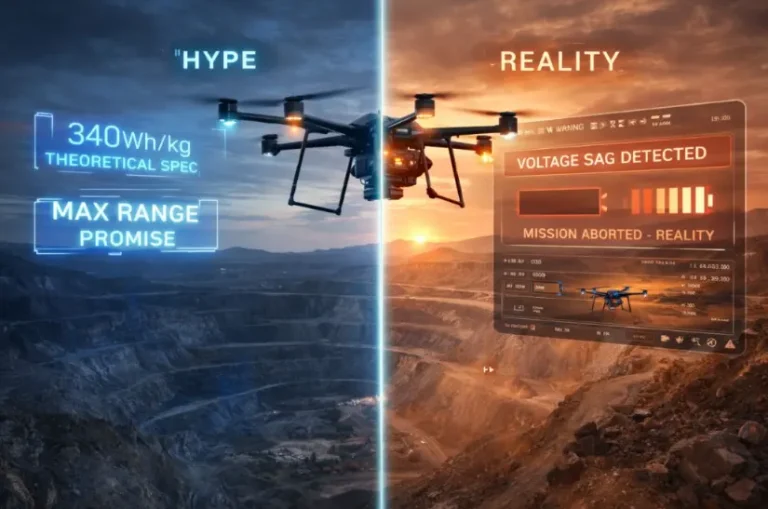
A: Yes, for a small camera drone, around 30 minutes per battery is quite normal. And it sits on the better side. If you carry heavy loads or fly in strong wind, a bit less is still okay. So it helps to match your numbers with drones in the same group rather than with top marks in ad sheets.
Q3: How many times can a drone battery be recharged?
A: Many LiPo packs used in drones last roughly 150–250 full cycles, and higher grade Li-ion designs often reach 300–500 cycles or more when charged, stored, and flown carefully. Harsh use, deep discharges, or high heat can bring that number down quite a lot.
Q4: Why does my new drone battery drain so fast?
A: The cause is often a mix of heavy load, rough flying, low heat, or old software taking more power than you think. It helps to try a test flight with no load in mild weather. If the time goes up, the problem is likely the job way, not a bad pack.
Q5: When should a drone battery be replaced?
A: Swap it when it puffs up, shows hurt spots, or when flight time falls a lot compared with new packs in the same setup. If you start landing way sooner than usual and notes show big voltage drops under normal push, it is safer to stop that pack. And switch to a new one, mainly for work trips.