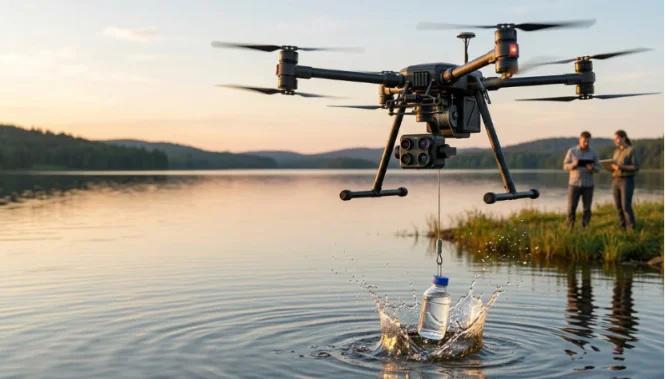
Environmental monitoring has thankfully moved past the days of rowing a small boat to the middle of a lake just to scoop up some water. Aerial technology handles the heavy lifting now. But when your equipment needs to carry a heavy multispectral camera to spot cyanobacteria and simultaneously drop a physical sampling bottle into the water, things get complicated fast. On paper, it looks like four motors doing all the hard work. The reality is much different. The true bottleneck hides inside the power system. A reliable drone water sampling battery is the actual foundation that makes these dynamic payload missions possible.
Are Environmental Drones Facing a Dual-Payload Dilemma?
Modern flight missions rarely involve doing just one thing. You often ask your equipment to perform several completely different tasks at the same time. This turns the payload hanging beneath the aircraft into a constantly shifting variable, creating hidden risks for every single takeoff.
Multispectral Cameras and Physical Hardware
You might spend a huge portion of your budget on advanced optical lenses to map out pollution gradients from the sky. The weight of those electronics is fixed and easy to calculate before you even launch. But looking at the water is never enough. You have to bring physical samples back to the lab. Because of this, the aircraft also carries a mechanical winch, a long cable, and a one or two-liter plastic bottle. This combination of sensitive electronics and clunky physical hardware forces the aircraft to operate under high stress the second it leaves the ground.
The Dynamic Weight Factor in Mid-Flight
The real headache starts when the total weight changes drastically while the aircraft is miles away. Flying out to the center of the lake is usually fine because the sampling bottle is completely empty. The frame feels relatively light. Once you lower that bottle, fill it with a liter of water, and prepare to head back, the entire physics of the flight change. You suddenly add several pounds of dead weight to the frame. Plus, the aircraft has to fight high-altitude winds on the return trip. This unbalanced, front-light and back-heavy flight profile puts absolute misery on the propulsion system. Just thinking about swapping power packs with freezing fingers on a windy reservoir bank makes you appreciate a system that does not force a premature landing.
Why Does the “Water Lift” Voltage Crisis Happen?
Many pilots experience a terrifying moment out on the water. The screen shows 60% power as the aircraft hovers over the target zone. The exact second the full bottle breaks the surface of the lake, the controller starts screaming with low-power alarms. This is not a case of the power running completely dry. It is a classic, aggressive voltage sag.
Instantaneous High-Current Discharge Explained
Picture the exact moment you drop the cable, let the bottle sink, and then try to rip it back up through the surface tension of the lake. The aircraft frame jerks downward violently. To stop the whole rig from plunging into the water, the motors have to generate a massive surge of thrust in a fraction of a second. The system violently demands a huge spike in electrical current. This sudden high-current discharge acts like tearing a massive hole in a water pipe. A standard lithium pack simply cannot survive that kind of sudden extraction.
False Low-Battery Alarms and Forced Landings
When hit with that massive current demand, the internal voltage of a standard pack drops off a cliff. The flight computer is essentially a strict rule-follower. It sees the voltage dip below the safety threshold and immediately assumes the tank is empty. The automatic response is usually a disaster. The system might trigger a forced return-to-home protocol or, worse, initiate an emergency landing right there on the open water. A lot of expensive missions fail right at the moment of lifting the water simply because the power source panicked.
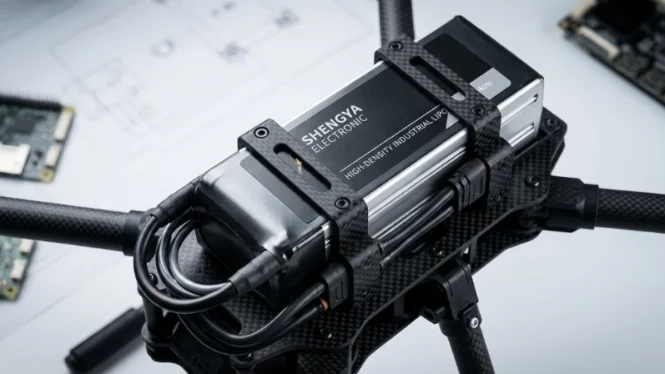
How Does a High-Density Drone Water Sampling Battery Solve This?
Trying to fix this voltage crash by just buying physically larger packs is a waste of time and money. The actual fix lives inside the chemical engineering of the cells and their ability to stay stable under extreme abuse. Industrial jobs require industrial-grade power solutions.
Stable Discharge Curves Under High Stress
Professional equipment demands professional power. This is where a specialized manufacturer like Shengya Electronic makes a massive difference in the field. If you look at Shengya Electronic, they focus heavily on developing high-energy-density drone batteries meant specifically for harsh, unpredictable industrial loads. Their engineering team targets the exact chemical formulas needed to survive brutal, sudden current spikes without flinching. Instead of piecing together generic parts, you get a power source built for stability. When your motors suddenly draw maximum current to yank a heavy water sample out of a lake, these packs maintain a firm, flat voltage curve. They keep the voltage high enough to stop the flight computer from triggering those annoying false alarms.
Finding the Balance Between Energy and Weight
These specialized industrial packs manage to cram far more energy into a surprisingly small physical footprint. When you fly environmental missions, cutting physical weight from the power supply gives you precious extra capacity for your expensive cameras and the water sample itself. A lighter overall setup makes the aircraft much more agile and provides a massive safety buffer when sudden crosswinds hit over deep water.
What Are the Real-World Operational Benefits?
Technical specs on a datasheet only matter if they actually work out in the wild. Upgrading to a truly capable power system completely changes how you run a field team. You stop worrying about the equipment and start focusing on the data.
Bidding Farewell to Forced Mission Interruptions
You can confidently push the aircraft out to the deepest, most critical parts of the water without second-guessing the return trip. Relying on a properly rated heavy payload drone battery means you can run the winch and transmit live multispectral video at the exact same time. The days of staring nervously at a flashing red power warning are over. You eliminate mission failures caused by power bottlenecks, which means the data you hand over to the lab is actually complete and useful.
Enhancing the Safety of High-Value Equipment
Hovering a highly expensive multi-sensor rig over deep water is stressful enough. A crash caused by a simple voltage drop is a catastrophic financial loss. Having a reliable UAV power supply provides more than just a few extra minutes of flight time. It gives you the confidence to take on harder, more demanding water quality projects knowing the aircraft actually has the strength to finish the job and come home dry.
FAQ
Q1: Why do standard photography power packs fail during water sampling missions?
A: Standard packs have a low discharge rate. They work perfectly fine for slow, cinematic flying, but they suffer massive voltage drops when the motors suddenly demand maximum thrust to pull a heavy bottle out of the water. This drop triggers false alarms and causes the aircraft to land prematurely.
Q2: What is the most important metric when choosing a drone water sampling battery?
A: The high C-rate discharge capability and the stability of the discharge curve matter most. The pack must hold its voltage steady even when the motors pull a massive amount of current during the lifting phase.
Q3: How much does carrying the physical water sample impact the flight time?
A: The impact is huge. Flying back with a full bottle adds several pounds of dead weight. The motors have to work significantly harder to fight gravity on the return trip compared to the flight out.
Q4: How do you completely prevent low-voltage alarms from ruining a mission?
A: You can tweak the safety thresholds in the flight controller slightly, but the only permanent fix is upgrading to a high-density, industrial-grade pack designed specifically to handle sudden, high-current draws without dropping voltage.
Q5: Do high-density packs actually reduce the total takeoff weight?
A: Yes. They pack the same amount of energy into a smaller, lighter casing. You can use that saved weight to carry a larger water bottle or mount an extra environmental sensor without overloading the aircraft.