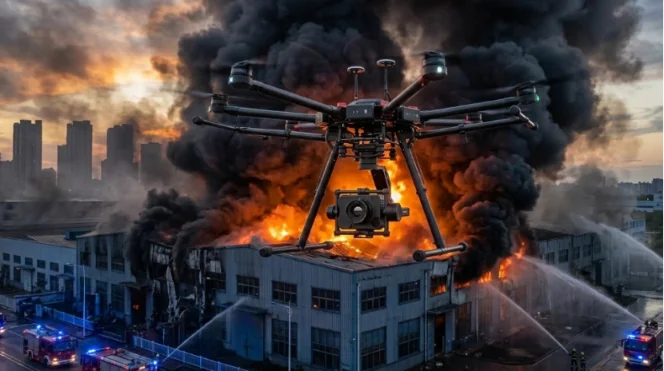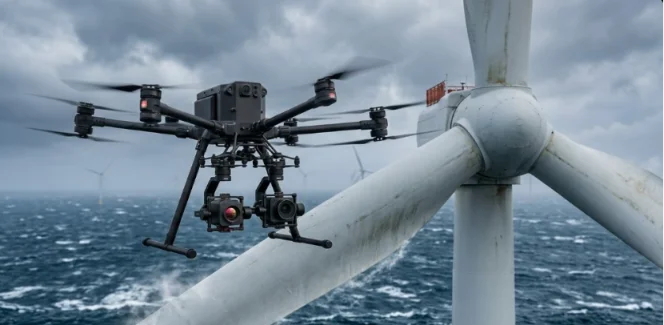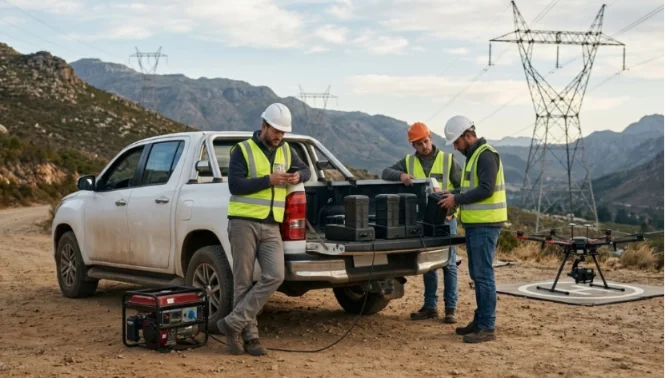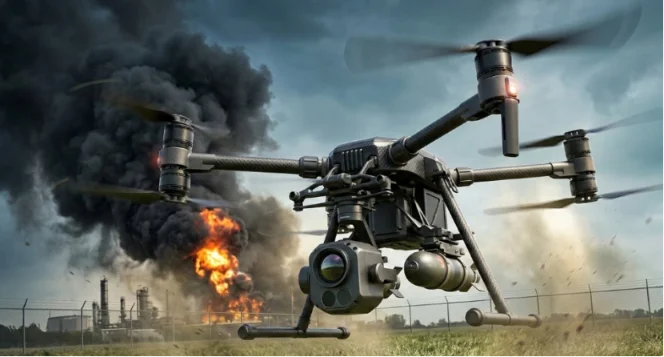
Imagine an industrial fire breaking out at a chemical plant. You have roughly a minute to get eyes in the sky and drop fire extinguishing bombs before things spiral completely out of control. You push the throttle. The drone lifts off, but barely clears the perimeter fence before the low voltage alarm starts screaming. The aircraft lands itself forcefully, and the whole mission scrubs right there on the grass. People talk constantly about high tech thermal cameras and fancy payload drop mechanisms. But all that expensive gear turns into dead weight if your emergency response drone battery fails during a violent takeoff. Those first thirty seconds dictate everything.
The Heavy Burden of Emergency Payloads
Tossing a standard consumer camera drone into the air is one thing. Strapping on riot control gear or medical supplies changes the physics of flight entirely. You are asking the aircraft to fight gravity with a massive handicap right from the start. People love buying new tactical attachments, but they often forget that gravity does not care about your budget.
Contextualizing the Weight
Let us look at what you are actually putting on these rigs during a crisis. For security work, you might hang tear gas canisters, heavy metal spotlights, and loudspeakers. Firefighting tasks require heavy thermal imaging sensors and chemical drop tanks. Search and rescue teams load up bulky life jackets and droppable trauma kits. A standard power source simply trickles electricity. It works fine for hovering around snapping real estate photos on a calm afternoon. But when you ask it to dump energy fast enough to lift an extra ten pounds of gear straight up in a panic, the internal chemistry starts breaking down almost immediately.
The Threat of Drone Voltage Sag
Here is the real nightmare scenario out in the field. You hit the throttle hard to clear a tree line or escape a sudden thermal updraft near a fire. The motors demand a massive, instant spike in current to make that maneuver happen. If you use a regular heavy payload drone battery, it simply cannot push that much electricity out of the cells at once. The result is a sudden and very sharp drop in available power. Engineers call this drone voltage sag. It usually triggers automatic system reboots mid air. Sometimes it just causes the aircraft to fall out of the sky completely like a rock. It is a terrifying thing to watch your expensive equipment hit the concrete just because the power source choked under pressure.
Why Is C-Rate a Matter of Life and Death?
Knowing the technical specifications on a manufacturer spec sheet might seem like busywork for the engineering team. But when a riot or a flash fire happens, grasping exactly how power leaves those lithium cells is the only way to keep the mission alive.
Standard Versus High-Rate Power
You hear the term C-rate thrown around a lot by drone pilots. It just means discharge rate. Think of a standard battery like a normal garden hose. It provides a nice, steady stream of water. A high discharge rate drone battery acts more like a busted fire hydrant. When you open the valve, it dumps an incredible volume of energy instantly. You absolutely need that hydrant level flow when you demand a zero to one hundred violent takeoff to get tactical payloads airborne fast.
The Survival Factor
Without that massive instant power delivery, your drone struggles and stutters in turbulent air. Emergency situations rarely happen on calm, sunny days with zero wind. You fight heavy gusts, thick smoke, and unpredictable updrafts. High discharge rates completely eliminate that terrifying voltage drop during aggressive ascents. The drone stays locked in and perfectly stable, no matter how much heavy tactical payload hangs off the bottom brackets.
Built for Violent Takeoffs
Finding a power source that handles these violent electrical spikes without swelling up like a balloon or catching fire is surprisingly difficult. You need internal chemistry explicitly designed for physical abuse and high stress environments.
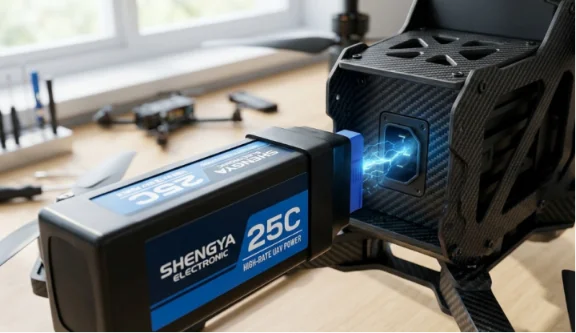
When you look at the raw specifications required for reliable tactical flights, the components built by Shengya Electronic stand out as a practical solution. They have been manufacturing lithium batteries since 2017. Running a massive facility means they actually control their own cell chemistry instead of just repackaging cheap consumer cells. If you look at the Shengya Electronic technical background, you see a heavy focus on high rate discharge capabilities.Their 25C High Rate series is exactly what you look for in a dependable security drone battery. It delivers true 25C sustained high current output, letting you launch heavy medical or tactical payloads instantly without the motors stalling out. The advanced chemistry prevents overheating even when you push the throttle to the absolute limit. You can check out their specific high rate cell configurations on their products page to see the exact dimensions available for different drone frames.
Conclusion: Powering Those Who Protect Us
The margin for error in crisis management is practically zero. A drone is only as reliable as the power source keeping it in the air. You cannot afford sluggish ascents, sudden reboots, or complete power failures when lives or property hang in the balance. Upgrading your aerial fleet to handle aggressive, fully loaded takeoffs is just a baseline requirement in this industry now. An emergency response drone battery built specifically for high discharge rates will always be the smartest and safest investment you can make for your tactical operations.
FAQ
Q1: What exactly causes a drone to crash from voltage sag?
A: When your motors demand more current than the battery can supply instantly, the voltage drops below the minimum operating threshold. This tricks the flight controller into thinking the battery is completely dead, which triggers an emergency forced landing or a total mid air shutoff.
Q2: Can I use a standard high capacity battery for heavy payloads?
A: Capacity just gives you longer flight times in perfect, calm conditions. It does not provide the instant burst of power needed to lift heavy gear quickly. You need a high C-rate to deliver that sudden burst.
Q3: How do I know if my battery is struggling with the payload weight?
A: The most obvious signs are sluggish controls during takeoff, low battery warnings popping up immediately after launch, and the battery pack feeling unusually hot or looking slightly swollen after a short flight.
Q4: What makes the 25C rating so important for security missions?
A: A 25C rating means the battery can safely discharge twenty five times its capacity in a single continuous burst. That is the exact mathematical threshold needed to shove a fully loaded security drone straight up into the air without stalling the motors.
Q5: Do high rate batteries require special chargers?
A: You can use standard balancing chargers, but you must monitor the charge rate closely. High rate cells are designed to discharge aggressively, but charging them too fast can degrade the internal chemistry over time and ruin the pack.