When you buy a new pack, the first question is simple: how long will it last? That question has two layers. One is flight time per charge. The other is how many flights you get before drone battery life drops so much that you stop trusting it. If you fly for work, both layers matter. A pack that gives great power for only a few months is not really a good deal.
This guide looks at flight time, cycle life, and aging. You will see what shapes real drone battery life, how LiPo packs wear out, and what you can do to slow that process down.
What Shapes Real Drone Battery Life?
Before you count cycles, you need a clear picture of what controls flight time on each mission. Most pilots feel this day to day, but it helps to put the main factors in one place.
Capacity, C Rating, and Flight Time
Capacity in mAh is the easiest spec to read. A higher number usually means more minutes in the air. A 5000 mAh pack can store more energy than a 2200 mAh pack. Still, drone battery life is not only about capacity. C rating also plays a role.
If you pull close to the max C rating all the time, the pack heats up and voltage sags. You get strong thrust for a short burst, then you land earlier than you hoped. A pack with a realistic C rating, used at a moderate current, will often give better usable flight time than a pack that is pushed to its limit on every flight. For fleets that run the same route daily, choosing balanced drone LiPo battery packs instead of chasing extreme C numbers can give you more stable flights over the long run.
Weight, Payload, and Propulsion
Every gram the battery has to lift cuts into flight time. Battery weight, airframe, payload, and even prop choice all show up in the final result. A heavy camera, a gimbal, or a sensor head can turn a ten minute flight into seven minutes very quickly.
Propeller size and pitch also matter. Large props with smooth, efficient profiles draw less current at cruise. Small props with high pitch can make the drone feel sharp on the sticks but burn through energy faster. For industrial missions, you usually want a setup that keeps current draw modest across the whole flight, not just impressive punch-outs.
Weather and Flight Style
Cold weather makes LiPo chemistry sluggish. You see lower voltage and shorter drone battery life, even with the same pack and route. Strong wind forces the drone to tilt harder and spend more time at higher throttle. That extra power demand shortens every flight. Aggressive flying has the same effect. Long full-throttle climbs and sharp moves feel great but cost you minutes in the air and speed up drone battery aging over time.
How Many Cycles Can a Drone Battery Last?
Once you know what shapes a single flight, the next step is total cycle life. This is the number of charge and discharge cycles a pack can handle before it feels “tired” and the usable drone battery life becomes too short for your jobs.
Typical Cycle Life for Drone LiPo Packs
Many common LiPo packs for small drones deliver somewhere around 150 to 300 good cycles if you treat them well. Some higher grade packs, especially those built for heavier UAV work, can reach 300 to 500 cycles. Well built drone LiPo battery packs designed for repeated field use can offer more stable performance in that upper range.
The key word is “good.” You may still be able to arm and take off after that, but drone battery life will drop and sag will rise. At some point, you do not want that pack on a valuable drone any more.
What Counts as a Cycle in Practice
In simple terms, one full cycle is a 100 percent discharge and charge. In real flying, you rarely go from full to empty. A few partial cycles add up. For example, two flights where you use about half the pack each time are roughly one full cycle.
That is why a pack used for very short hops still ages. You might think you are being kind to it, but many small top-ups still contribute to total drone battery cycles.
Depth of Discharge and Cycle Count
Depth of discharge, often called DoD, has a strong impact on cycle life. The deeper you drain the pack on each flight, the fewer total cycles you get.
A simple rule of thumb looks like this:
| Typical DoD per Flight | Approximate Cycle Range |
|---|---|
| 30–40% | 400–600 cycles |
| 50–60% | 250–400 cycles |
| 70–80% | 150–250 cycles |
| 90%+ | Often under 150 cycles |
If you land when cells are around 3.7–3.8 V per cell under light load instead of pushing to 3.3 V, you trade a little flight time per mission for much longer overall drone battery life.
How Drone Batteries Age Over Time
Even if you fly gently, LiPo cells age. This happens slowly at first, then faster once certain limits are crossed. Aging is a mix of chemistry, heat, and how hard you push the pack.
Internal Resistance and Heat
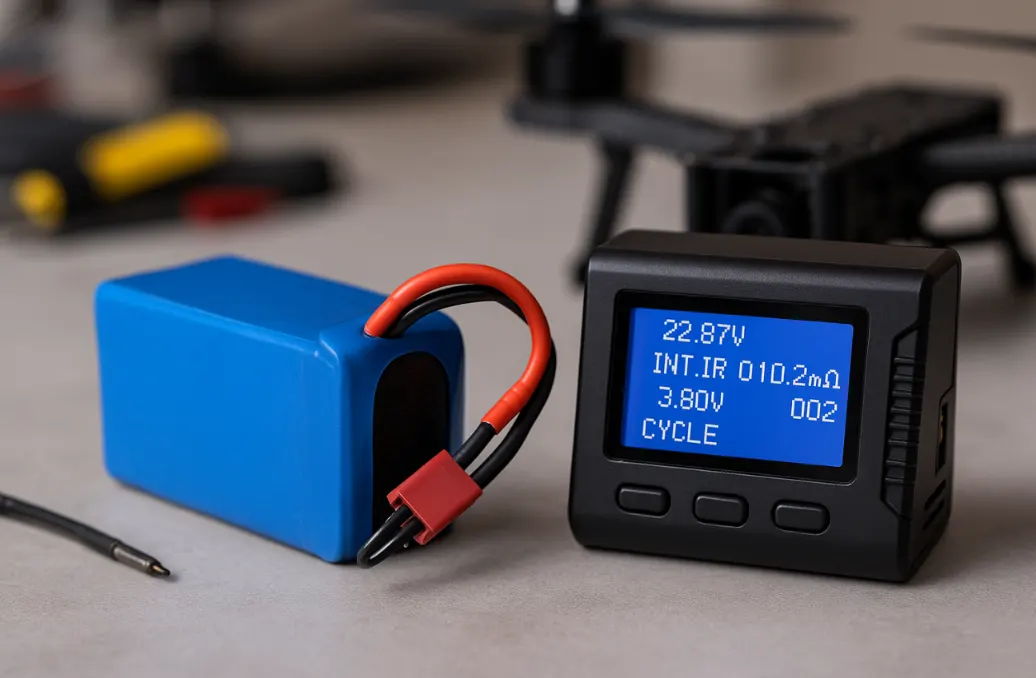
With every cycle, internal resistance creeps up. Higher internal resistance means more heat for the same current. The pack runs warmer and drops more voltage under load. You see less punch and shorter flights. If you track internal resistance with a charger or meter, you can spot packs that are aging faster than the rest of your fleet and protect overall drone battery life by moving weak packs to less critical roles.
Voltage Sag and Power Loss
As packs age, sag becomes more obvious. Full throttle that once felt clean now causes a big drop in voltage on your OSD. For a small hobby drone this is annoying. For an inspection UAV flying near power lines or structures, it can be a safety issue. Less available power reduces escape options when something unexpected happens. In simple terms, LiPo battery voltage sag is one of the clearest signs that a pack is past its best days.
Cell Imbalance and Self-Discharge
Older packs often show larger gaps between cells after a charge. One cell may rest at 4.18 V while another sits at 4.12 V. Over time, this imbalance gets worse. Self-discharge can also speed up. If you leave a battered pack on the shelf for a month, it may come back much lower than you expect and in a poor state for the next mission.
Signs Your Drone Battery Is Near the End
At some point, a pack moves from “aged but usable” into “not worth the risk.” You want to spot that before it causes a bad day.
Swelling and Physical Changes
Swelling is a clear warning sign. A slight puff after a hot flight that goes away later is already telling you the pack is not happy. If the case feels soft or stays bloated when cool, retire it from any serious drone use.
Shorter Flight Time on the Same Route
You know your usual route and payload. If drone battery life drops by a third or more on that same route, and nothing else changed, the pack is likely near the end of its useful window. You can use it for ground tests or indoor training, but not for work that matters.
Hot Packs After Normal Flights
Some heat is normal. But if a pack comes down very hot after a flight that used to be easy, internal resistance has probably climbed. That extra heat speeds up damage, so this becomes a loop. Once you see this pattern across several flights, it is time to think about a replacement.
How to Extend Drone Battery Life in Daily Use
You cannot stop aging, but you can slow it down and make better use of each pack. Small habits add up over hundreds of flights.
Charging and Storage Habits
Use chargers that can set proper LiPo profiles. Avoid charging at very high C rates unless the pack is rated for it and the mission needs quick turnarounds. For storage, aim for around 3.75–3.85 V per cell in a cool, dry place. Keeping packs full or nearly empty for long periods is one of the fastest ways to cut drone battery life in half.
Manage Load, Throttle, and Props
Do not build a drone that runs at 80 percent throttle most of the time. A well matched powertrain can keep cruise throttle around 40–60 percent on a typical mission. Choose props and motor KV that fit your AUW and role. If you need longer flights with the same airframe, it may be time to look at long-endurance drone batteries designed for higher cycle life and better heat control, instead of just increasing pack size and weight.
Regular Health Checks for Critical Missions
For hobby flying, you can rely on feel and simple timers. For mapping, inspection, and other work, it is worth checking internal resistance, cell balance, and flight logs on a regular schedule. Matching your packs to the right frames and roles, and refreshing your stock before failures, keeps fleets stable. Many pilots keep a separate group of drone LiPo battery packs for important missions and move older packs to training use to protect drone battery life where it matters most.
When to Consider Industrial or Custom Drone Battery Packs
If your work depends on drones every week, off-the-shelf packs may not always match your needs. Industrial drones carry expensive payloads, fly longer routes, and spend more time in harsh environments. In these roles, higher cycle life, tighter quality control, and better thermal behavior pay off fast.
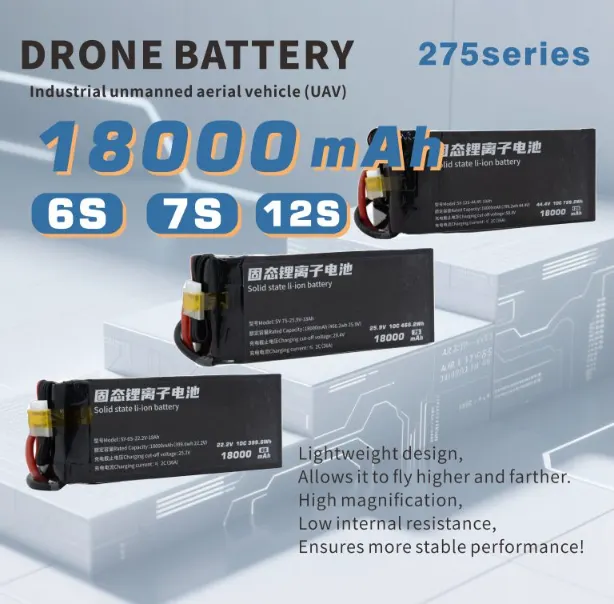
Industrial-grade packs aim at stable drone battery life over hundreds of cycles, not just strong punch on day one. They may include more robust cell selection, better internal layouts, and extra safety features. When your airframe has special size limits or connectors, or you need a specific voltage and capacity blend, it helps to talk about custom drone battery packs so the power system fits the job instead of forcing you to compromise.
Shengya Electronic as Your Drone Battery Partner
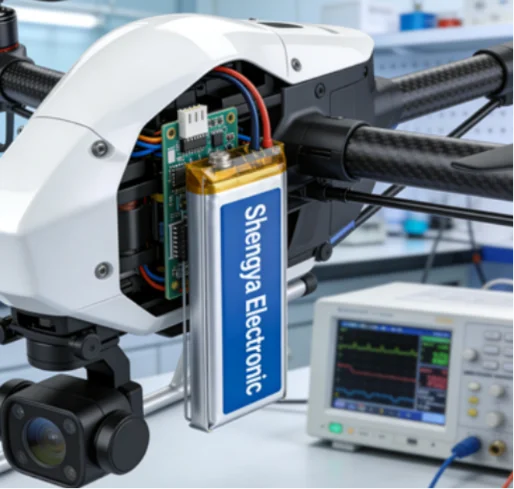
Shengya Electronic focuses on lithium battery packs for drones and related aerial equipment. The team works with multi-cell LiPo packs, high discharge rates, and battery management to support long missions in fields such as mapping, infrastructure inspection, agriculture, and security. From cell selection to pack layout and protection circuits, each step aims at stable drone battery life and repeatable performance across many cycles. Packs go through capacity testing, internal resistance checks, and safety checks such as over-charge and short-circuit tests. If you need standard drone LiPo battery packs for existing airframes, or you want tailored voltage, shape, and harness designs for new UAV platforms, Shengya Electronic can help match the battery system to the real duty cycle of your drone.
FAQ
Q1: Is it bad to fly a drone until the battery hits zero percent?
A: Yes, that is tough on LiPo cells. If you fly a lot until the low-voltage alert is loud and then push on, you shorten drone battery life fast. It is wiser to land with some power left. Then charge from a safer spot.
Q2: Does fast charging always hurt drone batteries?
A: Fast charging at high C rates adds more strain. This is true mainly if the pack is still warm from the last trip. Once in a while, it is okay. If you fast charge each time, heat and damage pile up quicker. For most packs, a middle charge speed is a safer pick each day.
Q3: Why does my drone battery life drop so much in winter?
A: Cold makes the chemical reactions inside LiPo cells slow. You spot lower voltage and see less available capacity. That is why trips feel briefer in winter. Warm packs a bit before flight. Skip deep discharge in cold weather. This can help.
Q4: How often should you check internal resistance on work drones?
A: For fun use, checking every few months is often fine. For drones that fly business or work trips, many operators check main packs every few weeks, or after a set number of cycles. You want to find packs that wear quicker than the rest. Pull them from key flights.
Q5: When is it time to replace a drone battery even if it still charges?
A: If a pack puffs up, gets very warm on usual flights, drops hard on punch-outs, or offers much briefer flight time on the same path, it is time to stop using it for real flights. You might hold onto it for ground checks or brief indoor flights, but not for trips where safety is critical.