If you source batteries for an OEM drone program, you already know the pain points. Specs look fine on paper, then flight time drops in cold air. A batch comes in and the voltage sag feels different. Lead time slips. Or a small connector detail slows the whole assembly line. This guide keeps the focus on what matters in real projects: the use case, the specs that predict field behavior, the documents that reduce risk, and the checks that help you avoid nasty surprises after you scale.
Start With Your Use Case, Not the Datasheet
A datasheet can be clean and still fail your mission. Start with how the drone is used, where it flies, and what “good” looks like in your build. This keeps you from buying a pack that hits the headline numbers but struggles in your real duty cycle.
Mission Profile Checklist
Write down the basic job the drone must do. Keep it plain.
- Target airtime in real conditions, not “max hover”
- Payload weight and how it changes during a flight
- Typical throttle style: smooth survey, stop and go inspection, or punchy moves
- Charging pattern: one cycle per day or many cycles back to back
- Needed pack format: OEM drone battery size limits, mounting points, and service access
Small detail, big impact: if your drone climbs hard at takeoff every time, that early power draw can shape what cell and pack design makes sense.
Environment Factors
Add the stuff that causes the weird failures.
- Cold mornings, hot afternoons, or both
- Wind and constant correction
- Vibration and hard landings
- Storage time between missions
This is where your supplier should talk about operating temperature range like a real constraint, not a footnote.
Key Specs That Actually Matter in OEM Procurement
After your use case is clear, specs become useful. Not all specs carry the same weight. Some numbers predict real flight behavior. Others mainly help marketing decks.
Voltage, Capacity, and Discharge Rate in Plain Terms
Voltage sets the system match. Capacity sets stored energy. Discharge rate sets how the pack behaves when your drone demands power fast.
If your drone pulls hard current bursts, ask early about a high discharge drone battery option. That conversation is much cheaper now than after you build tooling.
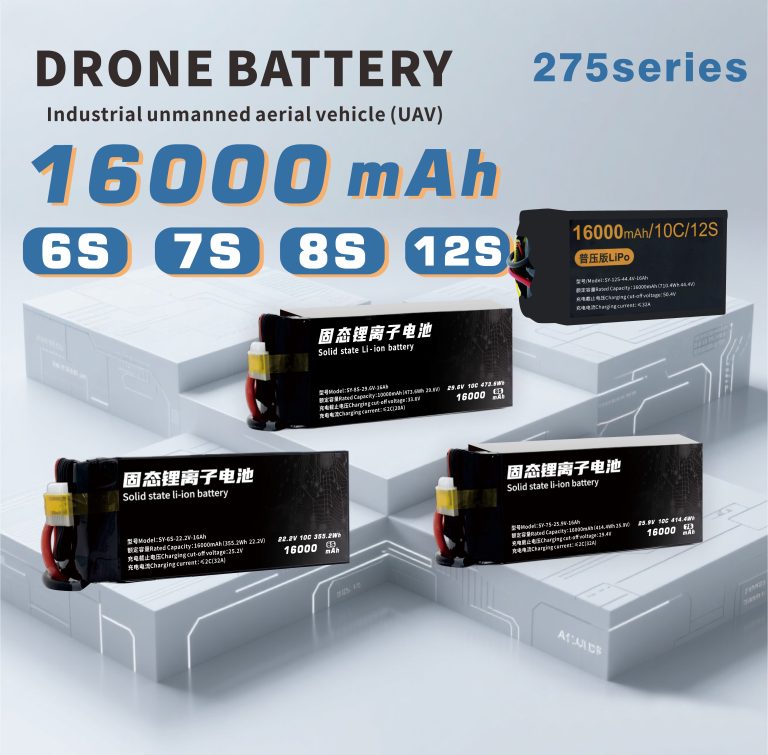
Also check series and configuration needs. Many UAV platforms run common pack combinations like 6S, 7S, 12S, 13S, or 14S.
When you compare products, it helps to scan a supplier’s range, not only one model. For example, the products list at Shengya’s site shows multiple high energy density series and common 6S to 18S options.
If you want a quick view of ranges and formats, link your team to these UAV battery pack options during the first spec review.
Cycle Life and “Usable Capacity” vs Nominal Capacity
On an OEM program, battery cycle life is not a nice bonus. It is cost, warranty, and customer trust.
Ask how cycle life is defined. Is it to 80% capacity? Under what load? At what temperature? With what cutoff voltage? These details decide whether two “same” packs behave the same in the field.
Operating Temperature Range and Storage Behavior
Some teams only test at room temp. Then winter arrives.
Request the operating temperature range your drone will face. Then ask what happens to voltage sag and available energy in that range. If the supplier has real test curves, that helps.
Storage matters too. Many drones sit between missions. Ask about storage charge guidance and what the pack looks like after weeks of idle time.
Battery Safety and Compliance You Should Ask For
In B2B sourcing, “safe” is not a vibe. It is a set of design choices and documents. This is where you cut a lot of risk, fast.
Pack Level Protections
Ask what protections exist at pack level, not only cell level.
- Over current protection
- Over charge and over discharge cutoffs
- Cell balancing behavior
- Fault handling
This is the practical side of a drone battery BMS. If your project needs special limits, ask if the thresholds can be set during build.
Shipping and Safety Documents
For procurement, you want paperwork you can hand to logistics and compliance without drama.
Ask for the supplier’s typical battery safety certification set for the markets you ship to. If you ship by air often, make that clear on day one. Also ask for test summaries and shipping support docs that match your route.
Traceability and Batch Control
If a batch problem happens, you need to trace it. That means lot tracking, basic labeling rules, and a clear record of key materials.
A supplier that takes battery quality control seriously can tell you how packs are tracked through build and how out of spec units are handled.
How to Evaluate Quality Before Mass Production
The smartest time to test is before you lock the design. This is not about fancy lab gear. It is about tests that match your risks.
Incoming Inspection Plan
Set a simple incoming plan. Make it repeatable.
- Visual check of welds, insulation, and pack fit
- Connector seating and pull check
- Quick voltage and balance check
- Basic weight and dimension check
Even a low cost check can catch build drift early. That supports your battery quality control flow without slowing you down.
Sample Testing That Predicts Field Issues
Ask for sample packs and test them like you fly.
- Power draw under your normal mission
- Heat after a full mission
- Voltage sag at takeoff and during climbs
- Cold start behavior if you fly in cold weather
What Consistent Performance Looks Like Across Batches
Most OEM headaches show up as “same spec, different feel.”
Define what “consistent” means in numbers your team can check. For example:
- allowed spread of internal resistance
- allowed spread of end of flight voltage under the same load
- allowed spread of pack temperature after a mission
Then put those in your supplier scorecard.
Customization That Helps Integration Without Blowing Up Cost
Customization is great, until it creates slow builds or hard to replace parts. Keep it focused on the items that save time on your assembly line.
Connector and Harness Options
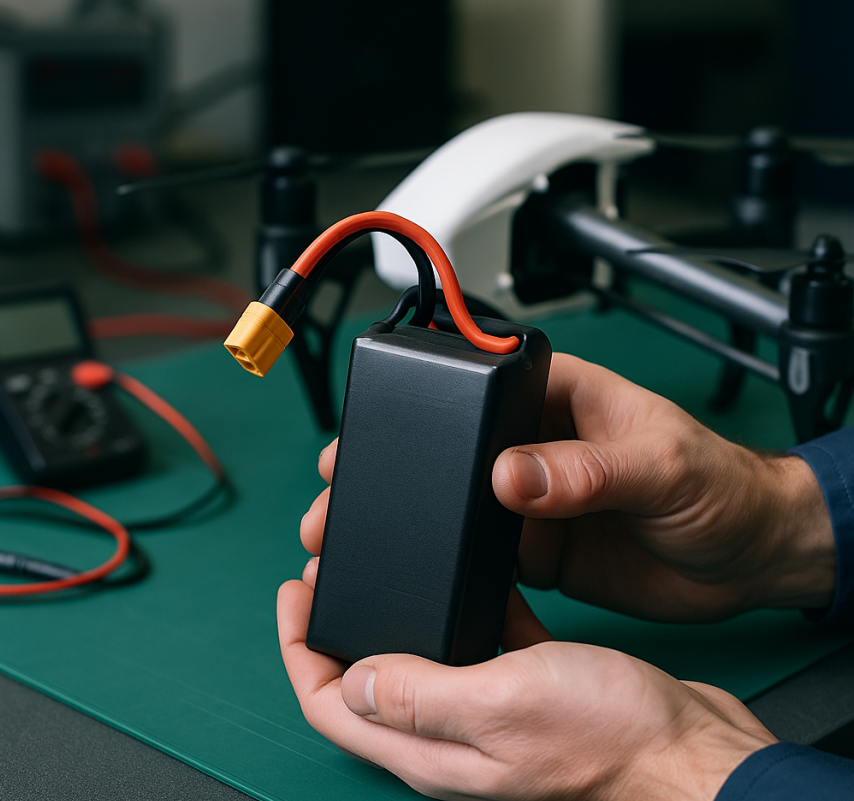
This is where connector customization matters most. If the connector choice reduces wiring mistakes or speeds service, it pays off.
Ask about:
- connector model options
- wire gauge and length
- strain relief design
- labeling that matches your harness map
Form Factor and Mounting Constraints
A custom drone battery pack often fails on simple fit issues. Share your space limits early. Include mounting method, clearance, and how packs are removed in the field.
BMS Settings and Communication Needs
Not every pack needs data comms. Some do. If your platform needs it, ask if the drone battery BMS supports the signals you want, and how it is tested.
RFQ Template: What to Put in Your First Email
A good RFQ saves weeks. Keep it short, but complete. If your message is vague, quotes become vague too.
The Spec Table You Should Send
Include a small table like this in your first email:
- target voltage and series count
- capacity target and minimum usable energy
- peak and continuous current draw
- max pack size and weight
- required operating temperature range
- needed battery safety certification for your market
- connector type and connector customization needs
- target battery cycle life under your duty cycle
If you can attach a power draw log from a test flight, do it. It beats guesses.
Commercial Terms That Reduce Risk
Put these in writing:
- sample lead time
- mass production lead time
- MOQ by pack type
- warranty window and what “failure” means
- how batch changes are communicated
This helps you compare a drone battery supplier on more than price.
When You Need a Stable Production Partner
At some point, your program stops being “a few prototypes.” Now it is delivery pressure, field feedback, and repeat orders. That is when supplier depth matters most.
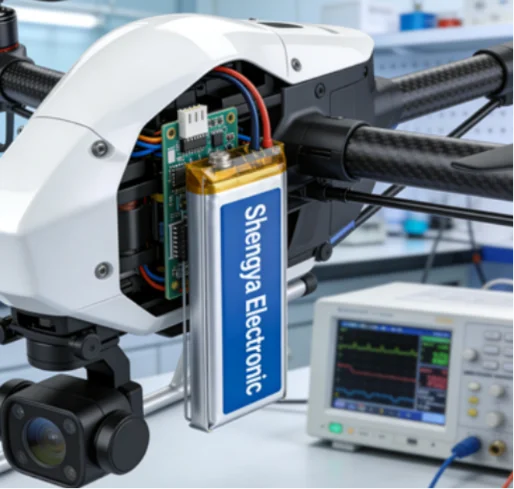
Taixing Shengya Electronic Technology Co., Ltd (Shengya Electronic) positions itself as a maker and seller of solid state lithium ion soft pack battery cells and battery packs, with high energy density options listed around 270Wh/kg up to 340Wh/kg, plus long cycle life claims in the 800 to 1000 cycle range. The products catalog also shows multiple energy density series and common multi S combinations used in UAV builds. For OEM teams, that kind of range can help when you need to balance weight, runtime, and current draw across different drone frames. If you are selecting a drone battery manufacturer for repeat builds, it helps when the supplier can talk through cell choice, pack build rules, and test steps in the same language your engineers use. A practical next step is to review the supplier’s drone battery systems range, then tie it back to your mission profile and RFQ table.
FAQ
Q1: What should you send a drone battery supplier in the first message?
A: Send your mission profile, peak and continuous current draw, size and weight limits, required operating temperature range, needed battery safety certification, and connector customization details. A short power draw log helps a lot.
Q2: What is a realistic battery cycle life target for an OEM drone battery?
A: It depends on load, cutoff rules, and temperature. Ask for cycle test conditions, not only the number. Real cycle life often drops when you run high current or fly in cold weather.
Q3: How do you compare a drone battery supplier beyond unit price?
A: Compare test data quality, batch consistency controls, traceability, lead time stability, and how clear the safety answers are. Price is just one line in the risk list.
Q4: What tests matter most before you scale a custom drone battery pack?
A: Test voltage sag under your real mission, heat after a full flight, cold start behavior if you fly in winter, and consistency across several sample packs. Those tests often predict field complaints.
Q5: What are quick red flags when picking a drone battery supplier?
A: Big claims with no test conditions, vague battery quality control steps, missing traceability, and unclear drone battery BMS protection details. If answers keep drifting, the risk is real.