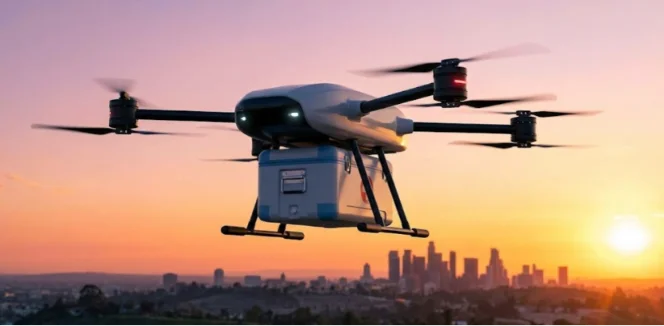
Running a commercial drone fleet sounds incredibly futuristic until you actually look at the daily flight logs. Operators hit a massive physical wall almost immediately. It is the classic payload vs. range dilemma. If you want to make actual profit in last-mile drone delivery, you cannot afford to fly empty boxes. You need to pack the drone full. But the minute you strap a heavy 5kg medical cooler to the bottom of the frame, the flight time drops like a rock. Suddenly your operators are sweating over the telemetry screen. To cure this severe drone delivery range anxiety, smart fleet managers are finally ditching standard lithium polymer packs and moving straight to high energy density drone batteries.
What Is the Physics of the Trade-Off Between Payload and Flight Time?
Physics is pretty unforgiving when it comes to flying robots. You cannot just command a drone to carry more weight and fly further at the same time. The hardware has strict physical limits that dictate every single delivery route you map out.
The MTOW Constraint
Aviation regulators and basic aerodynamics give every single commercial multi-rotor aircraft strict MTOW limits. That stands for Maximum Takeoff Weight. If your drone’s MTOW is 25kg and the drone itself weighs 15kg, you only have 10kg left to play with. Every single gram you add to the package takes away a gram you could have used for battery power.
The Non-Linear Power Drain
Flying heavy does not just drain power a little bit faster. It drains it exponentially. A multi-rotor drone needs to spin its props much faster just to hold a hover when fully loaded. It takes huge bursts of amps to fight the wind. The voltage sags hard. A battery that lasts 40 minutes empty might only last 12 minutes fully loaded. It is a brutal reality check for anyone doing logistics planning.
Why Is the Bigger Battery Trap Ruining UAV Logistics?
A lot of new operators try a really lazy fix when they realize their drones cannot fly far enough. They just buy a physically larger battery and strap it on. This almost never works out the way people hope it will.
The Problem of Dead Weight
Standard LiPo packs usually sit right around 180Wh/kg. If you want double the power, you have to strap on double the weight. Now the motors have to work twice as hard just to lift the gigantic battery itself. You burn extra power just carrying the power source.
Diminishing Returns
There is a hard breaking point where adding a heavier LiPo pack destroys any chance of increasing UAV payload. The drone simply becomes too fat to fly efficiently. It is honestly funny watching a giant heavy lift drone struggle to carry a single coffee order because its massive battery eats up all the thrust capacity. You basically spend thousands of dollars just to fly a heavy battery around the sky.
How Does Energy Density Change the Mathematical Game?
To fix this massive headache, engineers have to stop looking at the physical size of the battery and start looking at the actual chemistry inside the cells. Changing the power chemistry fixes the math.
What Is Specific Energy?
In the drone world, specific energy means Watt-hours per kilogram (Wh/kg). It is the only metric that actually matters. It tells you exactly how much juice you get for every single gram of weight you add to the aircraft. Higher numbers mean longer flights with zero weight penalty.
Breaking the Ceiling With a 275Wh/kg Battery
This is where things get interesting. By upgrading to a next-generation 275Wh/kg battery, you basically cheat the physics equation. You pack nearly 50% more power into the exact same physical weight footprint as an old 180Wh/kg pack. The drone does not even know it has more power on board because the weight stays exactly the same.
What Is the Real-World Impact on Last-Mile Drone Delivery?
Better battery math completely changes how logistics companies make money. It opens up delivery routes that were simply impossible a year ago.
Carrying Heavier High-Margin Cargo
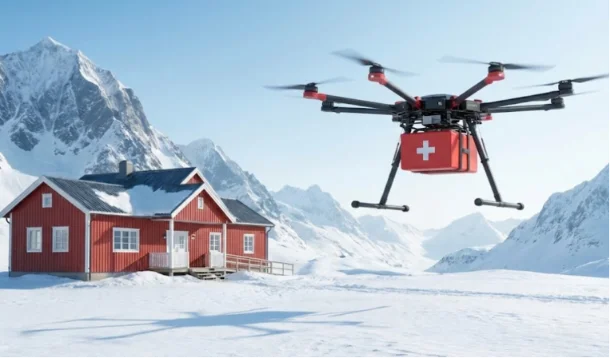
When the battery is lighter but holds more power, you get to use that saved weight for actual paying cargo. You can swap out a small blood sample box for a heavy refrigerated organ transport cooler. Transporting heavier, high-value goods is how delivery networks actually reach profitability.
Expanding the Delivery Radius
Having 50% more flight time entirely cures drone delivery range anxiety. Pilots no longer have to worry about a strong headwind draining the battery before the drone makes it back to the launch pad. You can confidently service distant rural farms and offshore oil rigs without setting up expensive charging stations right in the middle of nowhere.
Why Is Shengya Electronic the Industry Standard for High Energy Density Drone Batteries?
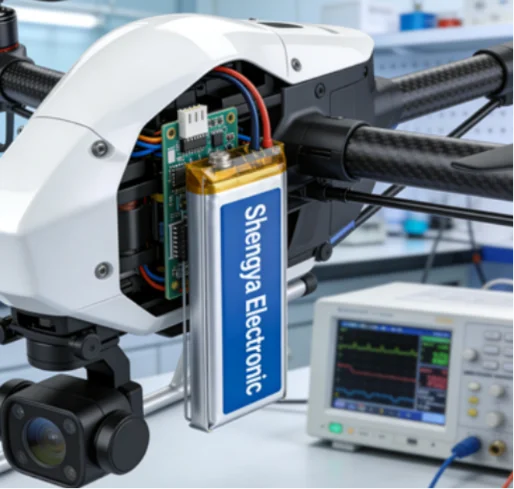
When sourcing high energy density drone batteries for commercial fleets, buying cheap unbranded cells usually ends in a fiery crash. Commercial aviation requires insane stability and high discharge rates. This is exactly where Shengya Electronic comes in. As a top-tier manufacturer, they engineer specific cells built exactly for the brutal power spikes of heavy multi-rotor aircraft. Their engineering teams focus deeply on real-world stability rather than just lab numbers. Integrating their flagship 275Wh/kg battery series means you no longer have to compromise. You can carry heavy medical coolers and still reach remote hospitals on a single charge. It is a massive operational upgrade. They maintain strict quality control so every single pack performs exactly the same in the freezing cold as it does in the summer heat. If you need to stop losing money on limited flight times, exploring the professional Shengya Electronic products lineup is simply the smartest engineering move you can make for your fleet.
Conclusion
Stop letting the payload vs. range dilemma cap your daily revenue. Hauling around old, heavy battery packs is a waste of thrust and a massive waste of money. Upgrading the chemical density of your power source fixes the core physical limits of the aircraft. Do the math on your current delivery routes and see how much farther a lighter, denser power source will take your business this year.
FAQ
Q1: What happens if a drone exceeds its maximum takeoff weight?
A: The motors and electronic speed controllers will overheat almost instantly. The drone will struggle to gain altitude, react very sluggishly to controls, and likely crash if a strong wind hits it.
Q2: Why do drone batteries drain faster in cold winter weather?
A: Cold temperatures slow down the chemical reactions inside lithium batteries. This causes a sudden drop in voltage. A battery that gives 30 minutes of flight in summer might only give 15 minutes in freezing snow.
Q3: Can an old drone use a new high energy density battery?
A: Yes, as long as the new battery matches the correct voltage and fits inside the battery tray. Because it weighs the same or less than the old battery, the drone handles it perfectly fine.
Q4: How do delivery companies calculate their maximum payload?
A: They take the manufacturer’s MTOW limit and subtract the weight of the empty drone, the battery, and the payload dropping mechanism. The leftover number is the absolute maximum package weight.
Q5: Are solid-state batteries ready for commercial drone delivery?
A: Not fully. While solid-state technology promises even higher density and safety, high-grade 350Wh/kg lithium setups currently offer the best reliable mix of high discharge rates and affordable mass production for commercial fleets.