Think about your industrial drone. Its true potential is locked inside the battery. Today, drones do vital jobs. They deliver packages, check crops, and inspect power lines. Picking the right battery is a big decision. It changes how well your operations run and how much money you make. This report makes things clear. It focuses on how you use your drone. The report looks at industrial UAV battery performance for 2025. It turns technical numbers into useful tips for your specific work.
Introduction: The Engine of Low-Altitude Economy
Industrial drones are now essential tools. They move goods, map land, and help in emergencies. This growth is part of the new low-altitude economy. It asks a lot from the power source. The battery decides how long you can fly, how much you can carry, and if your mission will work. The worldwide market for drone batteries is getting much bigger. Seeing the link between battery tech and your needs is more important than ever. This report explains that link. It gives you a plan to choose the best battery for your actual tasks.
Core Battery Technologies and 2025 Performance Benchmarks
First, know what battery tech can do today. The industry wants three things: more energy for longer flights, more power for tough moves, and total safety for trusty operations.
The Dominance and Evolution of Lithium Chemistry
Right now, lithium-polymer (LiPo) batteries are the main choice for many industrial drones. They offer a decent mix of energy and power. But everyone wants better. Big makers are pushing new lithium-ion recipes. They use high-nickel cathodes and silicon-based anodes to get better performance. The official Low-Altitude Aircraft Power Battery Technology Roadmap has clear goals. Batteries with 220-250 Wh/kg are becoming common in 2025. The aim is to pass 330-400 Wh/kg by 2030. This year, you will see more batteries in the 260-300 Wh/kg range. The very best test models go over 320 Wh/kg.
The Critical “Three-High” Requirements
Look for three key things in a battery. First is high energy density, measured in Watt-hours per kilogram (Wh/kg). This number tells you how long your drone can fly. Second is high power density, or the discharge rate (called C-rating). A high C-rating lets the battery give out huge bursts of power. You need this for heavy lifts, strong winds, or emergency moves. Some special batteries for hybrid systems can handle rates as high as 24C. Third is high safety and durability. Industrial drones work in tough spots. A battery must manage heat well, last for many cycles (often over 1,500), and have protection circuits to stop problems.
Analysis of Battery Demands Across Key Vertical Applications
Different jobs need different things from a battery. One type does not fit all. Using the wrong one wastes money and limits what you can do. Here is how needs change across major sectors.
Logistics and Transportation: Endurance and Cycle Life
Drone delivery needs good economics, in cities or remote areas. The cost-per-flight is key. Your top need here is cycle life. A battery that survives 2,000 deep cycles costs much less in the long run than one rated for 500. Fast charging is next. It allows quick turnarounds for all-day operations. Energy density matters for longer range. But lasting many cycles and getting back in the air fast often beat just a few more minutes of flight time.
Precision Agriculture and Mapping: The Need for Sustained Power
Spraying crops and mapping land need both time in the air and steady power. You want high energy density to cover big fields or large areas in one go. This cuts downtime. For spraying drones, a high and steady discharge rate is also key. It keeps the pump and nozzles working right through the flight. Batteries here must also handle dirt, moisture, sun, and heat.
Infrastructure Inspection and Public Safety: Reliability in Extreme Conditions
Inspecting power lines or wind turbines often means bad weather. Batteries for these jobs must work in a wide temperature range. You might need batteries for desert heat or mountain cold. Safety and reliability are not optional. Also, jobs with heavy gear like LiDAR or thermal cameras need batteries with high energy density. They must lift the payload and power both the drone and its tools. For emergency drones, the battery must hold charge well in storage and then give full power when needed.
A Practical Framework for Selecting Your UAV Battery
With these different needs, you can choose better. Don’t just look at price and size.
Step 1: Define Your Primary Mission Profile
Start with simple questions. How long and how far do you usually fly? What is the total weight of your drone plus its camera, sensor, or box? How many flights per day? Will you work in very hot or very cold places? The answers make a profile. This profile shows which battery specs matter most for you.
Step 2: Match Performance Specifications to Your Profile
Use your mission profile to rank battery specs. For long-range mapping, put energy density (Wh/kg) first. For heavy-lift delivery or agile inspection in wind, make discharge rate (C-rating) and power density your main criteria. For a busy delivery fleet, focus on cycle life and fast-charge capability. This way, you pay for what you really need.
Step 3: Evaluate Total Cost of Ownership and Support
The cheapest battery is rarely the best deal. Think about Total Cost of Ownership (TCO). Check the cycle life. A pricier battery that lasts twice as long can halve your cost per flight. Look at the warranty, the maker’s quality reputation, and if local help is available. A reliable battery with good support stops expensive delays.
Future Outlook: Emerging Technologies and Strategic Advice
The technology keeps moving. Watching the future helps you make choices that last.
The Trajectory Toward Next-Generation Solutions
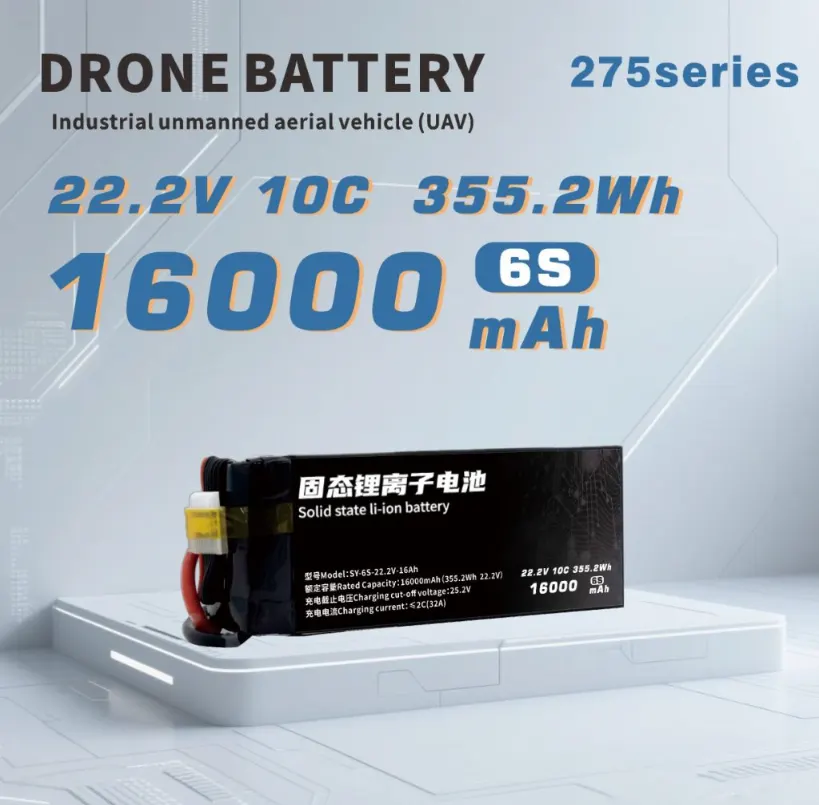
The clear path is toward solid-state and semi-solid-state batteries. They promise a big jump in energy density (maybe over 400 Wh/kg) and much better safety from a solid electrolyte. They are not standard for drones in 2025, but they are the next wave. Also, smart battery management systems (BMS) are getting smarter. They offer careful cell watching, health predictions, and data logs to get the most from your battery and plan maintenance.
Strategic Recommendations for Operators
First, talk to good drone battery suppliers. They should give you detailed performance data and test reports, not just ads. Second, think about your growth. If you plan to grow your fleet or take on harder missions, buying a slightly better battery platform now can save you from a full, costly upgrade later. Finally, take care of your batteries. Use good charging, storage, and retirement habits to make them last longer and stay safe.
Partnering with a Focused Technology Provider
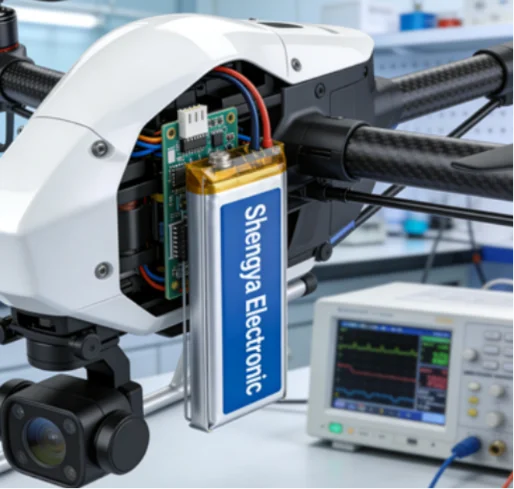
Figuring out all these specs and uses is hard. A good partner makes it easier. This is where a specialist maker like Taixing Shengya Electronic Technology Co., Ltd. (Shengya Electronic) helps a lot. Shengya Electronic is not a general electronics shop. It is a dedicated team focused on high-performance lithium battery solutions. Their whole work is about the tough needs of industrial and commercial jobs, where reliability and real-world performance are everything. By focusing here, Shengya learns deeply about battery chemistry, strong design, and management systems for the unique stresses of drone flight. For an operator, choosing a partner like this means getting solutions made for you and expert advice. It makes sure your battery money is spent right for your goals and builds something that lasts.
FAQ
Q1: What’s more important for a delivery drone, energy density or cycle life?
A: For a business doing deliveries, look at cycle life first (after basic safety). A battery with high cycle life (like 1500+ cycles) really lowers your cost for each flight over its life. High energy density is still good for more range, but the money you save from a long-lasting battery is often bigger for busy delivery work.
Q2: My inspection drone needs to fly in both summer heat and winter cold. What battery spec is crucial?
A: You need a battery that works in a wide range of temperatures. Check the maker’s specs for both discharge and charge temperature limits. More than that, look for batteries built for temperature stability, with a strong Battery Management System (BMS). A battery for mild weather might fail or lose lots of power in very hot or cold conditions.
Q3: Is it worth paying extra for a battery with a much higher C-rating?
A: It depends on your drone’s job. If you fly heavy loads, work in windy places often, or need to climb fast (like for emergencies), then a high C-rating is a key feature for safety and performance. For calm, steady flights like slow photography, you might not need the top rating and can spend less.
Q4: What does the future “solid-state” battery mean for my current operations?
A: For now, it means stay informed. Solid-state batteries should be much safer and hold more energy, but they are still new and will cost more. Your current plan should be to pick the best proven lithium tech for your needs today. But when you plan long-term for your fleet, think about suppliers who are working on next-gen tech. They might offer easier upgrades later.
Q5: How can I realistically estimate the flight time for my specific drone and payload?
A: Maker estimates are often for perfect conditions. Try this for a real-world guess: (Battery Capacity in Wh * 0.8) / (Average System Power Draw in Watts). Then multiply that by 60 to get minutes. The “0.8” keeps a safe 20% left. You need to know your drone’s average power use with your payload. You might need some test flights or check your old flight logs for this number.