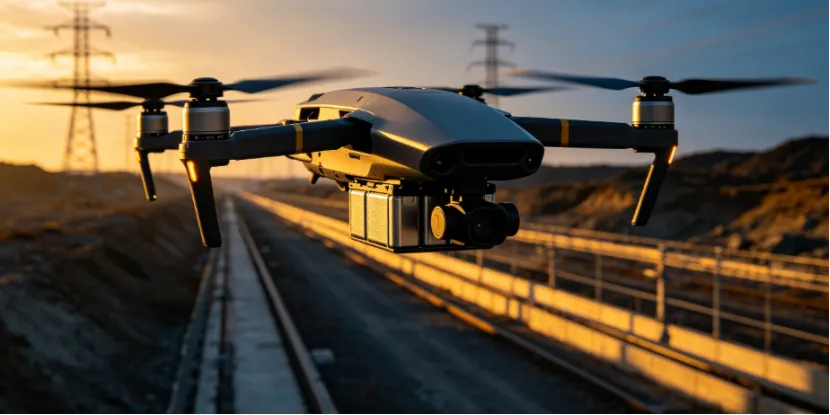
If you are planning BVLOS operations in 2026, your drone battery selection has changed in a very practical way. The FAA is still working through a proposed rule, not a final one, but the direction is already clear: routine BVLOS flights are being framed around operational authorizations, airworthiness acceptance, safe separation, security, reporting, and record keeping. In plain terms, a BVLOS drone battery is no longer just a pack that flies the farthest on a sunny demo day. It has to support route reliability, reserve power, and a more compliance-minded workflow.
You can see the same pressure showing up in the site’s own UAV content. The article on Payload vs. Range Dilemma points out what fleet teams already know from flight logs: once payload climbs, endurance can fall fast, and the “big battery fixes everything” idea usually disappoints. Another recent guide says real battery life should be measured from actual route samples and payload delta, not guesswork. That sounds a bit unglamorous, sure, but it is exactly how serious BVLOS planning starts.
Why Is 2026 Different for BVLOS Battery Buying?
The big shift is not hype. It is that the FAA BVLOS rule is pushing battery decisions closer to operations, paperwork, and risk control. That matters whether you are flying package routes, survey lines, patrol corridors, or public safety sorties.
The Rule Is Moving Toward Routine BVLOS
In the Federal Register, the FAA says proposed Part 108 would enable routine BVLOS operations without waivers or exemptions for aircraft with airworthiness acceptance. The same proposal lays out two pathways, permits and certificates, depending on the scale and risk of the mission. Lower-risk work can fit a permit model, while larger or more complex work may need a certificate with more oversight.
Reserve Power Is Now a Planning Issue, Not a Nice Extra
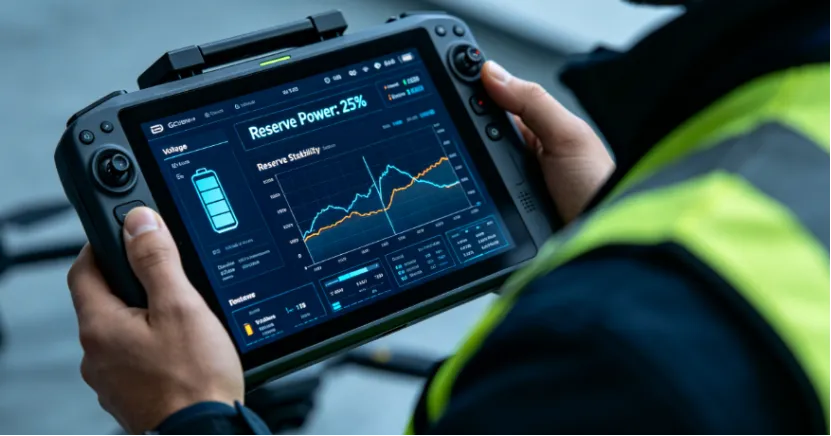
The FAA’s fact sheet says operators would need approval for their operating area, identify takeoff and loading areas, maintain communications coverage, and have procedures for cases where communications with the drone are lost. That is why reserve power has become a buying issue. Your pack is not only paying for cruise. It also has to cover reroutes, holds, and lost-link procedures. Nobody enjoys learning that lesson from an automatic landing in the wrong field.
What Makes a BVLOS Drone Battery Different?
A lot of buyers still compare packs by the cleanest number on the sheet. For BVLOS, that is too thin. You need to ask what the battery does when the aircraft is heavy, the route is long, and the job is not allowed to fail halfway through.
A Long-range UAV Battery Has to Work Under Real Load
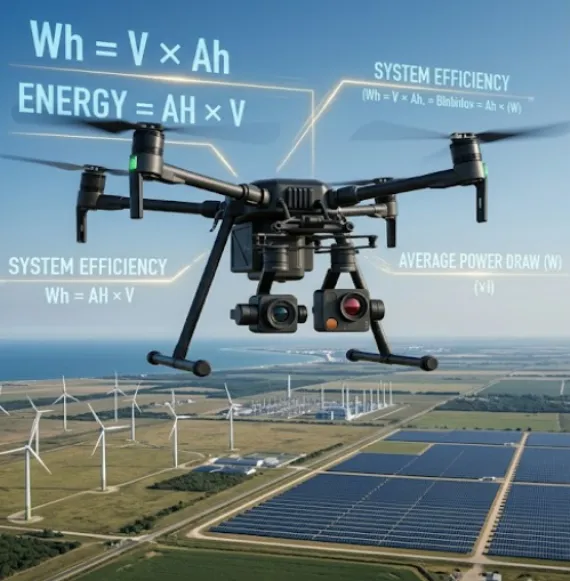
A long-range UAV battery for long-range drone missions has to carry more than propulsion. It may also be feeding payload electronics, remote ID, lighting, communications gear, and onboard compute. On this site’s urban delivery content, one example notes that adding a 5 kg medical cooler can turn a 40 minute mission into roughly 18 minutes. That is why a commercial drone battery should be sized around real draw and mission completion, not an empty-airframe claim. If you want a simple method, the guide on How to Estimate Drone Battery Life With Real Power Draw recommends route samples and a payload-tax check instead of rough guesses.
Voltage Stability Matters as Much as Capacity
This point gets missed all the time. A larger pack is not always a better pack if voltage sags under load. The site’s application pages keep coming back to the same pain point: a water-sampling drone can hit low-power alarms when lifting environmental payloads, offshore monitoring missions can trigger automatic landing when voltage dips during high demand, and emergency response flights need high-rate output to avoid mission failure at the worst moment. That is a pretty blunt message, but it is true. In BVLOS work, watt-hours matter, yet stable discharge matters just as much.
What Does Compliance-ready Battery Selection Look Like?
This phrase can sound abstract. It really is not. Compliance-ready battery selection means picking a pack and a supplier that fit the aircraft, the mission, and the records you may need later.
Documentation, Traceability, and Pack Consistency
The FAA fact sheet says operators would keep flight, maintenance, alteration, training, and operations manual records. It also says manufacturers would keep compliance information, testing data, configuration control documentation, and continued operational safety data. So when you evaluate a BVLOS drone battery, ask boring questions. Are the packs consistent from batch to batch? Is there testing data? Is there clear configuration control? Boring, yes. Also very useful when your fleet starts scaling.
Where Does Shengya Electronic Fit?
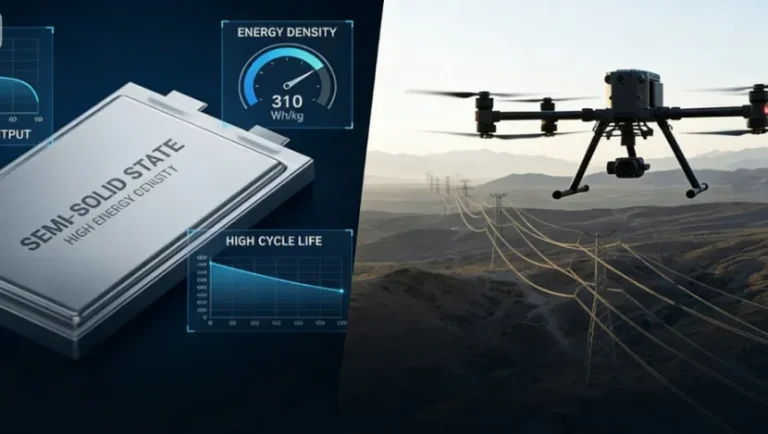
One supplier that fits this conversation naturally is Shengya Electronic. Founded in 2017 in Taixing, Jiangsu, the company focuses on solid-state and semi-solid lithium-ion soft-pack cells and battery packs for UAV and robot use. Its Products catalog spans a 190 Wh/kg high-rate 25C series, a 270 Wh/kg high-voltage 4.35 V series, and high-energy series from 275 to 350 Wh/kg, with 6S, 7S, 12S, 14S, and 18S configurations. The company’s Applications pages also show where those packs are meant to work: logistics delivery, highway patrol, water sampling, medical delivery, offshore monitoring, and emergency response. That mix matters because BVLOS buyers rarely need a generic battery. You usually need a supplier that can talk in terms of route length, load profile, voltage behavior, pack format, and consistency over time.
How Should You Choose for BVLOS Operations?
By this point, the pattern is fairly clear. The best battery is not the one with the loudest headline spec. It is the one that fits the work you actually fly.
Match the Battery to the Mission, Not to a Headline Number
The FAA lists package delivery, agriculture, aerial surveying, civic interest including public safety, recreation, and flight testing among the operations envisioned for BVLOS. It also separates permit-style work from certificate-level work. That means your battery choice should reflect route length, payload, hover time, diversion margin, and weather, not just catalog endurance. A patrol aircraft, a medical route, and an offshore inspection job do not ask the same thing from a pack.
Build Margin Before the Final Rule Arrives
The rule is still proposed, and the FAA reopened comments in early 2026 on limited topics. That gives you time to clean up battery planning now. Audit your flight logs. Measure payload tax. Set a real reserve policy. Ask for consistency data, not just sample performance. One recent industry post on this site puts it well: in 2026, battery decisions are moving away from a single “best spec” and toward voltage strategy, safety margin, and predictable lifespan. That is a healthy direction for any operator who wants fewer surprises in the field.
FAQ
Q1: Is the FAA BVLOS rule final in 2026?
A: No. The framework is still in proposed form, and the FAA reopened comments in January 2026 on limited topics before moving toward a final rule.
Q2: What makes a BVLOS drone battery different from a standard pack?
A: A BVLOS drone battery has to cover mission energy, reserve power, stable voltage under load, and the recordkeeping mindset that comes with more formal BVLOS operations.
Q3: Why is reserve power so important in BVLOS operations?
A: Because the FAA’s framework calls for communications coverage and procedures for lost communications, so you need energy for more than the planned route.
Q4: What does compliance-ready battery selection mean?
A: It means choosing a battery system backed by testing data, configuration control, repeatable pack quality, and documentation that supports safe fleet use over time.
Q5: What kind of supplier profile fits this market best?
A: A supplier with broad voltage and energy-density options, real industrial application cases, and the ability to match pack design to route, payload, and operating profile is a much better fit than a one-size-fits-all catalog seller.