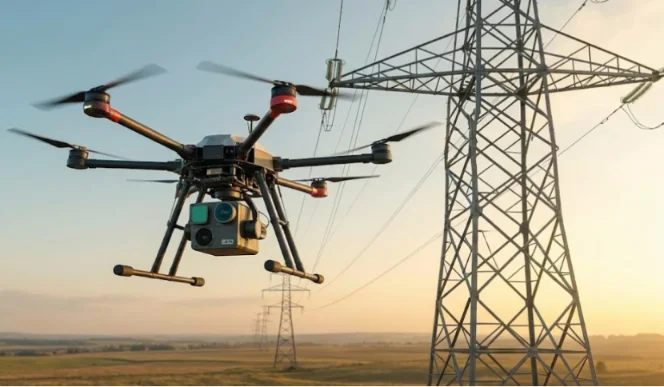
Executing a legal BVLOS drone inspection takes much more than just a strong radio link. You send a drone out 30 kilometers to look at electrical towers. Everything goes fine until the battery gauge hits 30%. Suddenly, standard LiPo packs force operators to land early just to maintain a strict legal UAV safety reserve. You end up driving a pickup truck into the mud to retrieve a drone that should have flown all the way back to base.
Why Do Standard Batteries Fail the BVLOS Safety Test?
Flying drones far away from the pilot changes the entire rulebook. You are no longer just fighting gravity. You are fighting strict aviation laws and totally unpredictable weather at the same time.
The Legal Mandate for UAV Safety Reserves
Aviation authorities do not mess around when it comes to flying over public land. They demand a strict UAV safety reserve before you even submit your flight plan. This means your aircraft must land with at least 20% to 30% battery remaining. If a drone drops to 5% mid-air, you lose your commercial license pretty fast. It is a massive headache for planning routes. You basically have to chop a third off your advertised flight time right out of the gate.
The Unpredictable Headwind Factor
Things get worse when the wind picks up. Sudden high-altitude winds blowing down a power line corridor cause massive power spikes. The drone tilts hard to fight the wind, and the motors draw double the amps. A standard battery dumps its voltage fast in these conditions. That legal buffer you carefully planned disappears in about three minutes flat.
How Does 310Wh/kg Technology Transform Power Line Drone Mapping?
Fixing this flight time problem requires looking inside the battery casing. You simply cannot strap bigger standard batteries onto a drone and expect it to fly further. The math stops working because heavy batteries waste their own power just trying to lift themselves.
Breaking the Weight Limit
By integrating a next-generation 310Wh/kg battery, engineers dramatically increase total flight time without messing up the aircraft’s physical balance. You basically get way more chemical energy stuffed into the exact same weight footprint. A 10kg battery pack that used to give you 40 minutes suddenly gives you over an hour, and the drone does not feel a single extra gram.
Heavy Payloads vs. Distance
This extra power changes the game for what you can actually carry. Operators can finally attach heavy dual-sensor LiDAR payloads for pristine power line drone mapping while still covering dozens of kilometers. Usually, carrying a heavy laser scanner means you fly for 15 minutes and land. Now, you can run a complete thermal and 3D scan on an entire grid section in one straight shot.
What Is the Economic Impact of True BVLOS Operations?
Getting the battery math right does a lot more than just keep regulators happy. It completely rewrites the budget sheet for large scale inspection contracts.
Slashing Operational Downtime
Every time a drone lands to swap a battery, you lose money. You pay a crew to sit in a truck, you pay for generator fuel to charge the empty packs, and the actual inspection job just stops. Cutting out those mandatory landing stops means field teams finish a two-day grid scan in a single afternoon. That is a real, measurable profit bump.
Achieving 100% Regulatory Confidence
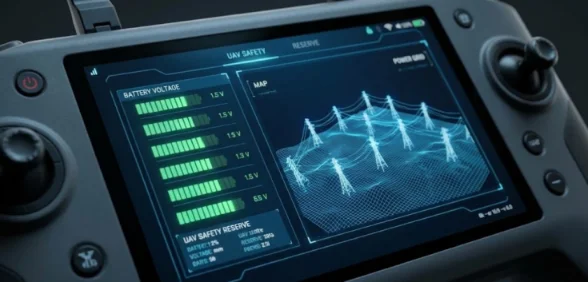
Reliable long-range drone batteries completely kill mid-air range anxiety. You look at the telemetry screen and know for a fact the drone will make it home. It proves to the aviation regulators that your BVLOS flights are totally safe. When your flight logs consistently show drones returning with 25% power left even on windy days, getting permits for the next big job gets a whole lot easier.
Why Is SHENGYA Electronic Your BVLOS Power Partner?
When your enterprise contracts depend on a legal BVLOS drone inspection, you need power sources built for harsh industrial realities. Buying cheap generic battery cells usually leads to swollen packs and ruined missions. This is exactly where SHENGYA Electronic steps in. They build industrial-grade power solutions specifically designed for the brutal discharge demands of heavy multi-rotors. Their engineering teams do not just chase high numbers in a clean lab. They build packs that survive freezing mountain winds and scorching summer heat.
Incorporating their high energy density technology into your enterprise drone fleet gives you that massive safety buffer regulators demand. You get the raw energy required to carry heavy LiDAR scanners over long stretches of power lines without constantly watching the voltage alarm. Furthermore, checking out the broader SHENGYA Electronic products lineup shows a real commitment to cell stability and long lifecycle performance. You spend less money replacing dead packs every season and more time completing paid flight routes.
Conclusion and Next Steps
Stop letting outdated battery chemistry dictate your power line drone mapping schedules. Having to land a drone every twenty minutes is a waste of a good flying day. Do the math on your current flight routes. Figure out how much money you burn just driving crews out to remote battery swap locations. Upgrading your fleet’s power source fixes the core problem instantly.
FAQ
Q1: Why do regulators require a safety reserve for drones?
A: Aviation authorities need to know a drone has enough extra power to handle sudden strong winds, avoid other aircraft, or safely reach an emergency landing zone if the primary home point gets blocked.
Q2: How does cold weather affect BVLOS drone flights?
A: Cold air slows down the chemical reaction inside lithium cells. This causes a sudden drop in available voltage. A battery might show 50% capacity but still fail to deliver enough amps to keep a heavy drone in the air.
Q3: Can a drone carry both LiDAR and optical cameras on the same flight?
A: Yes, but dual payloads are extremely heavy. Only drones equipped with high-density power systems can lift both sensors simultaneously while still flying far enough to make the inspection profitable.
Q4: What happens if a drone loses radio contact during a BVLOS mission?
A: The flight controller automatically triggers a return-to-home protocol. The drone will turn around and fly back to its launch point using GPS, which is exactly why it needs a large battery reserve.
Q5: Do higher energy density batteries weigh more than standard ones?
A: No. The whole point of a higher Wh/kg rating is getting more electrical energy stuffed into the exact same physical weight. A 310Wh/kg pack weighs the same as a much weaker standard pack.