The LiDAR Operator’s Dilemma
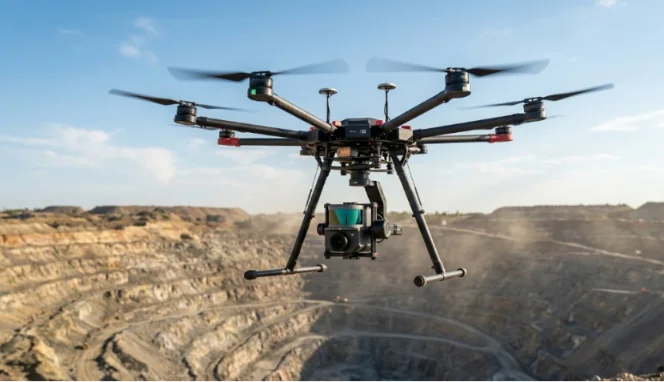
You bolt a massive laser scanner to your multicopter. The whole rig looks incredibly professional sitting on the launch pad. But then you check the telemetry screen. The estimated flight time just tanked from a comfortable 45 minutes to barely 15. This is the daily reality of aerial surveying. A proper heavy-lift LiDAR drone battery dictates whether a mapping job turns a profit or becomes a complete scheduling nightmare. UAV LiDAR power supply systems face brutal demands in the field. Fixing this power bottleneck takes a lot more than just strapping a bigger battery pack onto the carbon fiber frame.
The Physics of Payload vs. Power in Aerial Mapping
Every single gram matters when gravity fights against your multirotor. Adding a heavy payload to your setup does not just bump up power consumption by a tiny, predictable fraction. The drone motors have to spin significantly faster just to hold a basic hover.
Overcoming the Dead Weight Trap
The drone flight time with payload drops off a cliff because the relationship between physical weight and electrical energy draw is non-linear. When your aircraft gets close to the drone maximum takeoff weight, things get very sketchy. You might think adding a physically larger battery will solve the problem. More capacity means more flight time, right? Not exactly. More battery volume means more dead weight. You end up burning the extra electrical capacity just to lift the heavy battery itself. You get stuck in a losing battle with physics.
Why Standard LiPo Fails Heavy Payload Drone Operations?
Standard lithium-polymer packs have powered the hobby and commercial market for many years. They work perfectly fine for shooting real estate videos or light inspections. But heavy payload drone operations expose their chemical limits extremely fast.
When you run a power-hungry multi-sensor setup, the sudden demand for amperage causes voltage sag in drones. You push the throttle to climb over a tree line, and the battery voltage drops dangerously low. This triggers false low-battery warnings. Sometimes it even forces an emergency return-to-home right in the middle of a flight path. Your data collection gets interrupted. In worst-case scenarios, a sudden voltage drop messes up the RTK fix or corrupts the sensor logs completely. You have to fly the whole mission again.
The High-Energy Density Advantage Explained
This is exactly where advanced battery chemistry steps in to fix the physics problem. A high-energy density drone battery packs a lot more active material into the exact same physical space. The critical metric you need to look at here is watt-hours per kilogram.
Standard packs might sit around 160 Wh/kg. Modern cells push well past 250 Wh/kg. This simple number shift means you keep your takeoff weight exactly the same, but you suddenly have 30% more actual capacity in the tank.
If you look at the industrial market, specialized manufacturers are pushing these power boundaries hard. Shengya Electronic stands out as a serious player in this exact space. They focus strictly on high-performance power solutions for commercial UAVs rather than toy-grade hobby packs. Shengya Electronic builds solid-state and advanced lithium batteries designed specifically for heavy industrial rigs. When your operation relies on keeping a massive $50k payload in the sky, you need power cells that resist physical swelling and maintain highly stable discharge rates under extreme load. Their engineering approach tackles these surveying pain points head-on. You can see how they design power systems for heavy lifters by visiting the Shengya Electronic homepage. Their equipment is built around maximizing that crucial Wh/kg ratio without adding extra bulk to your aircraft.
ROI Breakdown: Less Swapping, More Mapping
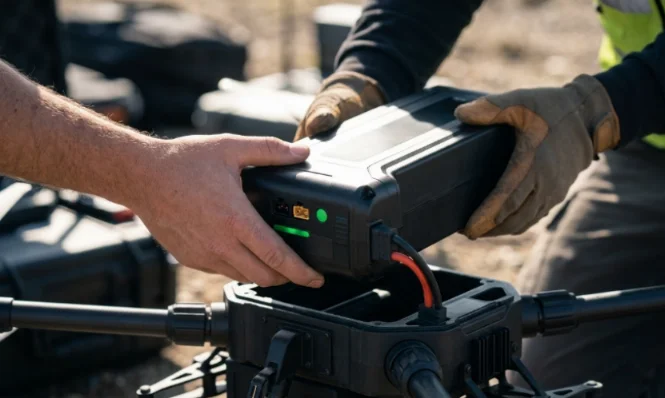
Think about your actual workflow on a large mining site or a pipeline survey. When the low battery alarm starts beeping, the drone has to fly all the way back to the launch zone. You land, power down the payload, swap the heavy-lift LiDAR drone battery, boot everything back up, wait for a new IMU alignment, and finally launch again.
That entire cycle eats up huge chunks of daylight. By using cells with higher energy density, you extend heavy-lift drone flight time by just 10 or 15 extra minutes per flight. That seemingly small jump is absolutely massive for your profit margins. It directly helps you reduce drone battery swaps out in the field. You finish a 500-acre site in three flights instead of five. The on-site labor costs go down, and the physical wear and tear on your drone connectors drops significantly.
Choosing the Right Heavy-Lift LiDAR Drone Battery?
Capacity on a spec sheet is one thing. Real-world performance on a job site is another. When you are ready to upgrade your fleet’s power system, you need to look very closely at the discharge curves. The battery cells need to handle the initial amperage spike of a heavy rig taking off from the dirt.
You also absolutely need a smart BMS for drones. A good battery management system tracks individual cell health and balances them perfectly. It gives your flight controller accurate data so you never have to guess when the battery will actually die mid-air. Temperature stability is also a big deal. If you map in freezing mountain air or extreme desert heat, the internal chemistry needs to hold up. For specific battery configurations that match different multirotor setups, you can browse dedicated drone battery products that handle these extreme industrial demands. Choosing a proper drone battery for aerial mapping keeps your expensive laser equipment safe and your data perfectly intact.
FAQ
Q1: Why does LiDAR drain drone batteries so quickly?
A: LiDAR units are heavy and require constant electrical power to spin the internal laser and process point cloud data. The added physical weight forces the drone’s motors to work much harder to maintain lift.
Q2: What does Wh/kg actually mean for my drone?
A: It stands for watt-hours per kilogram. It measures exactly how much energy a battery holds compared to its physical weight. Higher numbers mean longer flights without adding extra dead weight to the aircraft.
Q3: Can a higher capacity battery reduce my flight time?
A: Yes. If the new battery is significantly heavier than your old one, the drone burns more energy just lifting the battery itself. The extra weight can completely cancel out the extra power.
Q4: How does voltage sag affect aerial surveying?
A: Sudden voltage drops can trigger emergency landings or cause the flight controller to act unpredictably. It can also disrupt power to sensitive surveying sensors and ruin a whole day of data collection.
Q5: Is it worth upgrading to high-energy density cells?
A: For commercial operations, absolutely. They cut down on the number of battery swaps needed per day. This saves hours of field labor and speeds up large mapping projects significantly.