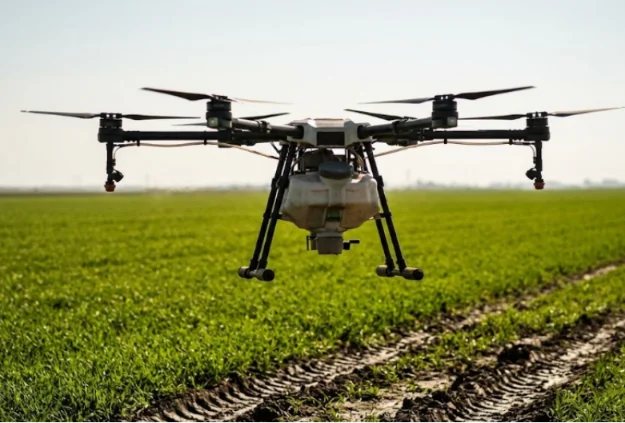
The agricultural drone industry moves fast. You see heavier equipment and more intensive schedules every peak season. Picking the right power source is literally the biggest variable in your profit margins. Right now, there is a lot of talk about new battery tech. People want longer life and better safety. Comparing a solid-state drone battery vs LiPo on a spec sheet is easy, but in a muddy field in July, the math gets complicated. This breakdown looks at real operational costs and field reliability to calculate true agricultural drone ROI for your business.
What Drives the Technology Battle: LiPo vs. Semi-Solid vs. Solid-State?
Batteries look like simple black boxes, but the chemistry inside dictates how many acres you can spray before lunch. The industry basically splits into two camps right now. You have the mature liquid-based systems and the newer solid variants trying to take over the market.
The Proven Workhorse: High-Discharge LiPo Batteries
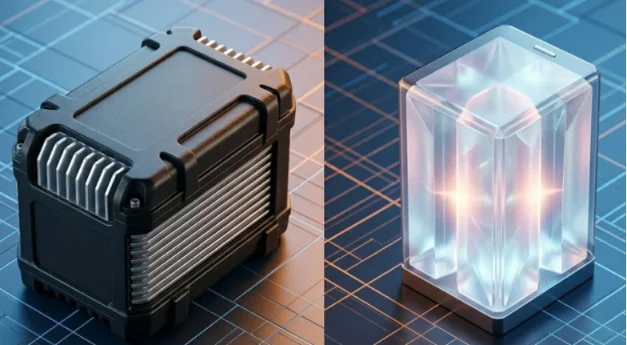
Traditional Lithium Polymer setups run the show. They use liquid electrolytes that allow power to move very fast. This is exactly what you need when pushing large rotors to lift heavy chemical tanks. High-discharge LiPo batteries can dump massive amounts of current instantly. If you run a standard 14S drone battery, you know it delivers the raw punch required to keep a fully loaded rig stable in a crosswind.
The Emerging Challenger: Semi-Solid and Solid-State Technology
Newer designs replace that liquid with a solid or gel material. The main pitch is safety and weight. Without the volatile liquid, they are much harder to set on fire. They also pack more energy into a smaller space theoretically. A lot of farm owners read about this and immediately want to switch, thinking it solves all battery degradation problems overnight.
Performance in the Field: What Do Contract Sprayers Actually Care About?
Spec sheets printed in a clean lab do not mean much when you are standing next to a mixing truck in 95-degree heat. Field performance is all about keeping the drone in the air and minimizing downtime between tank refills.
Payload Capacity and Flight Time
You make money by moving liquid, plain and simple. Heavy payload drones dominate the market today. When you strap a 30L-40L pesticide tank to your rig, every single gram matters. Solid-state packs are slightly lighter. That might buy you an extra minute or two of flight time per swap. However, you have to ask if that tiny bump in air time actually lets you finish an extra pass, or if it just means landing with 25% reserve instead of 20%.
Thermal Stability During Summer Peak Season
August heat is brutal on electronics. Good drone battery thermal management is not optional when the ambient temperature hits 100 degrees. Solid-state cells naturally resist overheating better than liquid ones. But premium LiPo packs fight back with thick aluminum housings and smart air-cooling channels built right into the shell. You can pull a LiPo pack off a hot drone, and if the physical cooling design is solid, it cools down fast enough for the next cycle.
Fast Charging Needs
When the bugs are eating the crop, you cannot wait two hours for a charge. You need to blast power back into the packs. The current fast charging infrastructure on most farms is built specifically for LiPo chemistry. LiPo takes a fast, aggressive charge very well if the cooling is decent. Solid-state and semi-solid cells currently struggle to accept ultra-fast charges without internal damage. You might have a battery that lasts forever, but if it takes twice as long to charge, your spray rate drops completely.
How Do You Calculate True ROI in Agricultural Operations?
Let us get down to the actual money. Buying power for a spray fleet is a major capital expense. You cannot just look at the sticker price. You have to calculate what that pack costs you every single time it lifts off the ground.
Initial Investment vs. Cycle Life
Solid-state packs cost a fortune right now. Manufacturers claim a massive overall cycle life, sometimes saying they will do over a thousand flights. A good LiPo costs significantly less upfront. It might only give you 500 to 600 cycles if you treat it decently. The trap is assuming you will actually reach 1000 cycles without dropping the solid-state battery in a puddle or crashing the drone first.
Cost Per Flight and Cost Per Acre
The only number that matters is your cost per flight. If a solid-state pack costs three times as much as a LiPo, it literally has to last three times as long just to break even. Most spray teams find that buying three fresh LiPo packs over a season yields a much lower cost per acre than praying one expensive solid-state pack survives the whole year.
Crash Replacement Costs
Drones hit power lines. They clip tree branches. Gravity always wins eventually. When a rig goes down hard, the battery usually takes the brunt of the impact. Writing off a damaged standard LiPo hurts the wallet. Writing off a brand new solid-state pack can wipe out the profit from that entire contract.
Why Premium High-Capacity LiPo Is the Smart Choice for Now
The hype around new chemistry is real, but the technology is just not commercially ready for the daily abuse of crop spraying. Right now, smart money stays with refined, high-end LiPo gear.
If you run high-demand sprayers, you need raw power and reliability without the crazy experimental price tag. This is where established manufacturers step in. For instance, Shengya Electronic has spent years building power solutions specifically for harsh industrial and agricultural environments. They do not just throw cells in a box. They build rugged packs designed to survive field abuse. Their flagship agricultural pack features a true 51.1V 25Ah capacity, giving your heavy sprayers the exact voltage and sustained amperage required to empty a full tank without voltage sag. Because Shengya Electronic focuses on refining proven LiPo chemistry with advanced battery management systems, you get the high discharge rates your pumps need, wrapped in a housing that actually dissipates heat. It is a practical, field-tested solution that keeps your cost per acre incredibly low compared to unproven solid-state alternatives.
FAQ
Q1: Can solid-state batteries charge faster than LiPo?
A: Currently, no. Traditional LiPo chemistry accepts fast field charging much better. Solid-state technology is improving, but it generally requires slower charge rates to prevent degradation.
Q2: Is a semi-solid battery worth the extra cost for crop spraying?
A: For most daily operations, the math does not add up yet. The high initial price tag rarely translates to a low enough cost per flight to justify the switch from premium LiPo.
Q3: How do you protect LiPo drone batteries in summer heat?
A: Keep them in the shade when not in use. Never charge a battery that is still hot from a flight. Use chargers with active cooling fans and invest in batteries with good physical heat dissipation designs.
Q4: Will a lighter battery significantly increase my acres sprayed per hour?
A: Not drastically. A lighter pack might give you a minute or two of extra flight time, but your spray rate is usually limited by the size of your liquid tank and the speed of your refill operations.
Q5: How many cycles should a good agricultural LiPo battery last?
A: With proper care, avoiding deep discharges, and keeping temperatures in check, a high-quality agricultural LiPo pack should deliver between 400 and 600 usable cycles before the flight time drops noticeably.