
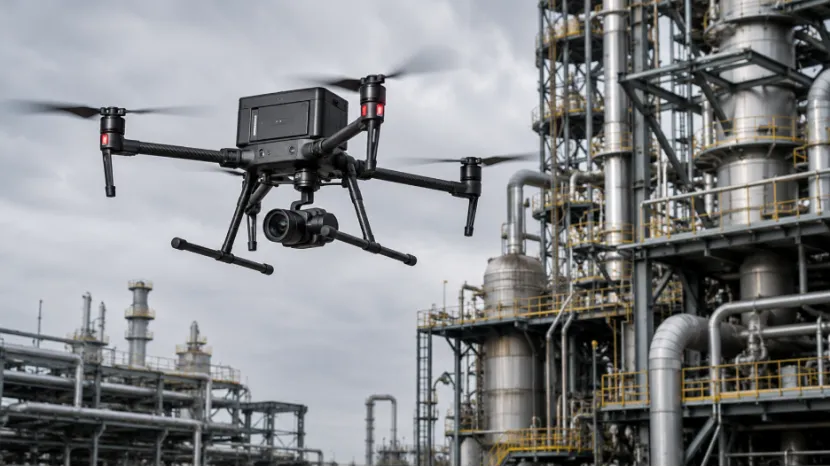
For enterprise UAV operators, drone battery safety isn’t just a minor technical spec. It dictates fleet uptime and insurance rates. Route approval, warehouse storage, and client trust heavily rely on it. A fire incident during urban delivery or refinery inspection can cause far more than aircraft loss. It may interrupt operations and introduce significant liability risks.
Conventional liquid-electrolyte batteries are more prone to ignition from punctures, hard crashes, or severe overcharging. Heat causes identical failures. This explains why solid-state UAV battery fire risk is now a top priority. Teams running urban drone logistics, UAM, BVLOS inspection, and high-value industrial inspection drones actively demand these safer alternatives.
Why Does Liquid-Electrolyte Chemistry Raise UAV Battery Fire Risk?
A UAV battery pack operates under demanding conditions. Takeoff needs high current. Hover keeps the load steady. Fast charging adds heat. Repeated cycles age the cells. In this environment, a flammable liquid electrolyte can become a risk path when the pack is damaged or poorly controlled.
Thermal Runaway and Pack-Level Escalation
Thermal runaway in drone batteries is not only a single-cell problem. One failed cell can heat nearby cells, release gas, and spread damage through the pack. For enterprise drone battery safety, this matters because fleets run many cycles, often with short charging windows.
A strong battery management system can track voltage, current, temperature, and state of health. Still, chemistry matters. Lower thermal runaway risk gives operators a better safety margin before software and emergency procedures even enter the picture.
Puncture, Collision, and Overcharge Exposure
Hard landings, propeller failure, rough transport, and charging mistakes are not rare in field operations. A delivery drone may land on a rooftop pad. An inspection drone may work near steel structures, towers, or mining sites. If the pack is punctured or crushed, liquid electrolyte leakage can increase UAV battery fire risk.
Overcharge creates another concern. High-use fleets may run several packs per aircraft each day. When charger settings, aging cells, or storage habits are poorly managed, drone battery compliance becomes harder to defend.
How Does Solid-State Technology Lower Drone Battery Fire Risk?
A solid-state drone battery replaces liquid or gel electrolyte with solid electrolyte material. This change addresses one of the primary causes of battery fire incidents the flammable liquid electrolyte. It does not eliminate all risks, but it can make failure less severe and easier to manage at fleet level.
Removing Flammable Liquid Electrolyte
The core safety value is simple. Reduced flammable material within the cell lowers the likelihood of leakage-induced fire hazards after damage. This is the main reason solid-state UAV battery fire risk is drawing attention from UAM operators, logistics companies, and industrial UAV buyers.
Solid electrolyte materials also support better mechanical stability. After vibration, deformation, or hard landing, the absence of free liquid can reduce secondary hazards. That matters when emergency teams need to recover the aircraft near a warehouse, a power substation, or a public road.
Supporting Higher Thermal Stability
Enterprise drones often need high power during takeoff, climb, and payload-heavy flight. A safer cell structure can help manage temperature rise under these loads. For drone battery safety, thermal stability is not a marketing phrase. It is the difference between a controlled mission and an incident report.
Where Does Shengya Electronic Fit in Enterprise UAV Battery Safety?
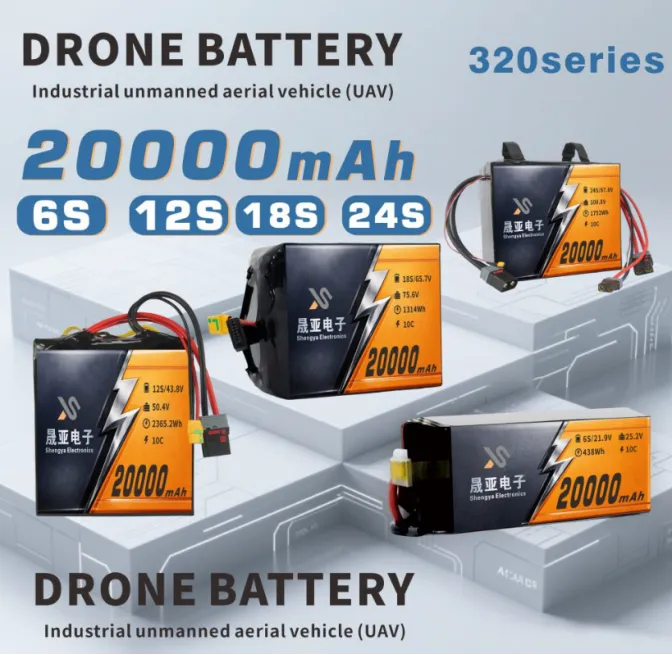
Shengya Electronic is a focused UAV battery manufacturer in Taixing, Jiangsu Province, working on semi-solid and solid-state lithium-ion soft pack cells and finished battery packs. Its product range covers high energy density series from 190Wh/kg high-rate packs to 275Wh/kg, 310Wh/kg, 330Wh/kg, 340Wh/kg, and 350Wh/kg options, with common platforms such as 6S, 7S, 12S, 14S, and 18S.
For enterprise buyers, performance evaluation extends beyond capacity alone.Shengya Electronic supports battery pack customization, including cell combination, cable outlet position, plug type, structure, and BMS options. Its products serve logistics delivery, agriculture, industrial inspection, urban air mobility, and rescue applications. In a safety-led procurement process, this makes it a relevant option for teams that need a battery matched to the aircraft, mission profile, and compliance file, not just a catalog part.
What Should Enterprise Buyers Review Before Fleet Adoption?
Battery selection should link chemistry, pack design, charging method, aircraft space, and mission risk. A solid-state drone battery can reduce fire exposure, but the complete pack still needs evidence. While documentation may seem routine, it helps prevent disputes and ensures compliance later.
Abuse Testing Data
Abuse testing data should cover puncture, crush, overcharge, short circuit, vibration, thermal exposure, and drop conditions. Shengya Electronic notes that some models pass needle puncture tests without fire or explosion, which is directly relevant to evaluating solid-state UAV battery fire risk.
Pack Design and BMS Protection
A professional battery management system remains central to drone fleet risk management. Buyers should check voltage monitoring, temperature sensing, current control, fault logging, balancing, and communication needs. Shengya Electronic states that BMS options can be customized, including communication protocols such as CAN, RS485, and UART on request.
Application Fit
A battery for industrial inspection does not face the same duty cycle as one used in urban delivery. Inspection drones may fly near power lines, oil and gas pipelines, wind turbines, solar farms, towers, and mining sites. UAM and delivery systems face stricter public-risk review. In each case, drone battery safety should be judged by mission load, charging rhythm, operating temperature, and the cost of failure.
Why Does Solid-State Technology Matter for UAM and Insurance Review?
UAM battery safety has a direct link with public acceptance. Flights near people, buildings, roads, and landing pads leave little tolerance for battery fire. Insurance teams may also review chemistry, incident history, charging SOPs, maintenance logs, storage plans, and telemetry records.
For BVLOS drone battery safety, the battery must behave predictably when the aircraft is beyond direct visual reach. Solid-state technology can form one part of a stronger risk profile. It supports safer fleet planning, but it still needs proper pack engineering, testing, documentation, and disciplined daily handling.
FAQ
Q1: What Makes a Solid-State Drone Battery Safer?
A solid-state drone battery removes combustible liquids. This reduces the risk of leakage and improves thermal stability, thereby lowering UAV battery fire risk during sudden crashes, hard impacts, or severe overcharges.
Q2: Does Solid-State Technology Remove All Battery Fire Risk?
Not entirely. It significantly reduces key combustion triggers. However, overall drone battery safety still relies heavily on cell build quality. Pack housing, BMS safeguards, smart chargers, and routine field upkeep remain just as vital.
Q3: Why Is Drone Battery Safety Important for UAM?
UAM aircraft frequently fly above crowded streets and tight zones. Therefore, proven UAM battery safety is completely mandatory. It helps operators secure strict flight permits, builds public trust, and ensures total drone battery compliance.
Q4: Which Applications Benefit Most From Solid-State UAV Batteries?
City parcel drops, medical runs, and remote BVLOS sweeps benefit significantly from this technology. Firefighting support and high-value industrial inspection drones also benefit greatly. In these specific sectors, operators simply cannot afford accidental blazes.
Q5: What Should Buyers Check Before Choosing a Solid-State UAV Battery?
Shoppers must verify the exact electrolyte makeup, true energy density, and expected lifespan. Always request raw abuse stats. Finally, double-check BMS options, charging rules, physical fit, supply tracing, and mandatory UAV battery insurance requirements.


