
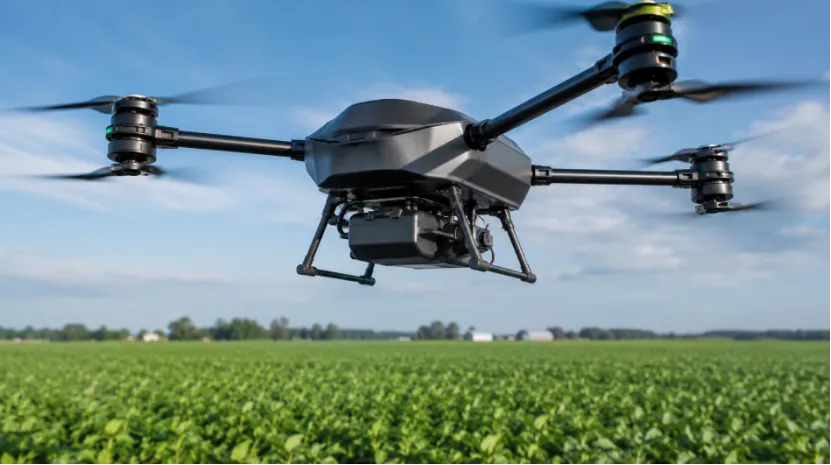
For specialized industrial UAV platforms, battery selection is rarely a simple catalog choice. A standard pack may have enough capacity on paper, but it may not fit the battery bay, match the voltage platform, or support the current draw of a non-standard motor system.That is where custom UAV battery packs become an integral part of the aircraft design.
For inspection drones, logistics UAVs, agricultural aircraft, rescue drones, and UAM platforms, the battery is far more than just a power source. It affects payload room, center of gravity, flight time, heat behavior, wiring path, service access, and batch production. OEM drone battery solutions help bring these details together before the airframe is locked, which saves redesign work later. That small early check can prevent a surprisingly expensive mold change.
Why Do Specialized Industrial Drones Need Custom UAV Battery Packs?
Specialized drones often have compact fuselages, irregular cabins, waterproof shells, fixed payload positions, and strict weight limits. In these cases, custom UAV battery packs allow the power system to follow the aircraft layout, rather than forcing the aircraft to accept a generic battery shape.
Non-Standard Airframes and Cabin Constraints
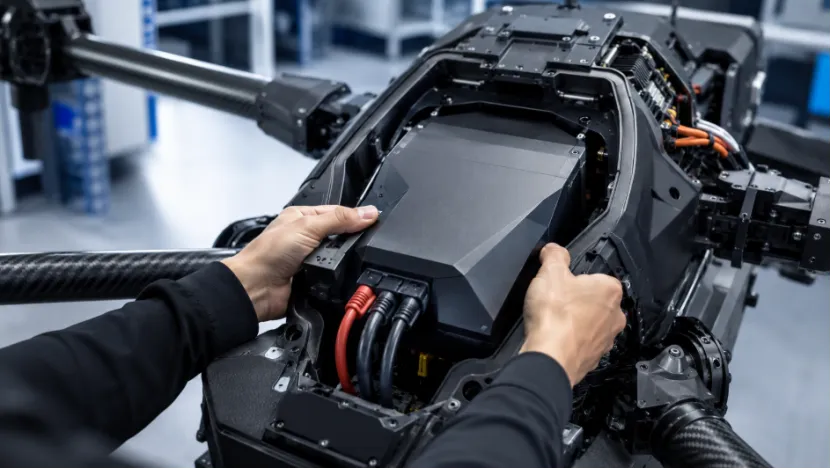
Non-standard drone battery design is common when a UAV has a narrow body, side-loading structure, arm-mounted space, or a payload bay that leaves only a small battery compartment. A custom drone battery pack can adjust the pack shape, cable outlet position, connector direction, and mounting method.
UAV battery structural design also affects balance. If the battery sits too far forward or backward, the flight controller has to work harder. That can reduce efficiency, shorten flight time, and create stability issues during takeoff or braking.
Voltage and Capacity Matching
Drone battery voltage matching is critical when motors, ESCs, and payload modules do not follow a common setup. A wrong voltage platform can cause poor motor efficiency, high heat, or early voltage sag. UAV battery capacity matching is also not just about picking the biggest mAh number. A larger battery pack increases weight and may deliver only marginal improvements in actual flight time.
OEM drone battery solutions should review series and parallel design, discharge rate, peak current, continuous current, charger plan, and reserve power. This reflects real engineering requirements rather than theoretical calculations.
What Should OEM Drone Battery Solutions Include?
A complete battery project should cover cell selection, pack layout, BMS logic, connector design, thermal review, sample testing, and manufacturing consistency. For serious UAV projects, these parts need to work as one system.
Cell Selection Based on Mission Load
UAV battery cell selection should start with the mission. A heavy agricultural drone may need high-rate output. A mapping drone may need a high energy density UAV battery. A delivery aircraft may need stable cycles and lighter weight. A rescue drone needs reliability when field conditions are not friendly.
Shengya Electronic offers custom UAV battery packs across multiple product series, including 190Wh/kg high rate 25C, 270Wh/kg high voltage 4.35V, 275Wh/kg, 310Wh/kg, 330Wh/kg, 340Wh/kg, and 350Wh/kg options. Common platforms include 6S, 7S, 12S, 14S, and 18S, with capacities that can serve compact UAVs as well as large industrial platforms.
BMS and Pack Protection
Drone battery BMS customization is important when the aircraft needs voltage monitoring, temperature sensing, current control, balancing, fault logging, and communication with the charger or flight system. A battery management system may also need custom communication protocols, such as CAN, RS485, or UART, depending on the UAV platform.
For OEM ODM drone battery projects, the BMS should match the aircraft’s actual control logic. A good pack should not only fly well during one sample test. It should behave predictably after repeated charge and discharge cycles.
Structure, Cables, and Thermal Design
Drone battery pack design includes more than cell stacking. Cable direction, plug type, casing, insulation, anti-vibration support, and heat path all matter. Drone battery thermal management becomes more important when the aircraft carries heavy payloads, flies in hot weather, or runs frequent missions.
For an industrial drone battery pack, small details become field problems. A cable that bends too sharply may fail early. A connector that sits too close to the shell may slow battery replacement. A pack that traps heat may pass a short test but struggle during a full workday.
Where Can Shengya Electronic Support Specialized UAV Projects?
Shengya Electronic focuses on semi-solid and solid-state lithium-ion soft pack cells and UAV battery packs for industrial applications. Its product range serves logistics delivery, agricultural crop protection, industrial inspection, urban air mobility, and firefighting and rescue. The key advantage lies in its wide range of configurable options: high-rate packs for strong current demand, high energy density UAV battery options for endurance, and semi-solid UAV battery or solid-state UAV battery paths for projects that need better safety margins.
As a custom UAV battery manufacturer, Shengya Electronic is relevant when your project needs OEM drone battery solutions around cell choice, voltage platform, connector layout, BMS options, and pack structure. It is particularly suitable for UAV platforms where standard batteries cannot be used without redesigning the airframe.
What Should You Prepare Before Starting UAV Battery Customization?
A smooth UAV battery customization project usually begins with clear aircraft data. This includes available battery space, target weight, motor and ESC model, voltage platform, peak current, continuous current, target flight time, payload weight, operating temperature, cable outlet needs, connector type, charging method, and expected production volume.
With this information, UAV battery prototyping can test real fit, current output, heat rise, balance, and flight behavior. After sample approval, drone battery pack manufacturing should focus on cell consistency, welding quality, insulation checks, BMS programming, aging tests, and batch traceability.
FAQ
Q1: Why Do Specialized Drones Need Custom UAV Battery Packs?
Custom UAV battery packs are vital when standard units miss battery bay specs. Furthermore, they resolve mismatched voltage platforms or motor current needs, hitting exact payload weight and center-of-gravity targets.
Q2: What Are OEM Drone Battery Solutions?
OEM drone battery solutions deliver complete engineering. They cover UAV battery cell selection, series-parallel planning, and drone battery BMS customization. Providers also manage UAV battery structural design, connector layout, and necessary testing.
Q3: How Does Cell Selection Affect UAV Performance?
UAV battery cell selection directly alters overall weight and flight time. It shifts voltage stability and heat generation. Ultimately, it dictates cycle life, discharge rate, and the true safety margin of an industrial drone battery pack.
Q4: Why Is BMS Customization Important?
Drone battery BMS customization lets the battery management system properly defend the pack. It actively blocks dangerous overcharge, over-discharge, and overcurrent. It also stops overheating, sudden short circuits, and cell imbalance.
Q5: What Information Should Buyers Prepare for a Custom Project?
Buyers should provide detailed aircraft specifications, including available battery space, voltage platform, and precise motor data. Payload weight and target flight time are also crucial. Lastly, specify connector needs, BMS communication needs, operating environment, and expected production volume.


