
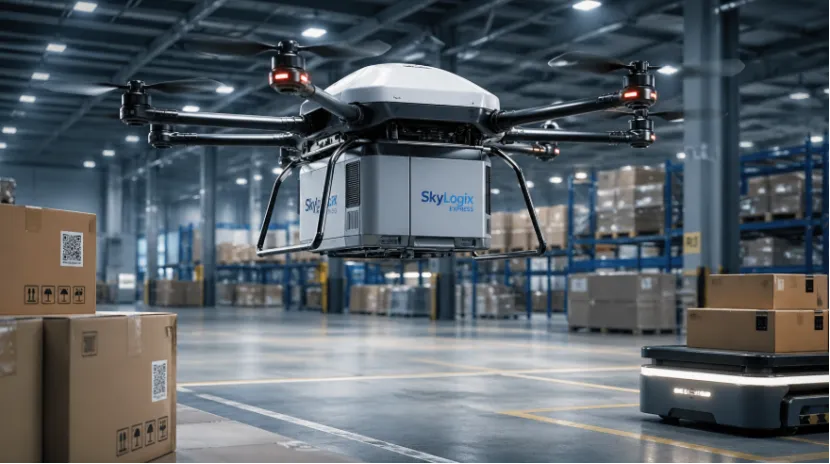
The aviation industry is changing fast. You see it moving away from small quadcopters toward heavy-lift delivery drones and passenger-carrying eVTOLs. But scaling up advanced air mobility batteries hits a massive wall called the payload-range paradox. Standard batteries add too much dead weight.
This limits how far your drones fly and how much cargo they actually carry. To make long-range commercial drone networks profitable, you have to transition to power sources that offer a strict balance of high energy density and high discharge rates.
What Is the Battery Bottleneck in Advanced Air Mobility (AAM)?
Scaling operations sounds great, but physics gets in the way. You cannot just strap a bigger battery onto a drone and expect it to fly further. The math simply fails.
The Limitations of Standard LiPo
Traditional lithium-polymer packs fail when pushed into commercial drone delivery power networks. When you add standard batteries to increase flight time, the motors work much harder just to lift that bulk.
The Weight Penalty
This creates a frustrating cycle. Adding battery weight requires more power to lift, eating up the extra capacity you just added. Your drones end up doing back-to-back flights with heavy packs, leaving little room for actual paying cargo. You need a better solution to break this cycle.
Why Is Crossing the 190 Wh/kg Energy Density Threshold Crucial?
Shedding battery weight directly translates to carrying heavier medical supplies or industrial parts. Every gram counts when you are trying to increase the profit per flight.
Defining Energy Density in Aviation
In real-world aviation terms, Wh/kg dictates your flight time versus payload weight. A higher number means more energy packed into a lighter space. This makes a high energy density UAV battery completely critical for commercial success.
Why 190 Wh/kg Is a Game-Changer
Reaching a specific threshold like 190 Wh/kg energy density fundamentally shifts what your heavy-lift drones and eVTOLs can achieve. It lets you extend the operational radius without bolting on extra bulk.
Finding the right manufacturing partner is a massive headache for engineers. You want a factory that actually builds aviation-grade power systems, not just generic electronics. This is where Shengya Electronic steps in as a serious player in the market. They are a dedicated manufacturer specializing in high-performance power solutions for industrial and commercial UAVs.
Instead of splitting their focus across consumer gadgets, their engineering teams dive deep into solving the exact payload and discharge problems holding back modern aviation. When you look at their 190 Wh/kg and 25C High-Rate series, you see a product line built specifically for heavy lifting and continuous commercial routes. They know that a slight voltage drop can ruin an entire mapping mission or drop an expensive agricultural payload. Their facilities run strict quality control checks to match the specific demands of heavy-lift platforms.
Working with an expert source like Shengya Electronic gives you access to consistent cell quality and technical support that genuinely grasps the harsh demands of advanced air mobility. Building a reliable fleet starts with sourcing from a factory that treats battery chemistry with the seriousness of actual aviation. It beats dealing with random suppliers who do not know the difference between a toy drone and a commercial eVTOL.
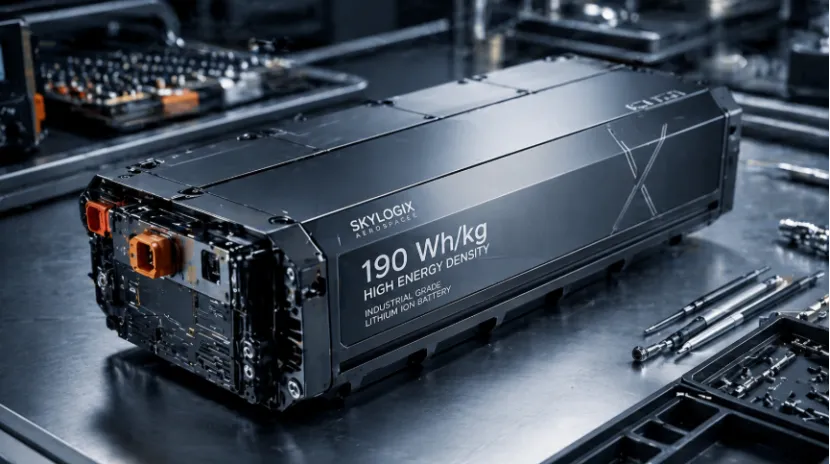
Why Is High-Rate Discharge (25C) Mandatory for VTOL Challenges?
Getting a heavy machine off the ground takes a ridiculous amount of instant power. Your batteries have to deliver massive bursts of energy to beat gravity during vertical takeoff and landing.
The Power Spikes of Takeoff and Hovering
It takes a lot to keep a heavy rig stable. When a drone faces sudden wind gusts, the motors demand instant power spikes. If the battery sags, the drone drops. A 25C high-rate discharge pack handles this easily.
It provides stable, instant voltage without sagging under extreme aerodynamic loads. This kind of eVTOL battery technology keeps the power delivery completely smooth, preventing mid-flight voltage drops that lead to expensive crashes. Honestly, watching a $20,000 rig fall out of the sky because of a cheap battery is a nightmare you want to avoid.
How Does Thermal Management Keep Continuous Operations Safe?
High currents generate extreme internal heat. If you run commercial operations back-to-back, that heat builds up fast and poses a serious threat.
The Heat Dilemma
You must prevent thermal runaway in commercial drones at all costs. Battery fires destroy expensive equipment and ruin your company’s reputation overnight. Proper UAV battery thermal management relies on advanced cell chemistry and smart structural design to push heat out quickly. Staying cool under pressure also helps you meet strict aviation safety guidelines set by the FAA or EASA. A cool battery is a safe battery.
How Does Battery Lifecycle Affect the Economics of Fleet Management?
Replacing batteries constantly drains your operational budget. You have to look at the total lifespan of your power packs to figure out the real cost of running a fleet.
The Hidden Cost of Degradation
Standard batteries lose capacity incredibly fast when subjected to rapid charging and heavy discharging. The economics of drone fleet management fall apart if you have to throw away expensive industrial batteries after just 50 cycles.
Advanced, high-density architectures maintain their cell health over hundreds of flights. This significantly lowers the total cost of ownership for your entire delivery network.
FAQ
Q1: What exactly does 25C mean for a drone battery?
A: It refers to the discharge rate. A 25C rating means the battery can safely discharge 25 times its capacity in a single continuous burst, giving motors the huge power spikes needed for heavy lifting.
Q2: Why can’t you just use standard car EV batteries in drones?
A: Car batteries prioritize overall capacity over weight. Drone batteries must be incredibly light while discharging power much faster to fight gravity, requiring a totally different cell chemistry.
Q3: How does extreme cold affect advanced mobility batteries?
A: Freezing temperatures slow down the chemical reactions inside the cells, causing severe voltage drops. Specialized aviation batteries use specific electrolytes to keep power flowing even in winter conditions.
Q4: Is it safe to fast-charge high energy density batteries between flights?
A: Yes, if they are designed for it. High-end aviation batteries incorporate strict thermal management systems to handle the heat generated during rapid charging without degrading the cells.
Q5: How many flight cycles should a commercial drone battery last?
A: A standard pack might die after 100 cycles, but advanced industrial batteries are built to maintain at least 80% of their original capacity well past 300 to 500 heavy-use cycles.


