
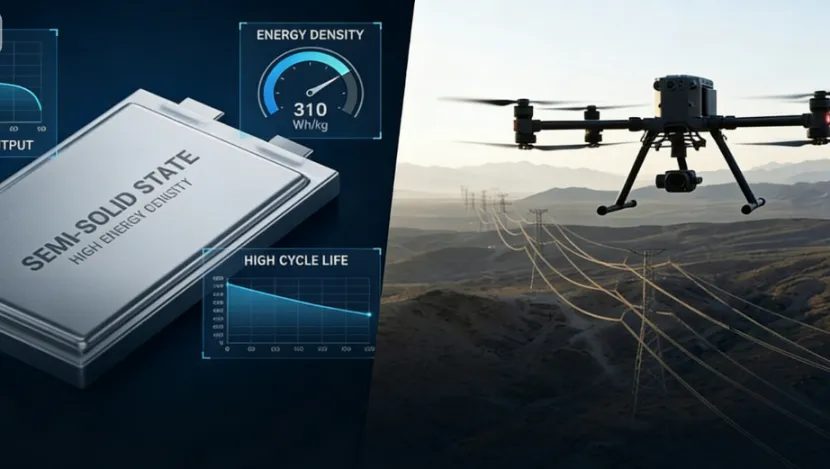
BVLOS drone operations are moving from limited trials into repeatable commercial work, and that changes how you look at power. Recent public data shows two things at once: commercial small drone activity keeps rising, and approvals for BVLOS flights have climbed sharply in just a few years. That sounds like regulation talk, but the real issue on the ground is simpler. A weak bvlos drone battery can turn a good route plan into a short day, a delayed inspection, or a drone that comes home with no comfortable margin left. If you are planning farther flights, heavier payloads, or more daily sorties, a long endurance drone battery stops being a nice spec on paper and becomes part of mission control.
Why Is BVLOS Growing So Fast?
The market is changing because buyers want more coverage from fewer launch points. That is true in line inspection, remote delivery, crop work, and emergency response. People do not really care about the acronym during procurement. They care about whether the aircraft can finish the job without eating too much labor or downtime.
More Distance Changes the Economics
With BVLOS drone operations, one aircraft can cover a larger corridor or route in a single mission. That cuts some field labor, but it also raises the cost of every battery mistake. A five-minute loss in usable endurance may look small in a demo. In actual field work, it can mean one less tower checked, one less parcel dropped, or one more forced landing point to plan around.
Reserve Power Stops Being a Nice Extra
This is where battery life for BVLOS drones becomes more than a marketing phrase. You need reserve power for wind, rerouting, loiter time, sensor load, and the occasional awkward return path. A bvlos drone battery is judged less by headline capacity and more by how much usable energy it still gives you when the mission gets messy. And missions do get messy.
Why Does Battery Performance Matter More in BVLOS?
In short-range flights, battery limits are annoying. In BVLOS, they shape the mission itself. You are not just buying minutes. You are buying confidence, margin, and repeatability across a whole fleet.
Flight Time Alone Can Mislead You
A long endurance drone battery is not simply a pack with a large number on the label. It has to hold up under real load, at real temperature, and late in the route when voltage sag starts to matter. That is why operators now ask tougher questions about commercial drone battery performance, not just nominal capacity. A drone that lands with 6 percent left may look fine on a slide. In field work, that is where the argument starts.
Stable Output Under Load Is Non-Negotiable
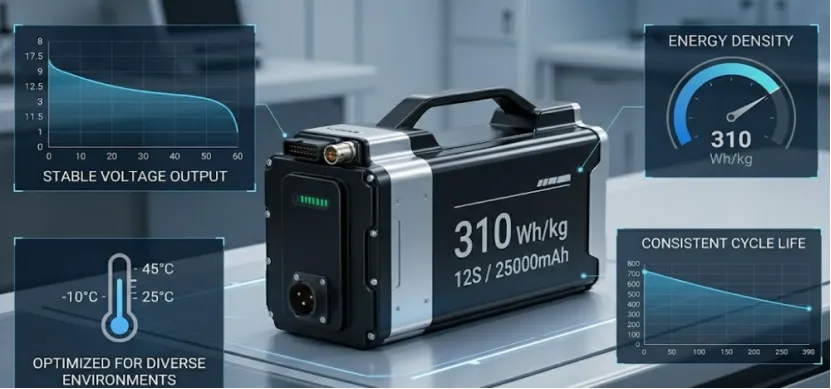
The best battery for long-range drones keeps output steady when payload changes, cameras stay on, or communications gear keeps drawing power. This matters even more in inspection fleets, where thermal cameras, zoom payloads, and mapping sensors can shift power demand during one flight. A pack that looks efficient in calm conditions may feel very different once the aircraft is actually doing the job.
What Kind of Battery Supplier Fits the Next Stage of BVLOS?
As the market matures, you are not only choosing a pack. You are choosing how much flexibility and consistency you can get over months of field use. That is where supplier structure starts to matter.
From an industry view, Shengya Electronic fits this stage of the market quite well. The company positions itself around semi-solid and solid-state lithium-ion batteries for drones and industrial equipment, and its product map shows several high-energy-density classes. In the high energy density UAV battery space, the 310 Wh/kg line alone covers 20,000mAh to 70,000mAh, with 6S, 7S, 12S, 14S, and 18S options. Its application pages also point to logistics delivery, crop protection, industrial inspection, and urban air mobility. That range matters because a growing fleet rarely needs one universal pack. You usually need the right voltage, capacity, safety margin, and pack behavior for the aircraft you actually fly. The company’s technical content also highlights cell matching, process control, voltage stability, and consistent cycle behavior, which are exactly the boring details that become very important once flights become routine.
A Flexible Voltage and Capacity Range Helps More Than One Hero Spec
A strong BVLOS UAV battery program should let you match pack architecture to the job. A drone battery for inspections may value lighter weight and stable voltage under sensor load. A drone delivery battery may put more weight on payload tolerance, repeat route performance, and turnaround speed. That is why broad 6S, 12S, 14S, and 18S coverage is useful. It gives you room to fit the aircraft instead of forcing the aircraft to fit the battery.
Process Control and Lifecycle Value Still Win
There is also the cost side. Drone battery cycle life matters because fleet math catches up with you fast. A cheaper pack that fades early can cost more per mission than a better one. The same goes for a fast charging drone battery. Faster turnaround is not just convenient. It can reduce the number of spare packs you need to keep on site.
How Should You Evaluate a BVLOS UAV Battery?
When you compare options, it helps to think in mission blocks, not in isolated specs. That makes your shortlist cleaner and usually saves time later.
Match the Pack to the Mission
For mapping and inspection, start with the real payload, average route length, weather window, and landing reserve. That will tell you more than a catalog headline. For corridor work, a battery for long-range drones should give steady voltage deep into the mission. For delivery, you may care more about pack swapping and charging rhythm than absolute top-end endurance.
Build Your Buyer Journey With the Right Internal Paths
A practical content path on your site can also help buyers move faster. Start with the high energy density 310 Wh/kg series page for product matching. Then guide readers to a technical article on semi-solid versus LiPo and Li-ion drone batteries. After that, send them to a battery FAQ page for shipping, pack design, and customization questions. It is simple, but it works because it follows the way buyers actually compare risk.
FAQ
Q1: What is the best bvlos drone battery for commercial missions?
A: The best bvlos drone battery is the one that matches your aircraft, payload, reserve target, and daily sortie pattern. A big capacity number alone is not enough.
Q2: How do you choose a long endurance drone battery?
A: Start with usable mission time, not brochure time. Check payload effect, late-flight voltage behavior, landing reserve, and charging rhythm. That is how a long endurance drone battery earns its value.
Q3: Why does commercial drone battery performance matter so much in BVLOS?
A: Because longer routes leave less room for voltage drop, weak reserve, or unstable output. In BVLOS work, commercial drone battery performance directly affects mission completion and fleet confidence.
Q4: What should you look for in a drone battery for inspections?
A: A good drone battery for inspections should stay stable under sensor load, hold enough reserve for rerouting, and keep performance consistent across repeated field cycles.
Q5: What shipping point do buyers often miss with lithium UAV batteries?
A: Many buyers focus on flight time and forget transport rules. Current air-transport guidance still centers on UN 38.3 testing, accessible test summaries, and added controls for some shipments above 30 percent state of charge. That part is not glamorous, but it can slow a project down if ignored.


