
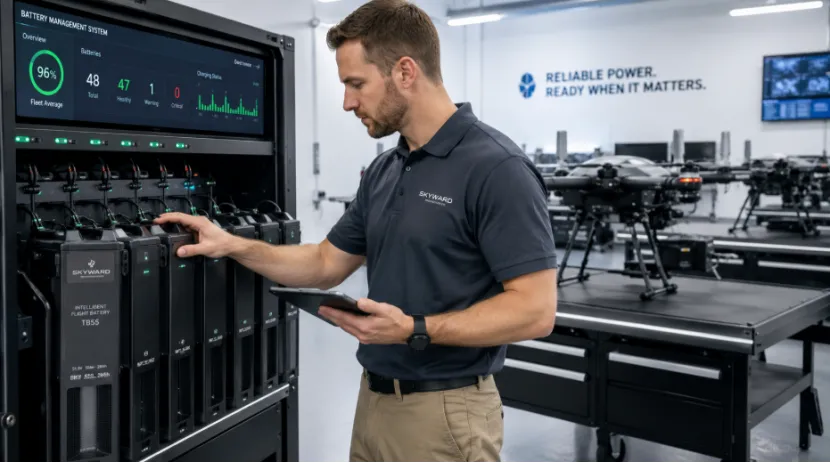
For drone fleet operators, battery cost is not just a line on a purchase order. It shows up in route planning, flight delays, maintenance calls, spare stock, customer complaints and sometimes a lost working day. Long-cycle UAV batteries help you lower UAV battery replacement cost because they stay useful through more flights, not just more lab cycles.
If you run drone rental companies, inspection drone teams, agriculture drone teams or logistics drone operators, the real target is simple: reduce drone fleet battery cost without making missions less safe.
Why Do Fleet Operators Care More About Battery TCO?
Fleet teams do not buy batteries for display shelves. They buy working power. A cheaper pack may look good at first, but if it fades fast, causes voltage warnings, or needs early retirement, the total cost of ownership becomes higher than expected.
Cost per Flight Matters More Than Unit Price
A useful way to read drone battery TCO is:
Battery Cost per Flight = Battery Purchase Cost ÷ Usable Flight Cycles
This is not fancy accounting. It is what your team feels every week. A long cycle life drone battery with higher usable flight cycles can reduce replacement frequency, even if the first price is not the lowest. For rental drone battery programs, that matters a lot because customers may fly hard, charge fast and bring equipment back half-warm. Real life is not always gentle.
Downtime Cost Is Easy To Miss
Downtime cost includes idle pilots, delayed inspections, unfinished spray jobs, late deliveries and extra charging shifts. For UAV fleet operators, battery replacement cost is only part of the bill. Battery maintenance cost and lost mission time often hurt more.
What Causes UAV Battery Replacement Costs To Rise?
Most UAV batteries do not fail all at once. They get weaker little by little. Flight time drops. Heat rises. Alerts come earlier. Your crew starts saying, “This pack feels tired.” That is often the start of higher fleet operating cost.
Capacity Fade Cuts Real Flight Time
Capacity fade reduces the energy a pack can deliver after repeated charge and discharge. At first, it may only mean 2 or 3 minutes less flight time. For inspection UAV battery use, that may force a route split.
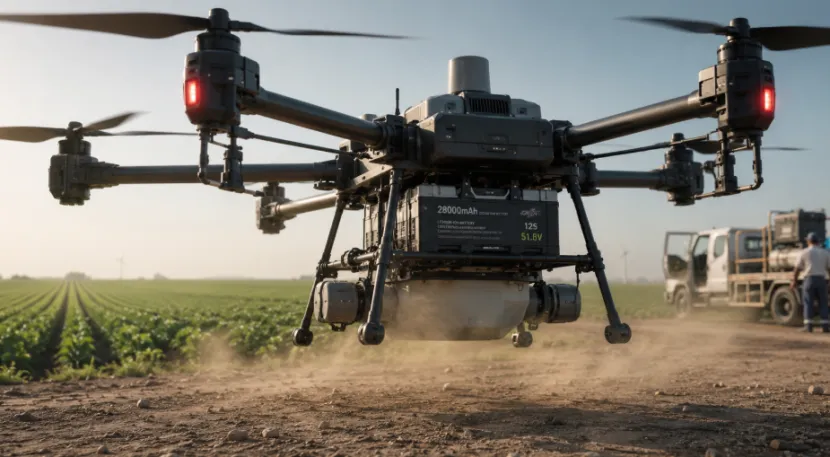
For agricultural UAV battery work, it may mean more landings during a busy spray window. For logistics UAV battery routes, it can disturb delivery timing.
Internal Resistance Creates Voltage Sag
As internal resistance rises, the battery may still show charge, but it cannot handle load as well. During takeoff, climbing, wind correction or heavy payload work, voltage sag may trigger alarms. Stable discharge performance is therefore a working requirement, not a small detail in a datasheet.
How Do Long-Cycle UAV Batteries Lower Operating Costs?
Long-cycle UAV batteries lower costs by staying dependable across more daily use. The point is not only “more cycles.” The point is more paid missions before replacement.
Longer Cycle Life Reduces Replacement Frequency
Shengya Electronic states that its solid-state lithium-ion soft pack battery cells and battery packs are designed with high energy density, high safety and long cycle life, including 800–1000 charge/discharge cycles on its company page.
The same page lists common battery pack combinations such as 6S, 7S, 12S, 13S and 14S. For a high-frequency fleet, 800–1000 charge/discharge cycles can help stretch replacement intervals and make annual battery budgets easier to plan.
Better Capacity Retention Supports Stable Scheduling
Battery capacity retention affects whether your route plan still works after months of use. A long cycle life drone battery should keep flight planning predictable for longer. That helps inspection drone teams finish route sections, agriculture drone teams cover more work blocks, and logistics drone operators keep fewer emergency spare packs on standby.
Which Fleet Types Benefit Most From Long-Cycle UAV Batteries?
Different fleets lose money in different ways. The battery answer should match the job.
Drone Rental Companies
Drone rental companies need battery packs that survive mixed user habits. Some users fly carefully. Some do not. Long-cycle UAV batteries, battery health tracking and battery cycle records help you decide which packs are still fit for rental and which should move to lower-risk work.
Inspection, Agriculture and Logistics Teams
Inspection drone teams need stable route coverage. Agriculture drone teams need fast field turnover and strong load support. Logistics drone operators care about cost per mission and on-time delivery. In all three cases, real-world battery life decides how often your crew has to stop, swap, wait or replace.
What Should You Check Before Buying an Industrial UAV Battery?
A smart purchase starts with the mission. Do not choose only by capacity. Check cycle life test conditions, discharge rate, charging temperature control, plug type, pack size and battery storage condition.
Energy Density, Pack Options and Customization
The Shengya Electronic product range includes high energy density UAV battery series such as 190Wh/kg high-rate 25C, 270Wh/kg high-voltage 4.35V, 275Wh/kg, 310Wh/kg, 320Wh/kg, 330Wh/kg, 340Wh/kg and 350Wh/kg options, with listed capacities across 10000mAh to 78000mAh and multiple 6S, 7S, 12S, 14S and 18S configurations. That gives you room to match a high-capacity drone battery or lightweight UAV battery pack to payload, bay size and flight rhythm.
Supplier Capability Matters
Shengya Electronic is a drone battery manufacturer focused on high-energy solid-state lithium-ion battery cells and UAV battery packs. Founded in 2017 in Taixing City, Jiangsu Province, the company works with high energy density products, custom UAV battery pack needs and pack formats for drones, unmanned aerial vehicles, robots and special application fields.
Its company information also mentions customization for combination method, wire position, plug type and logo, which is useful when one fleet platform needs clean installation instead of a messy cable workaround.
How Should You Manage Charging and Maintenance To Extend Battery Life?
Even good batteries age faster when handled badly. A clear charging strategy and discharge strategy can save real money.
Avoid Deep Discharge and Heat Stress
Deep discharge should not become a normal habit. Leave enough return and landing reserve. Also, do not rush hot packs straight into fast charging. Fast charging discipline is boring, yes, but it protects cells. Charging temperature control is especially important for agriculture work in summer and logistics routes with repeated same-day cycles.
Use a Battery Rotation System
Give every pack a number. Track battery cycle records. Build a battery maintenance plan around cycle count, flight time, swelling checks, connector condition and battery retirement threshold. Older packs can serve lower-risk training or short local tasks. Do not send tired packs on heavy payload or long-distance missions.
How Can Bulk Purchasing Reduce UAV Battery Costs?
Bulk UAV battery supply helps when it reduces complexity. If every aircraft uses random packs, your charging area becomes a headache. Spare parts, plugs, labels and staff training all get messier.
Standardization Makes Fleet Work Easier
A bulk drone battery purchase should favor batch consistency, clear specs and long-term battery supply. Fleet-level battery supply also helps you plan replacement cycles by season. For a growing operator, choosing a battery pack supplier for UAV fleets is not only about today’s order. It is about whether the same custom drone battery solution can still be supplied when the fleet doubles.
FAQ
Q1: What Are Long-Cycle UAV Batteries?
A: Long-cycle UAV batteries are packs designed to keep useful capacity and stable output through many charge and discharge cycles. For fleet use, usable flight cycles matter more than a lab number alone.
Q2: How Do Long-Cycle UAV Batteries Reduce Replacement Costs?
A: They reduce replacement frequency, improve cost per flight and help lower battery replacement cost across daily operations.
Q3: What Causes Capacity Fade in UAV Batteries?
A: Capacity fade often comes from deep discharge, heat, poor storage, high current loads and weak charging strategy.
Q4: Are Long-Cycle Batteries Useful for Agriculture Drone Teams?
A: Yes. Agriculture drone teams run heavy payloads and frequent cycles. A long cycle life drone battery can lower replacement pressure during busy seasons.
Q5: What Should Fleet Operators Ask Before Bulk Ordering?
A: Ask the UAV battery supplier about drone battery cycle life, test conditions, battery health tracking, custom UAV battery pack options, bulk UAV battery supply and after-sales support.


