
A UAV may take off normally from a warm vehicle, cross a cold field, and trigger a low-voltage warning during a rapid climb—even when the battery indicator still shows 40%.That mismatch is common in cold-weather UAV operations because the display estimates stored energy, while the motors demand power right now. Good planning starts with the voltage available under load. The resting bench voltage provides a secondary measurement.
The practical goal is to control voltage sag in UAV operations through cell selection, pack design, temperature control, and conservative flight rules. You can review suitable drone and UAV battery categories while defining those requirements.

Why Does UAV Battery Voltage Sag Increase in Cold Weather?
Voltage sag is the temporary fall from open-circuit voltage when current rises. A simple working model is loaded voltage equals open-circuit voltage minus current multiplied by resistance. In winter, both current demand and battery internal resistance can rise at the same moment.
Cold Cells Move Ions More Slowly
Low temperature slows electrochemical reactions and makes the electrolyte more viscous. Ion transport drops, so a low-temperature lithium battery delivers less usable power during a throttle spike. Its apparent capacity may also fall temporarily. Some of that capacity returns after the pack warms, but a UAV cannot wait for recovery during a climb.
High Current Exposes Weak Cells
Propeller acceleration, wind compensation, payload lifting, and rapid ascent can produce high current peaks. An aged cell or an imbalanced series group can dip first and push the pack below the controller cutoff. This UAV battery voltage drop may cause a return-to-home command, reduced thrust, or an emergency landing.
A weak connector adds resistance too. Small things count here, including a contact that looked clean in the workshop.
Which Battery Features Control Cold-Weather Voltage Drop?
The best battery for sub-zero UAV operations matches the aircraft’s peak current, mission duration, allowable mass, and actual launch temperature. A sub-zero UAV battery needs test data at the temperatures and discharge rates your aircraft will face. Nameplate capacity gives one part of that answer.
Cells Need Verified Cold Discharge Data
A high-discharge-rate battery uses cells built to supply strong current with a smaller voltage drop. Compare discharge curves at 0 degrees C, minus 10 degrees C, and your lowest planned temperature. Check the voltage near the end of discharge as well as the initial peak. Low-temperature discharge performance should be stated at a specific C-rate, cutoff voltage, and cell temperature.
Pack Architecture Shares the Load
Parallel cell groups divide current across cells and can reduce per-cell stress. The gain carries a weight cost, so pack sizing must follow the aircraft power curve. Low-resistance busbars, short conductors, sound welds, and clean connectors also protect loaded voltage. Every UAV battery pack should use matched cells because one weak series group governs the usable pack limit.
Thermal and Electronic Controls Work Together
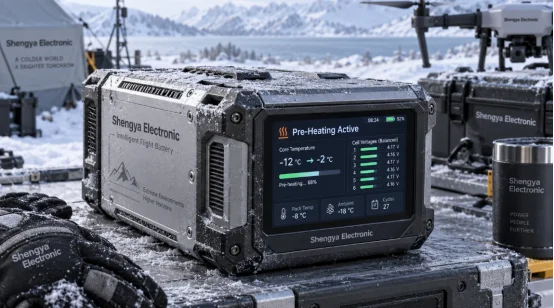
A battery preheating system can bring cells into their approved operating range before takeoff. Insulation then slows heat loss. Battery thermal management needs temperature sensors near representative cells, since surface temperature can lag behind the core. A UAV battery management system should track cell voltage, pack current, and temperature, then set cold-specific warning and cutoff thresholds from flight-test data.
How Should You Prepare and Fly in Sub-Zero Conditions?
If you are deciding how to prevent voltage sag in drone batteries, treat the mission as a temperature-controlled process. Storage, transport, takeoff, and the return leg all affect the same battery.
Prepare the Pack Before Launch
Store packs at the maker’s recommended state of charge for idle periods. Before a winter sortie, charge in the approved temperature range and use balance charging. Transport the pack in an insulated case, then preheat it with an approved heater that monitors cell temperature. Charging a cold lithium pack can promote lithium plating, so warm it before charging when its instructions require that step.
Inspect for swelling, damaged insulation, corrosion, loose connectors, and unequal cell voltage. Record pack temperature and cell spread before installation. A battery that behaves well at room temperature may still fail this cold check.
Reduce Peak Demand in Flight
Use gradual takeoffs, controlled climbs, and smooth turns to avoid unnecessary peak current demand. Shorten the planned route, reduce payload when possible, and reserve more energy for the return into wind. The reference guidance recommends avoiding deep discharge below 20% capacity. Your aircraft manual, battery data, wind, and test flights should set the final reserve.
Watch minimum loaded cell voltage alongside the percentage remaining. Land when the predefined cold-weather threshold appears. Repeated rebounds after a throttle reduction point to excessive resistance or a weak cell group.
What Maintenance Data Should Guide Replacement?
Winter reliability improves when each pack has a history. Label every battery and log charge cycles, launch temperature, payload, peak current, lowest cell voltage, cell spread, landing reserve, and any warning. These records turn a vague bad flight into a trend you can act on.
Track Resistance and Cell Balance
Compare battery internal resistance at the same temperature and state of charge. Rising resistance, widening cell spread, shorter flight time, or repeated low-voltage alerts gives you a clear retirement signal. Clean electrical contacts and use a balance charger. Cycle packs according to their instructions during long storage, and route retired lithium batteries through an authorized recycling program.
Validate the Whole Power System
Bench tests should reproduce cold soak and expected current pulses. Follow them with tethered or low-risk flights before a full mission. Test the aircraft, propellers, payload, firmware, battery, and connectors as one system. A regulator may steady power for avionics, yet it cannot create motor energy once pack voltage collapses.
Building a Battery Specification Around the Mission
A dependable purchase specification names the cold-soak temperature, target pack temperature at launch, peak and continuous current, mission time, cutoff voltage, connector, mass limit, and required test report. It also asks for cell-level discharge curves and BMS behavior under the same conditions.
Shengya Electronic supplies drone, UAV, and solid-state battery options. For this application, its useful role is technical matching. You can submit the aircraft power profile and request a pack proposal tied to cold-temperature discharge data, internal-resistance limits, cell matching, heating needs, and protection thresholds. Prototype testing should reproduce the planned cold soak and current pulses before fleet use. That process gives your team measurable acceptance points for voltage recovery, cell spread, temperature rise, and usable flight time.
FAQ
Q1: What Causes a UAV Battery Voltage Drop During Takeoff?
A: High motor current multiplied by pack resistance causes the drop. Cold cells, aged cells, weak connections, and cell imbalance raise that resistance.
Q2: Can a Larger Battery Reduce Voltage Sag in a UAV?
A: More parallel capacity can lower per-cell current, but added mass raises propulsion demand. Size the pack from measured peak current and aircraft weight.
Q3: Is It Safe to Charge a Cold UAV Battery?
A: Follow the cell maker’s charging-temperature limit. Warm the pack into its approved range first when the instructions prohibit cold charging.
Q4: Does Insulation Replace Active Heating?
A: Insulation slows heat loss. A heater raises pack temperature and needs sensor-based control. Many sub-zero missions use both functions.
Q5: When Should a Cold-Weather Drone Battery Be Retired?
A: Retire it when measured resistance, cell imbalance, physical damage, or repeated loaded-voltage warnings cross your written service limits.


