
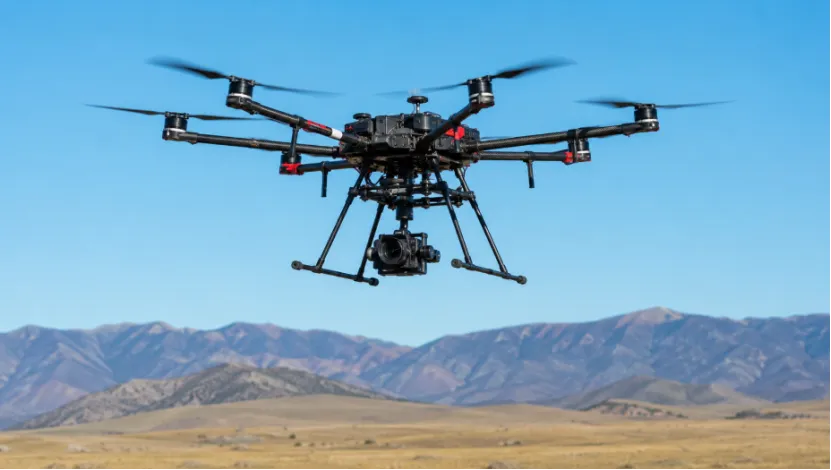
In long-endurance UAV projects, it is easy to look at battery capacity first. A bigger mAh number feels safer. It looks like more power, more time, and fewer worries in the field. But drone work is not that simple. Battery weight changes the whole aircraft.
If the pack is too heavy, your drone may lose UAV payload capacity, use more current, heat faster, and return with less power reserve. That is why larger battery does not always mean longer flight time. For B2B buyers, the real question is not “How large is the battery?” It is “Can this long-endurance UAV battery carry the mission load and still fly safely?”
Why Does a Bigger Battery Not Always Mean Longer Flight Time?
Battery capacity adds energy, but it also adds mass. Every extra gram must be lifted from takeoff to landing, especially on multi-rotor UAVs. That weight sits there the whole flight, even when the aircraft is hovering.
Capacity Can Become Extra Burden
At first, higher UAV battery capacity can increase drone flight time. After a certain point, the extra battery weight starts to eat the benefit. The motors work harder just to keep the aircraft in the air. Then the real flight time of a UAV battery may be far lower than the number on paper.
Field Results Often Surprise Buyers
A buyer may choose a bigger pack for a mapping drone, then find the aircraft climbs slower with the camera mounted. It still flies, but its climb performance and operational safety margin may be significantly reduced. This is a common B2B headache, and not a small one.
How Does Battery Weight Affect UAV Payload Capacity?
Battery weight and payload balance in UAVs is one of the first things you should check. The battery is not the only load. The aircraft also carries sensors, gimbals, cables, mounts, landing gear, and sometimes delivery boxes or sampling tools.
Battery Weight Competes with Useful Payload
If drone battery weight takes too much of the takeoff weight budget, less room remains for the actual job. A LiDAR drone needs its sensor. A patrol drone needs a stable camera. A delivery UAV needs cargo. Too much battery can quietly reduce project value.
Power Reserve Gets Smaller
A heavy aircraft needs more current during takeoff, climbing, wind correction, and return. If power reserve is too low, the drone may trigger early warnings or land sooner than planned. That is not something you want during offshore inspection or emergency delivery.
Why Is Battery Energy Density More Important Than mAh?
mAh is easy to read, but it does not tell the full story. Battery energy density gives a clearer view because it shows how much energy the battery stores for each kilogram.
mAh vs Wh/kg for Drone Batteries
mAh vs Wh/kg for drone batteries is a useful comparison for procurement teams. A high mAh pack may still be a poor choice if it is heavy. A high energy density drone battery can give more useful energy without taking too much payload space.
How Shengya Electronic Fits This Need
Shengya Electronic focuses on UAV battery products for industrial users who care about weight, endurance, and real work conditions. Its product range includes high energy density drone battery options from 330Wh/kg, 340Wh/kg, and 350Wh/kg series, plus a 190Wh/kg high rate 25C series for stronger output demand and a 270Wh/kg 4.35V high voltage series for weight-sensitive projects.
The lineup covers 6S, 7S, 12S, 14S, and 18S platforms, so buyers can match battery packs with different motors, ESCs, payload sizes, and mission types. You can review the full range on the Shengya Electronic product page.
How Does Battery Weight Affect Drone Flight Time?
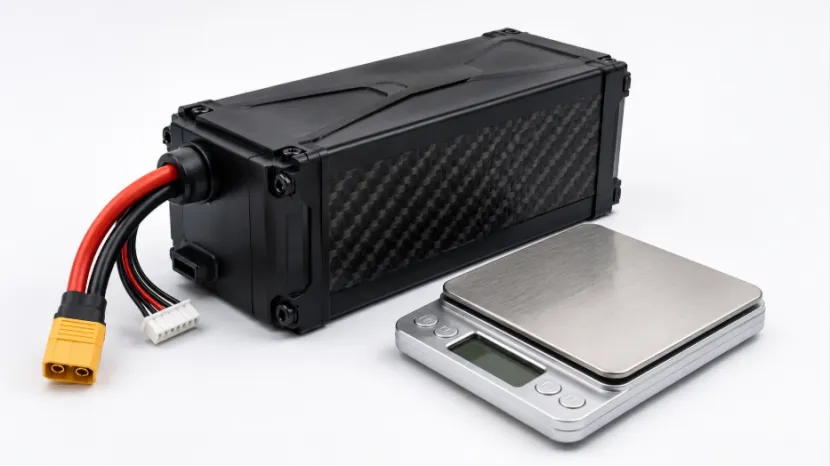
How battery weight affects drone flight time comes down to lift, current, heat, and efficiency. A heavy pack may carry more energy, but it also asks the aircraft to spend more energy every second.
Battery Weight Impact on Drone Performance
Battery weight impact on drone performance can appear as shorter endurance, lower agility, hotter motors, faster voltage drop, and reduced stability in wind. For a commercial drone battery, these signs matter more than a nice capacity label.
Voltage Platform Still Matters
A long-endurance UAV battery also needs the right voltage platform. A 6S pack may fit compact inspection work, while 12S, 14S, or 18S packs may suit larger industrial UAV battery projects. The right answer depends on the aircraft, not guesswork.
How Should Buyers Choose a Long-Endurance UAV Battery?
UAV battery selection should start with your mission, not the biggest number on the label. You need a pack that fits the aircraft and the work.
Check the Real Mission Data
Before buying, list the empty aircraft weight, payload weight, target drone flight time, average current, peak current, operating temperature, and return reserve. This makes how to choose batteries for long-endurance UAVs much clearer.
Test Before Bulk Orders
Test the battery with real payload, real route, and normal weather. A heavy-lift drone battery may need strong discharge output, while a patrol or mapping UAV may need lighter weight and higher Wh/kg. Samples tell the truth faster than a spreadsheet.
For supplier background and product direction, you can also visit the Shengya Electronic official website.
Why Does This Matter for Your UAV Project?
Battery weight matters more than capacity because long flight is not only about stored energy. It is about useful energy after weight, payload, current draw, voltage stability, and safety reserve are all counted.
For long-endurance UAV projects, the best battery for long-endurance drone projects is not always the largest pack. It is the pack that helps your aircraft finish the route, carry the payload, return safely, and do it again tomorrow.
FAQ
Q1: Does Higher Battery Capacity Always Increase Drone Flight Time?
A: No. Battery capacity can increase stored energy, but added battery weight may reduce drone flight time if the motors need much more power.
Q2: Why Is Battery Weight Important in Long-Endurance UAV Projects?
A: Battery weight affects lift demand, power use, heat, payload space, and power reserve in long-endurance UAV projects.
Q3: What Is the Difference Between mAh and Battery Energy Density?
A: mAh shows capacity, while battery energy density shows energy per kilogram. For long flights, Wh/kg is often more useful.
Q4: How Does Battery Weight Affect UAV Payload Capacity?
A: Battery weight uses part of the takeoff weight limit, so UAV payload capacity may drop if the pack is too heavy.
Q5: What Is the Best Battery for Long-Endurance Drone Projects?
A: The best battery for long-endurance drone projects is usually a balanced long-endurance UAV battery with suitable weight, voltage, discharge stability, and high energy density drone battery performance.


