
Finding a drone battery supplier is not hard. Finding a reliable drone battery supplier that performs the same after 100, 500, or 2,000 packs is the real test. For OEM buyers and fleet buyers, one good sample is only the first step.
A battery affects flight time, payload, voltage stability, charging safety, and customer trust. If a pack fails in the field, the problem does not stay inside the battery. It can delay delivery, stop a mission, or make your team spend a Friday night checking logs. Nobody enjoys that.
Why Does Supplier Reliability Matter for OEM and Fleet Buyers?
For B2B UAV projects, batteries are part of the aircraft system. You are not buying a loose accessory. You are buying a power unit that must match motors, ESCs, payload, chargers, software settings, and daily work conditions.
One Weak Pack Can Affect a Whole Fleet
A reliable drone battery supplier should offer stable power, repeatable weight, similar internal resistance, and clear performance data. Fleet buyers need packs that behave the same way during charging, takeoff, route flight, and landing. If one pack triggers low-voltage alarms earlier than the others, scheduling becomes messy very fast.
OEM Buyers Need Long-Term Fit
An OEM drone battery supplier should also support long-term platform matching. Once the battery size, connector, cable outlet, and mounting position enter your aircraft design, changing suppliers later is painful. That is why supplier choice should be made early and carefully.
How Can You Check Drone Battery Quality Control?
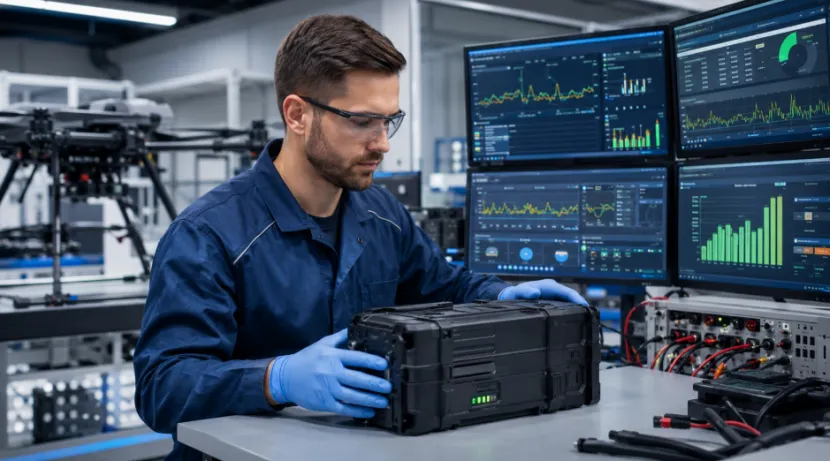
Good drone battery quality control starts before assembly. A drone battery manufacturer should check incoming cells, match key parameters, and test finished packs before shipment. Simple words, but they matter.
Ask for Incoming Cell Checks
Battery cell source is the base of pack quality. You should ask how cells are selected, whether capacity and internal resistance are checked, and whether the supplier keeps cell batches consistent. Vague answers are not a good sign.
Review the Drone Battery Test Report
A useful drone battery test report should include capacity, voltage, internal resistance, discharge curve, temperature rise, voltage balance, and cycle data. For an industrial drone battery, connector heating and high-load discharge data are also worth checking.
Why Does Battery Batch Consistency Matter for Drone Fleets?
Battery batch consistency is one of the biggest concerns for fleet buyers. It sounds boring until your operators find that two batteries with the same label give different flight times.
Consistency Saves Field Time
Why battery batch consistency matters for drone fleets is simple: operators plan missions by flight time, recharge time, and spare battery count. If every pack acts differently, route planning gets harder. Maintenance also becomes harder because the team cannot tell whether the issue comes from the aircraft, charger, or battery.
Samples Must Match Bulk Packs
Drone battery sample testing should not be treated as a showroom step. You should confirm that sample packs and bulk packs use the same cells, connectors, wire gauge, shell design, and test standard before any bulk drone battery order.
What Customization Ability Should OEM Buyers Look For?
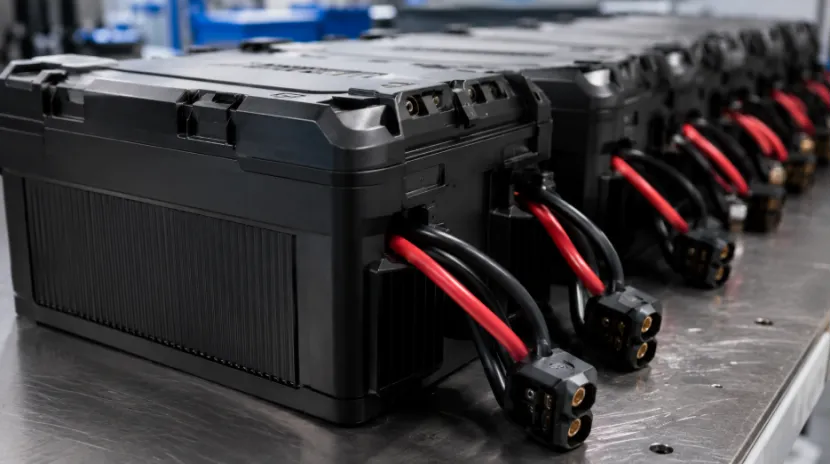
Many UAV projects cannot use a standard pack forever. Custom UAV battery packs often need a specific voltage, shape, cable outlet, connector, and mounting style.
Match Voltage, Size, and Mission Load
UAV battery customization should start with platform needs. A compact inspection UAV may use 6S or 7S. Larger industrial platforms may require 12S, 14S, or 18S. You should also check capacity, discharge rate, battery weight, dimensions, plug direction, and charging method.
Choose a Custom Drone Battery Supplier for UAV Projects
A custom drone battery supplier for UAV projects should ask about your aircraft, not just quote a price. Payload, current draw, flight time, working temperature, and safety margin all affect the final pack design.
How Important Are Lead Time and After-Sales Support?
Price matters, but drone battery delivery time can decide whether an OEM project ships on schedule. A low price is less useful if battery arrival keeps moving by another week.
Delivery Stability Is Part of Reliability
Reliable UAV battery supply chain support means clear sample lead time, bulk lead time, and capacity planning. You should know when packs will ship and what happens if the project volume increases.
After-Sales Response Should Be Practical
Drone battery after-sales support should cover swelling, heat, voltage imbalance, connector damage, charger mismatch, and shorter flight time. A reliable supplier responds with checks and solutions, not just a short “please test again” message.
How Does Shengya Electronic Fit OEM and Fleet Buyer Needs?
Shengya Electronic is a practical choice when buyers need wide specification coverage rather than one general battery pack. Its product range includes 190Wh/kg high rate 25C series for strong output, 270Wh/kg 4.35V high voltage series, and 275Wh/kg, 310Wh/kg, 330Wh/kg, 340Wh/kg, and 350Wh/kg high energy density series for longer endurance work. The lineup covers 6S, 7S, 12S, 14S, and 18S platforms, which helps OEM buyers match different motors, ESCs, payloads, and mission times.
Built for Different Commercial UAV Battery Needs
For a commercial UAV battery project, one mission may need fast current output while another needs long flight time. Shengya Electronic’s official website presents battery options for logistics delivery, agricultural crop protection, industrial inspection, urban air mobility, and firefighting rescue. That range gives buyers a clearer starting point for OEM UAV battery pack customization.
What Red Flags Should Buyers Avoid?
A UAV battery supplier checklist should include what to avoid, not only what to ask for. Some problems look small during sampling but become expensive after delivery.
Avoid Price-Only Decisions
Do not choose a drone battery supplier only because the first quote is low. Missing test data, unclear battery cell source, poor batch control, and slow drone battery after-sales support can cost more later.
Ask the Right Questions Early
How to choose a reliable drone battery supplier comes down to repeatability. What makes a drone battery supplier reliable is not a perfect sample photo. It is clear data, stable batches, custom support, delivery discipline, and quick technical response. That is also what makes the best drone battery supplier for OEM buyers worth keeping.
FAQ
Q1: What Makes a Drone Battery Supplier Reliable for OEM Buyers?
A: A reliable drone battery supplier should provide stable batch quality, clear test data, consistent battery cell source, customization support, and responsive service.
Q2: Why Is Battery Batch Consistency Important for Drone Fleets?
A: Battery batch consistency helps fleet buyers keep flight time, charging behavior, voltage stability, and maintenance planning more predictable.
Q3: What Should Be Included in a Drone Battery Test Report?
A: A drone battery test report should include capacity, voltage, internal resistance, discharge curve, temperature rise, cycle data, and connector checks.
Q4: How Should OEM Buyers Test Drone Battery Samples Before Bulk Orders?
A: How to test drone battery samples before bulk orders is simple: test them on the real UAV with actual payload, route, charger, and normal working temperature.
Q5: Why Does UAV Battery Customization Matter?
A: UAV battery customization helps match voltage, capacity, size, cable length, connector type, discharge rate, and mounting design to the aircraft.


