
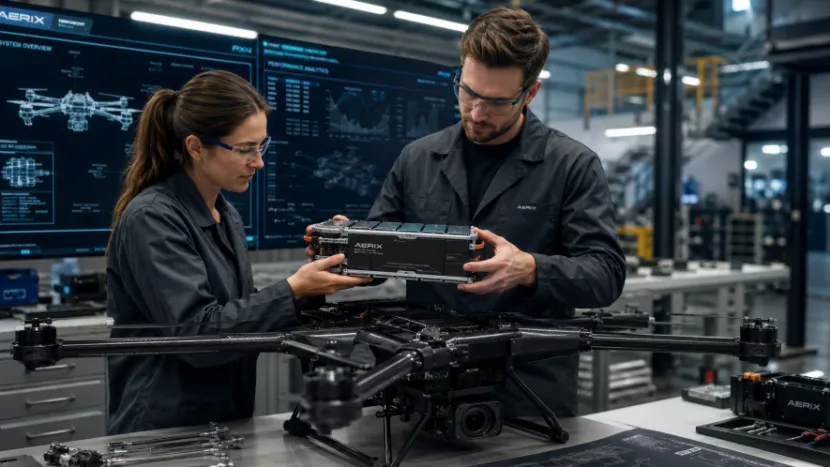
For a drone manufacturer, battery choice is not a small parts decision. It can change takeoff behavior, payload limit, flight time, pack layout, and even the final price of the aircraft. In one OEM project, the same drone platform had two planned versions. One version needed strong power for heavy payload takeoff. The other needed longer flight time for mapping, inspection, and delivery tests.
That is where high rate vs high energy density drone battery selection became the main design question. A high rate drone battery helps when the UAV pulls high current. A high energy density UAV battery helps when the aircraft needs longer useful flight time without adding too much battery weight.
Why Did the OEM Team Need Two Different Battery Strategies?
An OEM drone platform may look the same from the outside, but the real mission can be very different. A spraying drone, a rescue drone, and a patrol drone may share a similar frame. Their battery needs are not the same, though. This is where UAV battery selection becomes practical, not theoretical.
One Drone Platform Had Different Mission Versions
For the power version, the drone carried heavier equipment and needed stronger output during takeoff and climbing. For the endurance version, the drone flew steady routes and needed fewer battery swaps. If one industrial drone battery pack was used for both, one side would suffer.
The team first checked payload weight, motor load, peak current, expected flight time, and battery bay size. Although this is a standard engineering process, overlooking these factors can lead to inefficient battery selection.Choosing a larger battery may seem like a straightforward solution. In reality, extra battery weight can eat part of the flight-time gain.
What Is a High Rate Drone Battery Best For?
A high rate drone battery is made for power demand. It does not always give the longest range, but it can give stronger current when the drone needs it fast. That matters during heavy payload takeoff, steep climbing, sudden wind correction, or emergency maneuvering.
High Current Output Matters During Heavy Load
A 25C drone battery is more suitable when the UAV often faces high current output. Some UAV battery manufacturers, including Shengya Electronic, offer high-rate battery series designed for applications that require strong discharge performance.
For heavy-lift UAV applications, this type of battery can help minimize voltage sag during high-current operation. The drone feels more stable when motors ask for power. It is not about making the spec sheet prettier. It is about avoiding weak takeoff, early low-voltage alarms, and nervous field testing.
What Is a High Energy Density UAV Battery Best For?
A high energy density UAV battery is better when the mission needs range, time, and fewer stops. It stores more energy for its weight, so the drone can fly longer without a battery pack becoming too heavy. For many industrial teams, that is the real win.
Long-Endurance Missions Need Better Energy-to-Weight Balance
A long endurance UAV battery fits mapping, patrol, pipeline inspection, powerline inspection, environmental monitoring, and delivery testing. These jobs usually do not need extreme current every second. They need steady flight and enough reserve to finish the route.
Shengya Electronic offers high energy density drone battery options such as 310Wh/kg, 330Wh/kg, 340Wh/kg, and 350Wh/kg series. A 310Wh/kg UAV battery or higher energy density pack can help increase useful flight time when battery weight must stay controlled. Still, the choice must match voltage, pack size, discharge demand, and safety reserve.
What Should Be Customized in an OEM Drone Battery Pack?
A custom drone battery pack is not only a battery with a logo. For OEM production, the pack must fit the aircraft body, electrical system, and assembly process. Small details can slow down production if they are handled too late.
Electrical and Mechanical Matching Come Together
For a drone battery pack for OEM use, you should confirm voltage platform, capacity, C rating, peak current, continuous current, connector type, wire outlet position, charger match, and BMS needs. Pack structure also matters. A pack that is 8 mm too tall may cause a redesign, and nobody wants that during pilot production.
Shengya Electronic supports different battery configurations such as 6S, 7S, 12S, 14S, and 18S. For a custom drone battery pack, buyers can match battery series, plug type, wire direction, pack layout, and label needs to the aircraft project. That makes the battery easier to install, service, and repeat in batch production.
How Does Shengya Electronic Fit into This OEM Battery Selection Case?
A good UAV battery manufacturer should help you match the battery to the mission, not push one pack for every drone. Shengya Electronic is focused on semi-solid and solid-state lithium-ion UAV batteries for industrial drone projects. Its catalog covers power-oriented and endurance-oriented directions, which is useful when one OEM platform serves several markets.
Battery Selection Should Be Driven by Mission Requirements
Shengya Electronic provides both the 190Wh/kg high rate 25C series for stronger discharge demand and higher energy density series for longer endurance. This gives drone manufacturers a more flexible path when choosing between high rate vs high energy density drone battery options.
For industrial projects, its battery packs can support applications such as logistics delivery, agricultural crop protection, mapping, inspection, and emergency response. More importantly, the company can help with pack matching around voltage, capacity, cable layout, connector type, and project structure through its UAV battery solutions. This helps ensure the battery integrates efficiently into the aircraft design from the beginning.
How Should Buyers Make the Final Choice?
The best battery is not the one with the largest number on the label. The best battery is the one that matches the job. If the UAV needs strong current for heavy load, choose a high rate drone battery. If the UAV needs longer route coverage, choose a high energy density UAV battery.
Mission Data Should Lead the Decision
For practical UAV battery selection, start with payload, peak current, flight time target, voltage platform, battery bay size, center of gravity, connector type, and charging plan. Then compare pack weight and field service needs.
A high rate battery supports power stability. A high energy density battery supports longer flight time. A custom drone battery pack helps connect the two sides with real aircraft design. That is the point many OEM teams learn after the first prototype, sometimes the hard way.
FAQ
Q1: What Is the Main Difference Between a High Rate Drone Battery and a High Energy Density UAV Battery?
A: A high rate drone battery supports strong current output during takeoff, climbing, and heavy payload work. A high energy density UAV battery stores more energy for its weight, so it is better for long-endurance missions.
Q2: When Should You Choose a 25C Drone Battery?
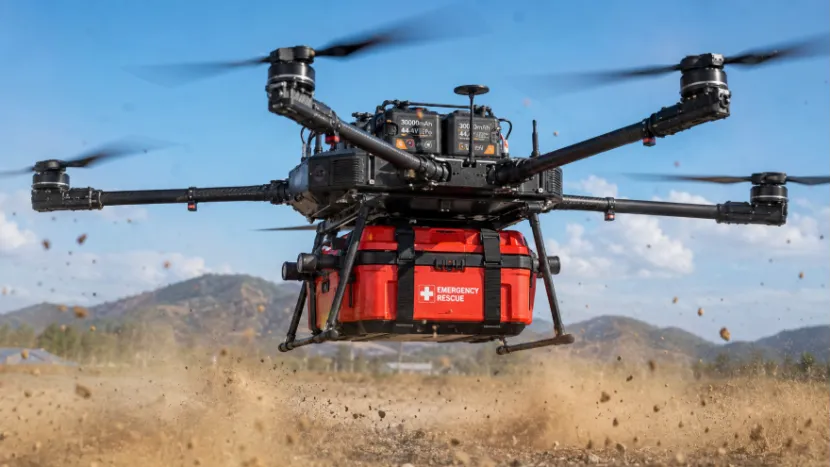
A: You should choose a 25C drone battery when the UAV often needs high current output, such as heavy payload takeoff, spraying, rescue delivery, or strong climbing.
Q3: When Is a 310Wh/kg UAV Battery a Better Choice?
A: A 310Wh/kg UAV battery is better when the mission needs longer useful flight time, fewer battery swaps, and controlled battery weight, such as mapping, inspection, patrol, or delivery testing.
Q4: Why Does an OEM Project Need a Custom Drone Battery Pack?
A: An OEM project needs a custom drone battery pack because voltage, size, connector type, wire outlet position, BMS needs, and pack structure may differ from one aircraft model to another.
Q5: Can One Battery Type Fit All Industrial Drone Missions?
A: No. A heavy-lift drone may need a high rate battery, while a patrol or mapping drone may need a high energy density battery. The right choice depends on payload, current demand, flight time, and working conditions.


