
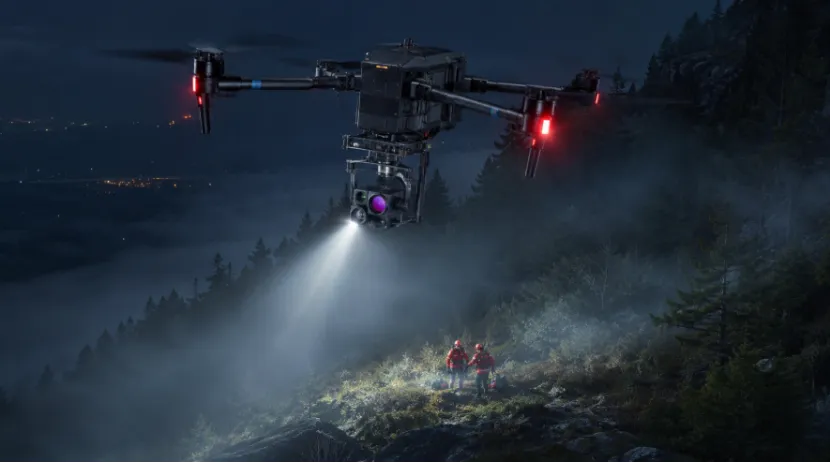
When a rescue call comes in, flight time is not just a number on a spec sheet. It can decide how long you keep eyes on a missing person, a flooded road, a burning roof, or a dark hillside. For police, fire, and emergency teams, a public safety drone battery has to support the whole mission, not just the aircraft.
A search and rescue drone battery works under pressure. Thermal cameras, searchlights, loudspeakers, mapping modules, and communication devices all pull power. Cold air makes it worse. So does wind. The real goal is simple: extend drone flight time while keeping the aircraft safe enough to return.
Shengya Electronic focuses on high-energy lithium-ion battery cells and UAV battery packs for demanding platforms. Founded in 2017 in Taixing City, Jiangsu Province, the company works with solid-state lithium-ion soft pack battery cells and battery packs, including 270 Wh/kg, 320 Wh/kg, 330 Wh/kg, and 340 Wh/kg series. Its battery packs are available in common UAV formats such as 6S, 7S, 12S, 13S, and 14S, with support for custom pack combination, outlet position, plug type, and logo. For teams building or upgrading rescue drones, that flexibility matters more than it sounds. Sometimes the connector angle is the thing that slows down a clean installation.
Why Do Search and Rescue Drones Lose Flight Time So Quickly?
Search and rescue drone flight time often drops faster than expected because public safety drones rarely fly light. A normal camera flight is one thing. A rescue flight with thermal imaging, a searchlight, and a communication module is another.
Heavy Payloads Change the Power Curve
A UAV battery for heavy payload has to handle takeoff current, hovering, climbing, and quick position changes. Thermal imaging may run through the full mission. A spotlight may stay on during night search. A speaker or communication device may support contact with victims or ground teams. Each payload looks manageable alone, but together they create drone battery voltage sag, especially when the aircraft fights wind or holds position over rough ground.
Cold Weather Makes the Problem Worse
Cold weather drone battery performance can be tricky. A battery that looks fine at the station may show faster voltage drop on a winter night. For a drone battery for firefighters, this matters during mountain rescue, water rescue, and overnight fire watch. You need warm storage before takeoff, careful voltage checks in flight, and a return margin that does not rely on luck.
How the Right Battery Choice Extends Drone Flight Time?
A better battery choice starts with mission type. Do not choose capacity alone. A high capacity drone battery may help a wide-area search, but if the pack is too heavy, flight time can still suffer.
Match Energy Density to Search Range
A long endurance UAV battery helps when you need more scanning time over forests, rivers, industrial zones, or collapsed areas. Higher energy density lets the aircraft carry more usable energy without adding too much weight. Shengya Electronic’s UAV battery product range includes high-energy-density series from 275 Wh/kg to 350 Wh/kg, with several capacities and voltage formats for different UAV platforms.
Match Discharge Power to Rescue Payloads
A high discharge UAV battery is better when the aircraft carries high-load equipment. Shengya Electronic lists a 190 Wh/kg high rate 25C series, with 20000mAh and 30000mAh options in 6S, 12S, and 14S formats. This type of high rate drone battery can fit missions where takeoff load and power stability matter more than the last few minutes of endurance.
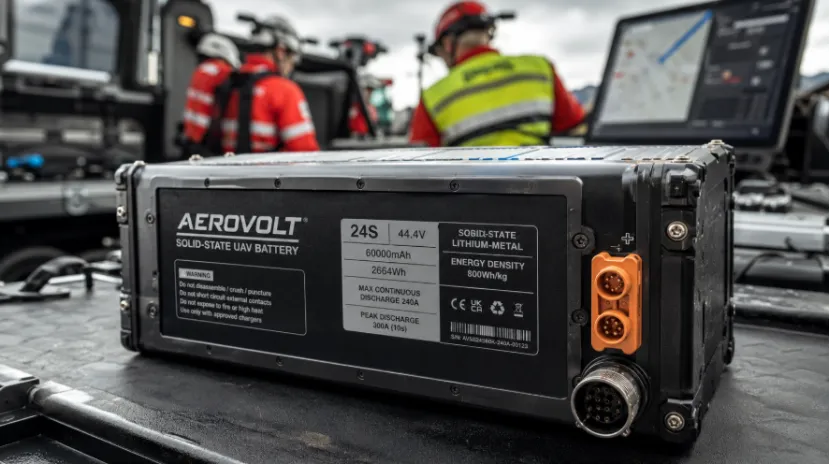
How Should You Plan Batteries for Thermal Imaging, Searchlights, and Communication Modules?
Payload planning should happen before the field mission, not after the drone gives an early low-voltage warning. Public safety teams often add one more device because the case needs it. That is normal. The battery plan has to follow.
Thermal Imaging Needs Steady Runtime
A thermal imaging drone battery should support slow scanning and hovering. For a drone battery for thermal camera missions, steady output is often more useful than aggressive peak power. Night search over trees, fields, and riverbanks can take time. You want the drone to stay in the air long enough to confirm what the sensor sees.
Searchlights Need Strong Output
A drone battery for searchlight payload needs better discharge support. Searchlights are useful near cliffs, rooftops, flood zones, and dark roads, but they can raise power draw fast. Stable power output for drones helps reduce sudden warnings and gives the pilot more predictable control.
Communication Modules Add Hidden Load
A drone battery for communication module work should be selected based on the full payload package. A speaker may not look heavy. A relay module may feel small. But combined with lights and thermal imaging, the system load grows. This is where an emergency response drone battery needs both capacity and discharge headroom.
What Is a Practical Drone Battery Backup Strategy?
A drone battery backup strategy is not just “bring more batteries.” That helps, sure, but it can still create chaos if packs are not labeled, warmed, charged, and assigned by mission type.
Build Sets by Mission Phase
For a public safety drone fleet, separate batteries into first-response, extended-search, standby, and return-reserve groups. Use a drone battery rotation plan with battery ID, cycle count, mission role, and last flight notes. While simple, this system reduces errors during long overnight operations.
Keep Different Packs for Different Jobs
A light thermal-only search may use a long endurance UAV battery. A drone carrying a spotlight and loudspeaker may need a high discharge UAV battery. A large rescue platform may need a custom UAV battery pack to match size, connector, voltage platform, and mounting space.
What Should Public Safety Buyers Check Before Purchase?
When choosing a public safety drone battery, look beyond the headline capacity. Check Wh/kg, C-rate, voltage platform, weight, dimensions, connector type, cable direction, safety protection, and supplier support.
Check Application Fit, Not Just Specs
Shengya Electronic’s homepage lists firefighting and rescue as an application where drones support fire reconnaissance, rescue payload delivery, search and rescue, and on-site command. It also lists logistics delivery for remote areas, mountainous regions, islands, medical supplies, and emergency materials. These field uses explain why battery selection cannot be one-size-fits-all.
Choose a Supplier That Can Work With Your Platform
A reliable UAV battery supplier should help you match the battery to the aircraft. Shengya Electronic can support a public safety UAV battery solution through multiple product lines, including the 270 Wh/kg 4.35V high voltage series and high-energy-density formats for longer missions. As a drone battery manufacturer, it also supports customization for pack layout and connector needs, which is useful for OEMs and system integrators.
How Can Teams Reduce Battery Swap Downtime?
Battery swap downtime cuts search continuity. Every landing breaks the scan pattern and takes attention away from the incident.
Make Battery Readiness Visible
Use simple field labels: charged, used, warm, cold, standby, and check-needed. Record early warnings after each flight. If one pack shows repeated drone battery voltage drop in cold weather, remove it from critical missions until tested.
Use the Right Battery for Emergency Rescue Drones
Battery for emergency rescue drones should be treated as part of the rescue system. A better pack, a clean rotation plan, and a safe return rule can help you extend UAV flight time without pushing the drone into a risky landing.
FAQ
Q1: What Is the Best Public Safety Drone Battery for Search and Rescue?
A: The best public safety drone battery depends on payload and mission length. A long endurance UAV battery suits wide-area search, while a high discharge UAV battery suits heavy payloads such as searchlights and speakers.
Q2: How Can a Drone Battery Backup Strategy Reduce Rescue Downtime?
A: A clear drone battery backup strategy keeps charged, warm, and mission-ready packs separated. It also helps the public safety drone fleet avoid random charging and rushed battery swaps.
Q3: Why Does Cold Weather Drone Battery Performance Drop During Rescue Missions?
A: Cold weather can increase voltage drop and reduce usable capacity. This is why a drone battery for firefighters should be kept warm before takeoff and monitored closely during flight.
Q4: Should Rescue Teams Choose a High Capacity Drone Battery or a High Discharge UAV Battery?
A: Choose a high capacity drone battery for longer search routes. Choose a high discharge UAV battery when the drone carries heavy or power-hungry rescue equipment.
Q5: How Do You Choose a UAV Battery Supplier for Emergency Rescue Drones?
A: Choose a UAV battery supplier with clear specs, safety protection, stable quality, customization support, and real experience with battery for emergency rescue drones.


