
A solid-state battery may appear ideal under laboratory conditions. But performance degradation may occur over time.This happens if the internal contact fails to match lab promises.
You might notice climbing resistance or weak discharge. Fast-charging could suffer. The pack might handle light loads fine. However, voltage drop becomes evident under high load conditions.
Solid-state batteries swap liquid electrolyte for a solid material. This design improves safety and increases energy density. The solid-state battery guide highlights great perks. These include higher energy density, quicker charging, and lower fire risks.
However, solid-solid interfaces are significantly more sensitive than liquid electrolyte systems.Even tiny gaps cause issues. Rough surfaces hurt performance. Temperature matters too.
Why Do Solid-State Batteries Lose Connection?
Disconnection usually starts at the contact area between the electrode and solid electrolyte. In a liquid cell, electrolyte can wet small pores and uneven surfaces. In a solid-state battery interface, two hard or semi-hard layers must stay pressed together while the cell expands, contracts, heats, cools, and ages. Maintaining stable contact under these conditions is highly challenging.
Electrode Contact Loss
During cycling, the cathode and anode change volume. If stack pressure is too low, local contact can weaken. If pressure is too high, brittle areas may crack. You may not see a dramatic failure at first. The cell may simply need more voltage to push the same current, which shows up as battery internal resistance.
Solid Electrolyte Cracks
Solid electrolyte cracks can form after repeated charge and discharge cycles. Once cracks appear, lithium-ion pathways become less stable. Current then crowds into smaller regions. That can create hot spots, faster aging, and uneven lithium movement near the lithium metal anode. This is a minor defect with significant long-term impact.
Poor Surface Matching
Flat on a drawing is not always flat under a microscope. If the electrode coating has rough regions, dry spots, dust, binder variation, or uneven calendering, the solid electrolyte cannot make full contact. This is where many pilot lines get humbled. The chemistry may be good, but the surface finish ruins the result.
How Can You Diagnose Solid-State Battery Disconnection Issues?
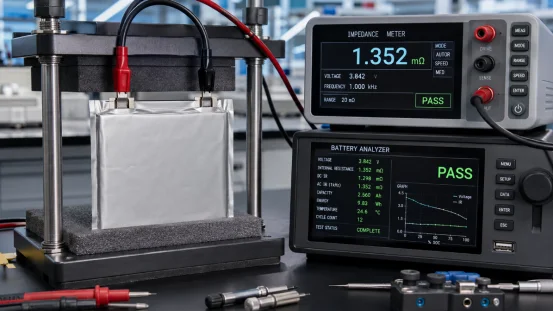
Avoid immediate replacement without proper diagnosis.A clear test routine can tell you whether the problem comes from the cell interface, the tab, the connector, the BMS, or the pack build. That saves time, and it avoids blaming the wrong part.
Track Resistance Before and After Cycling
Measure impedance at controlled temperature and state of charge. A steady rise after cycling points toward interface aging or contact loss. A sudden jump often suggests mechanical damage, tab trouble, or a weld issue.
Compare Low-Load and High-Load Behavior
Run the cell gently, then test it under the target current. If voltage sag only appears during high load, the solid-state battery repair plan should focus on internal resistance, current path, and pack-level heat removal. For drones or robotics, that detail matters because short current bursts can expose weak contact fast.
Inspect the Pack Assembly
A pouch cell battery pack can fail outside the cell too. Check compression plates, foam pads, cable exit position, plug fit, nickel strip welds, and protection-board data. Loose connectors are often overlooked. It can still waste a whole afternoon.
What Are the Best Ways to Fix Disconnection Issues?
Fixing disconnection is usually a design and process job, not a quick field trick. If the cell has internal cracks, you cannot safely glue it back together. The better path is to reduce the stress that caused the gap, then select or build cells that match the actual load.
Set the Right Stack Pressure
Solid-state batteries often need controlled pressure to keep the electrode and electrolyte in contact. Use pressure plates, elastic pads, or a frame that holds the pouch evenly. Avoid hard points near tabs and corners. Pressure should stay stable after swelling, vibration, and temperature change.
Improve Interface Materials
Manufacturers may use softer interlayers, coated cathode particles, gel-like buffer layers, or better solid electrolyte formulations to reduce contact loss. The goal is simple: keep ions moving without forcing brittle materials to carry every bit of mechanical stress.
Control Temperature
Cold cells often show higher resistance. Hot cells age faster. Keep the battery inside its approved working range, and avoid fast charging when the pack is too cold. For field equipment, preheating may be less noticeable than a bigger capacity rating, but it often gives better real use.
Tighten Manufacturing Checks
Good process control catches surface defects before they become field failures. Useful checks include coating thickness, moisture control, electrolyte density, lamination pressure, weld strength, and post-assembly impedance. Skipping quality checks may reduce costs initially but leads to higher failure rates in the field.
How Do You Prevent the Same Failure in Future Packs?
A stable battery pack starts before the purchase order. You need cell data, pack data, and mission data in the same conversation. Capacity alone is not sufficient for battery evaluation.
Match the Cell to the Real Load
Share peak current, average current, pulse length, cut-off voltage, available space, weight target, charging method, and operating temperature. If your device vibrates, climbs, sprays, lifts, or lands hard, this information should be clearly specified. Solid-state lithium-ion battery selection changes when the duty cycle is honest.
Design Around Movement
Use stable compression, strain relief, and protected cable routing. Do not let tabs carry pack movement. Do not place hard edges against pouch surfaces. If a battery bay squeezes one side harder than the other, interface stress will not stay even.
Keep Better Field Records
Log cycle count, resistance trend, temperature, fault codes, and discharge depth. When a pack fails, these records show whether it aged slowly or broke after one harsh event. It is not exciting paperwork. It provides valuable diagnostic insights.
Why Pack-Level Support Matters for Stable Connections?
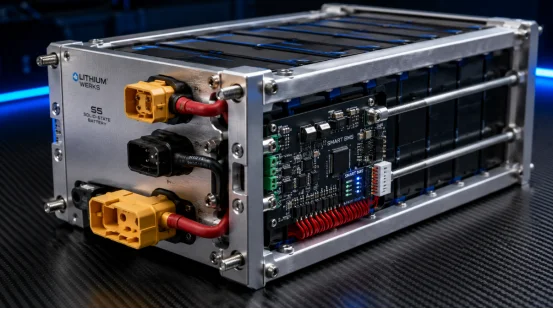
Once interface stability becomes the concern, supplier capability matters more than nominal capacity specifications. Shengya Electronic focuses on semi-solid and solid-state lithium-ion soft pack battery cells and packs, with listed high-energy-density series from 190 Wh/kg to 350 Wh/kg and common pack formats such as 6S, 7S, 12S, 14S, and 18S in its battery product range. Its official company information also describes custom work for pack combination, cable exit position, plug type, and logo.
This product range is suitable for applications where disconnection risk is influenced by factors such as pressure, layout, vibration, connector choice, and real current demand. You can review the broader company context at Shengya Electronic. For a drone, robot, or special-use pack, the key consideration is not only how much energy fits inside the pouch. It is whether the whole pack stays electrically and mechanically stable after many cycles.
FAQ
Q1: What Causes Solid-State Battery Disconnection Issues?
A: The common causes are electrode contact loss, solid electrolyte cracks, uneven stack pressure, poor surface matching, temperature stress, and weak pack assembly.
Q2: Can You Repair a Solid-State Battery With Internal Cracks?
A: Usually no. Internal cracks inside the solid electrolyte are not a safe field repair. Replace the cell and correct the design or process issue that caused the damage.
Q3: How Can You Reduce Battery Internal Resistance?
A: Better electrode-electrolyte contact helps. Keep stack pressure steady and watch the temperature. Use clean manufacturing. Also, match the cell to your actual current load.
Q4: Are Solid-State Batteries Safer Than Liquid Lithium-Ion Batteries?
A: They are generally safer. This is because they drop the flammable liquid electrolyte. Still, they require correct charging and pressure control. Smart thermal design and pack protection are always needed.
Q5: What Should You Ask a Supplier Before Buying Solid-State Battery Packs?
A: Check the energy density, cycle life, and discharge rate. Ask about pack configuration and compression needs. Finally, confirm connector options, test data, safe temperature range, and custom layout support.


