
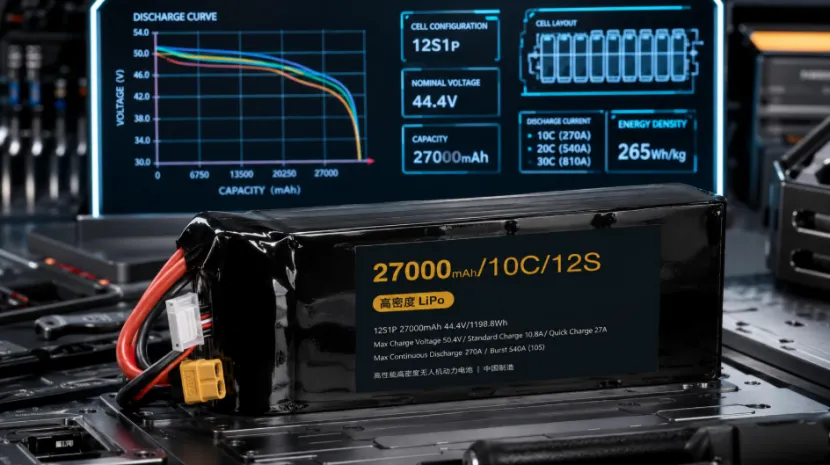
Choosing a reliable drone battery manufacturer is not just about finding the lowest price.When placing a bulk drone battery order, a single design or quality issue can reduce flight time, limit payload capacity, and impact operational safety. It also hurts safety and drives up fleet replacement costs. Before paying, check the energy density and capacity. Also, look closely at S count, discharge rate, and cycle life. Do not forget to ask about customization, lead time, and quality control. Finally, always verify certifications, compliance documents, and after-sales support capabilities.
Shengya Electronic is a professional UAV battery manufacturer specializing in solid-state and semi-solid lithium-ion battery cells and packs.Founded in 2017 in Taixing, Jiangsu, the company focuses on high-performance drone battery solutions for industrial applications. Their product lineup includes high energy density UAV battery systems designed for long-endurance and heavy-load drone operations. Their packs hit 270Wh/kg, 320Wh/kg, 330Wh/kg, and 340Wh/kg. They also deliver a cycle life of 800 to 1000 charge and discharge rounds. They support multiple voltage configurations, including 6S, 7S, 12S, 13S, and 14S platforms, ensuring compatibility with various UAV systems. They let you change cable spots, plugs, logos, and shapes. This flexibility makes Shengya Electronic a competitive choice when evaluating UAV battery suppliers.
What Energy Density Can the Drone Battery Manufacturer Provide?
Energy density determines how much usable energy a UAV can carry without increasing overall weight. without making the aircraft too heavy. For mapping drones, additional landings can significantly reduce operational efficiency. For logistics or inspection drones, battery weight can also take space away from sensors or payload.
What to Ask
Ask whether the Wh/kg value is measured at cell level or pack level. Shengya Electronic lists multiple high energy density series, including 270Wh/kg, 310Wh/kg, 330Wh/kg, 340Wh/kg, and 350Wh/kg product ranges on its drone battery product page. For a serious quote, you should also ask for discharge curves under real UAV current, not just the label number.
What Capacity and S Count Fit Your UAV Platform?
Battery capacity and S count must match the motor, ESC, flight controller, and overall UAV power system, charger, and target flight time. A 6S pack may suit one drone, while a heavy-lift platform may need 12S or 14S. Improper matching can lead to voltage sag, overheating, and reduced flight performance, heat, or poor climb performance.
What to Ask
Ask for available capacity ranges, voltage, full-charge voltage, cutoff voltage, connector type, and weight. Shengya Electronic lists drone battery options from 10000mAh to large packs such as 70000mAh and 78000mAh, with many 6S, 7S, 12S, 14S, and 18S choices. That gives buyers more room to match aircraft size and mission time.
What Discharge Rate Is Needed for Your Drone?
A high discharge UAV battery is important when the drone takes off, climbs fast, fights wind, or flies with liquid, cargo, LiDAR, or thermal camera payloads. Peak current requirements are often underestimated in real-world flight conditions until a hot afternoon, full tank, and gusty field say otherwise.
What to Ask
Ask for continuous C-rate, peak C-rate, peak duration, voltage drop, and temperature rise. For crop protection or heavy-lift work, a high-rate option such as a 25C series may be more suitable than a pack built only for long endurance. The key is proven current output, not marketing words.
What Cycle Life Can You Expect in Real UAV Work?
Cycle life for UAV batteries depends on depth of discharge, current, charging habit, storage temperature, and landing reserve. A battery used for daily agricultural spraying follows a significantly different usage profile than a battery used once a week for inspection.
What to Ask
Ask how many cycles remain before capacity drops to 80%, and ask for the test conditions. Shengya Electronic states 800–1000 charge and discharge cycles for its high energy density soft pack cells and packs.Buyers should verify whether the stated cycle life matches their actual discharge conditions and charging strategy.
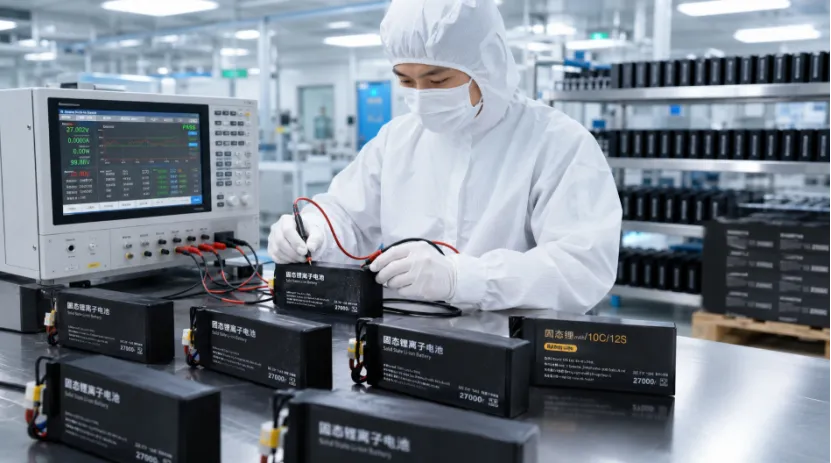
Can the UAV Battery Supplier Customize the Pack?
Most UAV projects need some level of custom work. The battery bay may be narrow. The center of gravity may be sensitive. The plug may need to face left, not right. These details become critical in large-scale UAV deployments. when a bulk drone battery order reaches hundreds of packs.
What to Ask
Ask about pack size, shell, wire length, outlet position, plug type, label, logo, and communication needs. Shengya Electronic says its drone batteries can be customized by combination method, outlet position, plug type, and logo. For an OEM drone battery manufacturer, that is a practical point because your pack has to fit the aircraft, not the other way round.
How Long Is the Lead Time for a Bulk Drone Battery Order?
Lead time affects production planning, pilot testing, shipment booking, and after-sales stock. It is better to know the sample schedule and mass production schedule before your aircraft assembly line waits for batteries.
What to Ask
Ask for sample lead time, small-batch lead time, mass production capacity, packing method, and split shipment options. A professional UAV battery supplier should also tell you when custom plugs, labels, or new molds may add extra days.
How Is Drone Battery Quality Control Handled?
Consistency is critical for fleet-level UAV operations. If one pack has higher internal resistance or lower capacity, the drone may land earlier than expected. In industrial work, that can mean an unfinished inspection route or a crop field left half sprayed.
What to Ask
Ask about cell grading, capacity testing, internal resistance matching, aging tests, traceable serial numbers, and outgoing inspection reports. Shengya Electronic describes its factory as using efficient production management and strict quality control, which should be backed by batch records during procurement.
What Certifications and Shipping Papers Are Available?
Lithium UAV batteries require proper certification and transport documentation for international shipping. For bulk orders, missing documents can delay export, customs clearance, or air cargo booking.
What to Ask
Ask for UN38.3, MSDS, transport packaging details, and market-specific certification needs such as CE or RoHS when needed. For buyers serving logistics delivery, agricultural crop protection, industrial inspection, urban air mobility, and rescue applications shown in Shengya Electronic’s UAV application areas, this step should come before mass production.
What After-Sales Support Comes With the Order?
After-sales support matters because drone batteries are consumable power parts. Even high-quality UAV batteries require clear warranty terms, storage guidance, charge rules, and failure review after hard field use.
What to Ask
Ask about warranty period, swelling cases, charging failure, failure analysis, replacement rules, and reorder support. A reliable industrial drone battery supplier should help you reduce repeat problems, rather than simply replacing defective units.
FAQ
Q1: How Do You Choose a Reliable Drone Battery Manufacturer?
A: Evaluate energy density, capacity range, S count options, discharge performance data, cycle life, customization capability, quality control systems, certifications, and after-sales support.
Q2: What Should You Provide Before Asking for a Quote?
A: Provide voltage, capacity, S count, size limit, weight limit, discharge current, connector, drone model, payload, target flight time, and order quantity.
Q3: Why Is S Count So Important for UAV Batteries?
A: S count sets the voltage platform. It must match the motor, ESC, charger, and power system, or the drone may lose performance or suffer electrical stress.
Q4: Is Higher Energy Density Always Better?
A: Not always. High energy density helps flight time, but you still need enough discharge rate, thermal safety, and pack strength for your UAV task.
Q5: When Should You Use a Custom Drone Battery Pack?
A: Use a custom drone battery pack when your drone has special space, plug, weight, cable, label, communication, or flight-time requirements.


