

For drone mapping companies, flight time means money. If a drone lands too much, it slows the crew down. It breaks the flight path and adds battery swap downtime. It can leave small gaps in your data. You see these gaps later during 3D modeling. This is a real pain.
A higher Wh/kg UAV battery fixes this. It gives the drone more energy for every kilogram it weighs. In a large-area drone survey, you get longer flights. This reduces landing frequency.It improves daily survey coverage.This is especially valuable for mining sites, construction zones, and long-distance corridor mapping. The right drone mapping battery improves data quality. It also lowers the mission cost per hectare.
Shengya Electronic makes high-energy-density lithium-ion soft pack battery cells. They also build UAV battery packs. The business started in 2017 in Taixing City, Jiangsu Province. They sell battery platforms like 270 Wh/kg, 320 Wh/kg, 330 Wh/kg, and 340 Wh/kg. They offer common pack combinations. These include 6S, 7S, 12S, 13S, and 14S.
Their list also has high energy density drone battery choices from 275 Wh/kg to 350 Wh/kg. Drone makers and mapping teams like the practical parts. You can change the pack combination. You can pick the outlet position and plug type. You can even add a logo. This helps the battery fit many different drone shapes.
What Does Wh/kg Mean for Mapping Drone Batteries?
Wh/kg stands for watt-hours per kilogram. It shows how much power a battery holds for its weight. For a survey drone battery, this metric is critical. The drone must carry the battery and the camera. It carries the RTK module. It might also lift a LiDAR sensor and a radio unit.
Why mAh Alone Can Mislead Buyers
A high mAh rating may appear attractive.But it does not promise better mapping drone flight time. A heavy battery makes the drone work hard. It burns power just to stay up. UAV battery energy density shows real flight time. A high Wh/kg drone battery is much better than a huge pack. An oversized battery pack may add unnecessary weight without improving efficiency.
Why Do Large-Area Survey Missions Need Longer Flight Endurance?
Large-area survey missions need smooth paths. You fly grids over farms and open-pit mines. You fly over solar plants and road projects. You need clean overlaps and steady flying. Each return-to-home cycle reduces operational efficiency.
Fewer Landings Mean Better Data Continuity
A long endurance UAV battery cuts down on drone battery swaps. This helps during grid flights and corridor mapping. You must cover a mine face or highway fast. You must beat bad weather. A UAV battery for large-area survey lets the team fly more lines. before requiring landing.The data stays clean, and the work day ends early.
How Does Payload-to-Battery Ratio Affect Survey Efficiency?
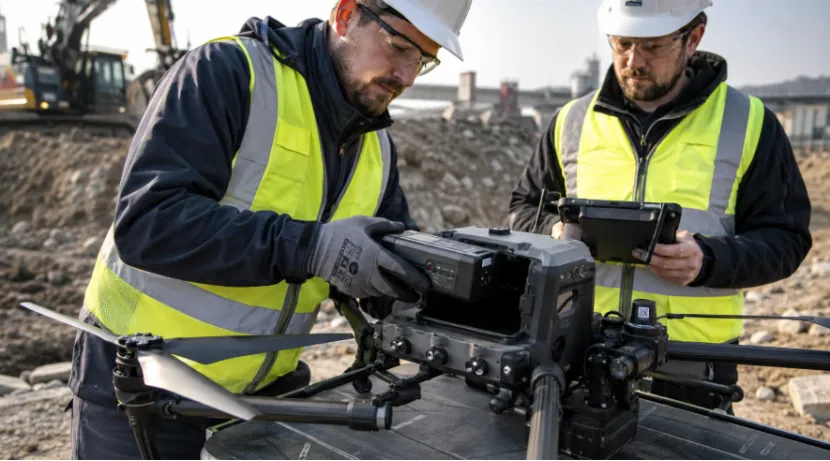
A mapping drone is never empty. The real payload has the camera and gimbal. It has an RTK receiver and a storage drive. It might carry LiDAR or special cameras. The payload-to-battery ratio is key. It sets how much gear the drone lifts. It also sets if the drone flies long enough to win the job.
Why More Capacity Does Not Always Improve Performance
Adding too much capacity makes the pack too heavy. Picking a light pack with bad energy density is also bad. The drone lands too soon. A good drone payload battery ratio matches the battery to the job. For a drone battery for surveying and mapping, optimal performance depends on balancing multiple parameters rather than relying on a single specification.
How Does Battery Performance Affect Mission Cost per Hectare or km²?
Battery selection is a critical operational and financial decision.A team might drive two hours to a work site. Once there, every landing wastes time. Every takeoff adds risk. Every delay hurts the budget.
Daily Coverage Drives Profit
A battery that boosts daily survey coverage is great. It lowers the mission cost per hectare. It lowers the mission cost per km². You spend less time swapping packs. You spend more time flying real paths. Large teams can plan better. Small teams can finish before dark. They do not have to come back the next day.
Which Mapping Applications Benefit Most From Higher Wh/kg Batteries?
Higher energy density UAV battery options are handy for big flight areas. They help when the payload is heavy and flight paths must stay smooth. Different mapping jobs push the battery in unique ways.
Mining, Construction, and Terrain Mapping
A drone battery for mining survey must handle open-pit routes. It helps measure dirt piles and check roads. A mining survey drone battery needs strong output to fly over rough ground. For job sites, a drone battery for construction inspection cuts down on stops. It handles large zones and bridges. A construction survey drone battery must run the same path every week.
A drone battery for terrain mapping needs solid flight time. A drone battery for 3D mapping does too. They need time for photo overlap and safe returns. For long roads and pipes, a drone battery for corridor mapping helps the drone fly further before it stops.
What Battery Specifications Should Drone Mapping Companies Check?
Do not just look at capacity before you buy a UAV battery for mapping. Check Wh/kg and total Wh. Look at the voltage platform and weight. Check the size, working heat, and cycle life. Also, make sure the pack fits your drone nicely. The cables should not be a mess.
Match the Battery to the Platform
Shengya Electronic has a wide UAV battery product range. They sell 310 Wh/kg series options from 20000mAh to 70000mAh. They offer 330 Wh/kg options from 10000mAh to 36000mAh. You can get 340 Wh/kg options from 20000mAh to 40000mAh.
They also have 350 Wh/kg options from 13000mAh to 39000mAh. These choices give drone builders lots of room. Mapping teams can match voltage, capacity, and weight to their exact drone.
How Should Survey Teams Plan Battery Sets for Large-Area Missions?
A battery for large-area drone survey is best with a good swap plan. Good battery planning sounds simple. But it saves headaches. The team gets tired. The weather turns bad. Projects often require strict delivery timelines.
Track Batteries Like Field Equipment
Mark packs by ID and cycle count. Note how they act in the field. Group them in simple stages. These are ready, flying, cooling, charging, and backup. Does a drone mapping battery show early warnings? Do not use it for long trips. This easy habit cuts battery swap downtime. It keeps daily survey coverage high.
How Can Shengya Electronic Support Drone Mapping Battery Requirements?
A good UAV battery supplier helps you pick a pack that fits the drone. They provide solutions that extend beyond nominal specifications. Shengya Electronic is a drone battery manufacturer for UAVs and robots. They support custom UAV battery pack builds. You can ask for a special combination method. You can pick the outlet position and plug type. You can even add custom labels.
Fit Comes Before the Flight
For mapping drones, the pack shape matters. Cable direction and connector type change how fast you swap batteries in the field. A custom UAV battery pack is often a smart choice. A normal pack might block a sensor. It might mess up the drone’s balance. Survey crews spot these small details very fast.
FAQ
Q1: Why Do Drone Mapping Companies Need a Higher Wh/kg UAV Battery?
A: A higher Wh/kg UAV battery holds more energy for each kilogram. This gives you better mapping drone flight time. You land less during a large-area drone survey.
Q2: How Does UAV Battery Energy Density Affect Large-Area Drone Survey Work?
A: UAV battery energy density sets flight time. It does this without making the drone too heavy. A long endurance UAV battery keeps flight paths smooth and data good.
Q3: Is a High Capacity Battery Always the Best Battery for Mapping Drones?
A: No. The best battery for mapping drones balances things out. It matches capacity, weight, and the voltage platform. The payload-to-battery ratio and a snug fit matter most.
Q4: How Can a Better Survey Drone Battery Reduce Mission Cost per Hectare?
A: A better survey drone battery cuts down on drone battery swaps. It lifts daily survey coverage. This drives down the mission cost per hectare and mission cost per km².
Q5: What Should Buyers Check When Choosing a UAV Battery Supplier for Mapping Drones?
A: Buyers must look at the product range and energy density. Check voltage choices, pack size, and cycle life. See if the UAV battery supplier makes a custom UAV battery pack.


