
Survey teams demand more from UAVs than just getting off the ground. You want stable flights and precise data. You also need enough time to wrap up a survey line. Plus, your battery shouldn’t turn into a safety hazard mid-mission.
That is exactly why 350 Wh/kg high energy density stands as a major benchmark for mapping and surveying UAVs today. This energy density level enables UAVs to support heavier sensor payloads and stay airborne much longer. It also cuts down on field battery swaps. For real-world surveying, these practical gains beat flashy specs every time.
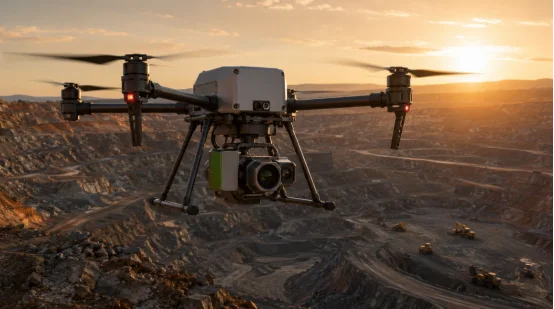
Why Does Energy Density Matter for Surveying Drones?
Energy density measures how much energy a battery stores relative to its weight relative to its overall weight. A pack rated at 350 Wh/kg holds far more usable energy in the exact same mass compared to older designs. On a surveying drone, this shifts nearly every aspect of your mission. A lighter power source frees up space.
Now, you can mount a larger sensor package. It also lowers the power required just to keep the aircraft flying. Hitting that perfect balance is vital when your UAV hauls a LiDAR scanner, multispectral camera, RGB camera, or RTK equipment.
More Flight Time for Long Survey Lines
Mapping crews often waste hours traveling between launch points. They check ground control spots and re-fly sections ruined by wind. A high energy density battery directly increases available flight endurance before landing. Your actual gains rely on the aircraft, propellers, payload, and weather.
However, stepping up to 350 Wh/kg extends your workable flight time. Best of all, it does this without forcing you to bolt on a physically massive battery. This proves invaluable when surveying long roads, pipelines, mines, or farmland.
More Room for LiDAR and Photogrammetry Payloads
A photogrammetry drone typically hauls a camera, gimbal, and positioning module. A LiDAR mapping drone handles even heavier gear. Each additional kilogram increases propulsion load and energy consumption and burns power faster.
A high energy density battery offsets this heavy load. You retain the exact payload needed for crisp aerial mapping, ensuring your aircraft doesn’t become sluggish. This remains crucial when you need both high-resolution imagery and precise GPS data in a single pass.
What Can 350 Wh/kg Change in Field Operations?
The primary advantage isn’t solely longer flight times. It completely alters how you structure the workday. Fewer landings mean fewer operational interruptions. You handle batteries less often and require a smaller charging station on site.
Fewer Battery Swaps
Swapping packs takes only minutes, yet those delays add up quickly. Teams working narrow construction corridors or remote mining sites lose critical hours landing, cooling, and swapping power packs.
A high energy density battery lowers the total units needed for a complete project. You knock out entire flight blocks with fewer stops, keeping your data collection patterns incredibly consistent.
Better Use of Takeoff Windows
Many sites offer brief operating windows due to traffic, dust, or heavy industrial activity. Extended UAV flight time lets pilots capitalize on these short chances. For instance, a road survey crew might only fly when cars are diverted.
A better battery gives the pilot more safe minutes to work. It seems like a minor operational detail, but it often dictates whether you finish the corridor that day.
How Should You Choose a High Energy Density Battery?
Never evaluate energy density in a vacuum. A battery might boast incredible specs on paper but fail completely outdoors. If the discharge rate, thermal behavior, or connector design doesn’t suit your UAV, the battery is useless.
Check Continuous Discharge Performance
Surveying drones battle harsh, changing conditions. Hard climbs, sudden acceleration, strong wind, and hungry sensors draw massive power. The drone battery must deliver rock-solid output without unexpected voltage drops. Always request continuous and peak discharge ratings rather than just total capacity. A pack delivering proper current ensures smoother flights and safer landing reserves.
Review Thermal and Safety Controls
High energy density requires effective thermal management. A dependable battery pack needs proper cell matching, thick insulation, and a robust battery management system. You must verify charging limits, storage rules, and short-circuit protection.
Field batteries endure direct sunlight in hot trucks and freezing high-altitude winds. Protection circuits have to survive harsh real-world operating environments, not just pristine labs.
Match the Pack to the Airframe
Voltage, physical dimensions, and communication protocols matter immensely. A custom drone battery often fits specialized payloads far better than standard off-the-shelf packs. Before buying, compare your aircraft’s takeoff weight against motor demand and cruise current. This simple upfront check prevents expensive compatibility headaches.
Is Longer Flight Time Enough for Accurate Mapping?
No, it isn’t. Endurance aids accuracy, but it never replaces intelligent mission planning. A surveying drone requires stable positioning, proper image overlap, and a terrain-matched flight path. RTK surveying equipment secures exact locations. Meanwhile, steady speeds produce cleaner datasets. In photogrammetry, high winds blur shots regardless of how much power remains.
For LiDAR work, sensor calibration is everything. The finest results emerge when your battery capacity aligns perfectly with the mission. Simply increasing battery capacity can introduce unnecessary weight and reduce overall system efficiency. Frequently, a lighter 350 Wh/kg battery outperforms a heavier unit with a bigger capacity number.
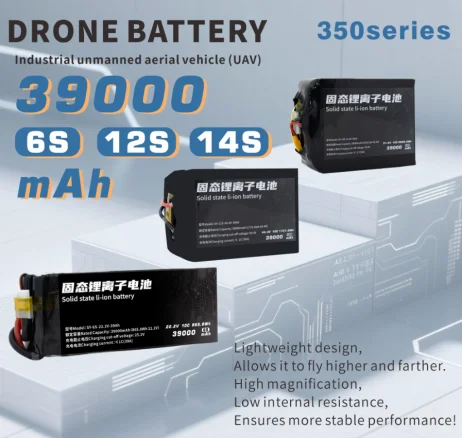
How Can a Supplier Support Custom Mapping UAV Battery Design?
Selecting batteries gets complicated when managing different UAV models or unique payloads. A supplier handling cell selection, pack assembly, and custom protection helps adapt the battery to your specific aircraft. You shouldn’t force an airframe to accept a generic format.
Shengya Electronic delivers tailored battery and power solutions for diverse equipment requirements. For mapping and surveying UAVs, their engineers match pack dimensions directly to your airframe. They align output needs with your motor system while tackling rugged field charging environments. The supplier also hands over vital technical test data.
You can review cycle performance, temperature limits, and real-world discharge behavior. A custom approach proves invaluable when hauling a LiDAR sensor, flying repeated RTK loops, or battling heavy dust and vibration.
What Is the Future of Batteries for Mapping and Surveying UAVs?
The industry leans heavily toward smarter monitoring, rapid charging, and superior thermal control. Next-generation lithium and solid-state tech will push limits further. Still, rugged field reliability always matters more than theoretical datasheet numbers. Right now, 350 Wh/kg serves as the ideal benchmark. It directly tackles limited UAV flight time, heavy payloads, and transport hurdles.
It won’t guarantee a flawless mission, but it grants survey teams massive flexibility. When comparing packs, evaluate the entire system. A trusty drone battery lifts the payload, pushes stable power, survives the elements, and communicates clearly.
FAQ
Q1: Why is 350 Wh/kg important for mapping and surveying UAVs?
A: It provides higher energy storage per unit weight, improving flight endurance and payload capacity.
Q2: Can a high energy density battery improve LiDAR mapping results?
A: Yes, by enabling steadier, longer missions with fewer landings. However, true accuracy relies heavily on sensor calibration, solid flight planning, and favorable weather.
Q3: Is a larger-capacity battery always better for a surveying drone?
A: No. Oversized packs add severe weight penalties. The smartest choice balances dimensions, continuous discharge performance, and payload limits.
Q4: What safety features should a UAV battery include?
A: Always demand active cell balancing, temperature monitoring, overcharge safeguards, and a proven battery management system.
Q5: When should you consider a custom drone battery?
A: Custom designs solve major headaches when dealing with unusual airframe sizes, power-hungry sensors, unique connectors, or strict weight constraints.


