
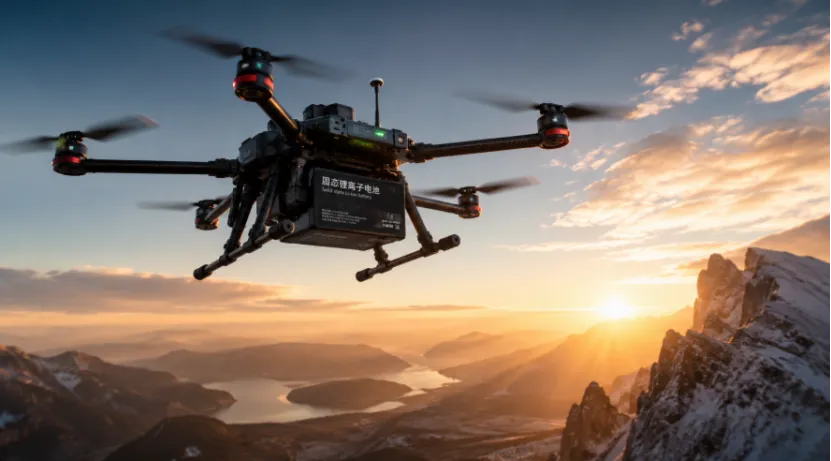
Choosing a drone with the best battery life is not a race for the biggest number on a product page. You need enough airtime to finish the route, capture the shot, and return with a safe reserve. Comparisons between drones with long battery life should focus on mission, aircraft type, payload, weather, and battery design.
The longest-lasting drone for mapping may be a poor choice for a photographer who needs stable hovering. Start with the job, then judge the minutes.
What Does Drone Battery Life Really Mean?
Drone battery life can refer to either flight time per charge or the overall service life of the battery pack. Many buyers often confuse these two concepts.
Flight Time vs Battery Service Life
If you ask how long a drone battery lasts, first determine your specific need. Tiny recreational aircraft fly for just a few brief minutes. Standard consumer aircraft manage roughly 20 to 45 minutes. Meanwhile, industrial and fixed-wing systems stay airborne far longer. Official published figures assume perfect tests. In reality, actual drone flight time drops quickly from harsh wind, heavy payload, constant hovering, and safe return reserves.
Drone Battery Capacity and Flight Time
A useful drone battery capacity and flight time check uses watt-hours, not mAh alone:
Estimated flight time (minutes) = battery energy (Wh) ÷ average power consumption (W) × 60
The result is theoretical. Deduct a reserve and include payload weight. A bigger pack adds energy and mass, so the gain may be small. Annoying, yes, but common.
Which Drone Has the Best Battery Life?
Determining which drone has the best battery life relies on your task. Buyers prioritize the maximum safe working period. They generally ignore unrealistic laboratory tests.
Consumer and Photography Drones
A consumer drone with the longest flight time typically claims 40 minutes. Yet, this assumes flawless conditions. When evaluating a long battery life drone for photography, check camera power use and wind resistance. Also, review charging times and spare-pack costs. In real-world conditions, those 40 advertised minutes often drop to around 28–34 minutes of usable flight time from positioning, wind, and return reserves.
Professional, Industrial, and Fixed-Wing Aircraft
Professional drone flight time ranges from under an hour for heavy hovering to several hours for efficient airframes. An industrial drone with long flight time must carry its payload without sharp voltage drop or excess heat.
Fixed-wing drone endurance generally ranks higher. Their wings naturally produce lift moving forward. For pure stamina, the longest flight time drone rarely involves a standard multirotor. Instead, expect a fixed-wing, hybrid, hydrogen-powered, or solar-assisted setup.
What Cuts Real-World Drone Flight Time?
Multiple factors directly affect real-world drone battery life. Wind, temperature, and payload matter most. Speed, propeller condition, and electronics also play key parts.
Weather, Payload, and Flight Style
Fierce headwinds require constant motor correction. Meanwhile, cold cells provide less usable energy. Heavy cameras or thermal sensors spike current demand. Rapid climbs and repeated braking burn extra power compared to smooth cruising.
A practical rule of thumb is to subtract 15%–25% from advertised figures on mild days. Always leave larger margins for cold, wind, or heavy-load work.
Battery Age and Electronics
Cameras, data links, and obstacle sensors consume power too. Older cells may show voltage sag under high current. Track cycle count, temperature, cell balance, and swelling.
Which Battery Type Is Better for Long Flights?
Chemistry matters, but the pack must match the aircraft. Voltage, discharge rate, heat control, and balance can matter as much as capacity.
LiPo vs Li-Ion Drone Battery
A LiPo vs Li-ion drone battery comparison often comes down to power versus energy density. LiPo packs suit high current, fast response, and heavy multirotor loads. Li-ion designs can store more energy per unit of weight and suit steady, long-duration flight. Neither wins every mission.
High Energy Density and Pack Design
Compare high-energy-density UAV batteries by Wh/kg, series count, continuous current, peak current, and usable voltage range. Pack placement matters too. Poor balance makes the flight controller work harder and quietly steals minutes.
Can a Two-Hour Flight Time Drone Be Practical?
A two-hour flight time drone is practical for certain jobs, but it is rarely a normal consumer aircraft. Multi-hour endurance usually needs an efficient fixed-wing layout, a hybrid system, or another specialized energy source.
Where Multi-Hour Endurance Makes Sense
Long missions suit corridor mapping, pipeline patrol, large farms, and communication relay. A long battery life drone for mapping can cover more land per launch. A long battery life drone for surveying reduces battery swaps, repeated takeoffs, and gaps between data sets.
Why Most Buyers Do Not Need It
Long endurance adds cost, size, and complexity. Three reliable 35-minute flights may beat one complicated two-hour mission. The task decides.
How Can You Choose the Best Drone for Long Flights?
An effective drone battery life comparison should start with actual mission requirements rather than headline specifications. Define route, payload, weather, reserve, and daily flights before selecting the best drone for long flights.
Match the Aircraft to the Job
Choose multirotor flight for hovering, close inspection, and precise positioning. Choose fixed-wing or hybrid flight for large-area coverage. Compare time with the real payload installed.
Check the Pack as a System
Review energy density, voltage, current, connector position, BMS functions, and replacement access. Specialized platforms may benefit from custom UAV battery packs when a standard unit cannot fit the bay, wiring path, or balance point.
How Can You Extend Drone Battery Life?
Learning how to extend drone battery life starts with simple habits. Small gains add up across a workday.
Before and During Flight
Remove unused payload, inspect propellers, warm cold packs safely, and avoid hard climbs. Fly smoothly and leave room for a headwind.
Charging and Storage
Use the correct charger, avoid repeated deep discharge, and store packs at the recommended charge level. Let hot batteries cool before charging. Replace damaged or swollen packs rather than squeezing out one last flight. It is rarely worth it.
How Does Shengya Electronic Support Longer UAV Missions?
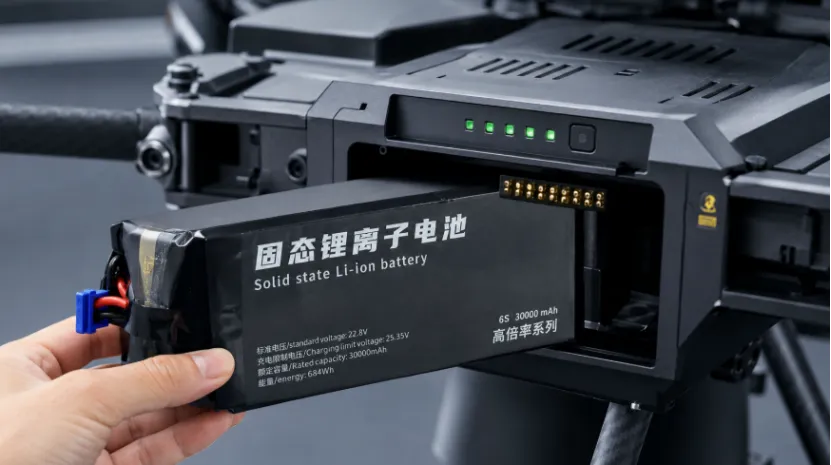
When endurance depends on the power system, Shengya Electronic offers a broad technical range rather than one generic pack. The company develops semi-solid and solid-state lithium-ion pouch cells and UAV packs, including a 190 Wh/kg high-rate 25C series and energy-density ranges from 270 to 350 Wh/kg. Common configurations include 6S, 7S, 12S, 14S, and 18S.
Its UAV battery product range supports logistics delivery, agricultural crop protection, industrial inspection, urban air mobility, firefighting, and rescue. Custom options can cover pack shape, cable outlet, connector type, BMS communication, and series configuration. Optimized fit, stable current output, service access, and predictable thermal performance often deliver more mission value than capacity alone.
FAQ
Q1: How Long Does a Drone Battery Last?
A:Consumer flight time typically sits near 20 to 45 minutes. Industrial multirotors can push past an hour. Meanwhile, fixed-wing and specialized platforms stay airborne for several hours.
Q2: What Drone Has the Longest Battery Life?
A:Finding what drone has the longest battery life usually points to fixed-wing, hybrid, hydrogen-powered, or solar-assisted aircraft. Still, your best choice relies heavily on payload and mission type.
Q3: Is a 40-Minute Flight Time Good?
A: Yes. It is strong for a consumer camera aircraft, though useful working time may be lower after wind, positioning, and return reserve.
Q4: Does a Bigger Battery Always Fly Longer?
A: No. Added weight raises power demand. Voltage, energy density, discharge rate, and aircraft efficiency all affect the result.
Q5: How Many Spare Batteries Should You Carry?
A: Two or three spare packs are common for field work. Base the number on route length, charging access, weather, and safety reserve.


