
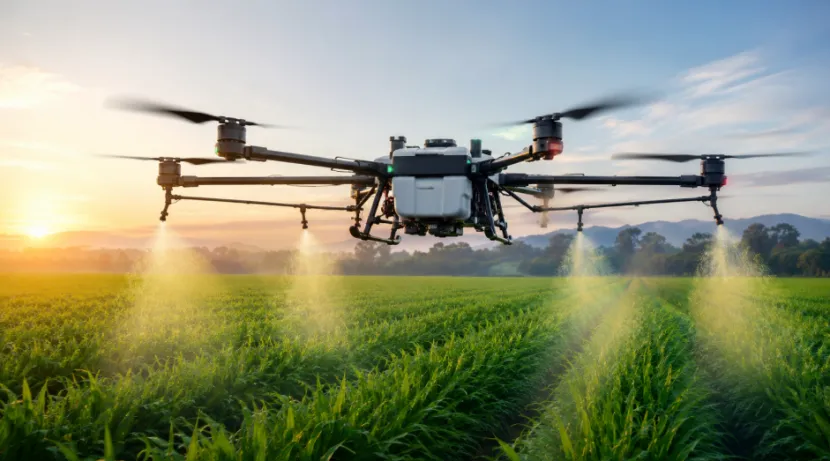
Why Is Industrial Drone Battery Demand Becoming More Application-Specific?
The drone battery market is no longer driven by hobby use alone. Commercial drones now work in farms, construction sites, power lines, logistics routes, border patrol, and emergency scenes. That shift changes what you should look for in a UAV battery. A small mapping drone, a crop spraying drone, and a delivery drone do not need the same pack. One needs low weight. One needs high current. One needs better payload efficiency.
Market research points in the same direction. Lithium-based batteries remain widely used because they offer high energy density, lightweight design, and cost efficiency, while battery cells decide energy density, lifecycle, and efficiency across drone platforms.
For buyers, industrial drone battery demand now comes down to three practical questions: how long can the drone fly, how much payload can it carry, and how safe is the battery during repeated workdays?
Agriculture Drones Need High Capacity and Stable Output
Agricultural drones often fly with heavy liquid tanks, spreaders, sensors, or crop monitoring cameras. That means a drone battery for agriculture must handle load changes without quick voltage drop. In crop spraying, a weak pack can cut one flight short before the field strip is complete. It sounds small, but after 20 flights in one day, the lost time adds up.
Battery Capacity for Agricultural Drones
For crop monitoring, a 5–20Ah agricultural drone battery may be enough when the goal is image capture and field scanning. For spraying or seeding, a high capacity drone battery is more practical because the aircraft carries heavier payloads and needs stronger discharge stability.
MarketsandMarkets lists 5–20Ah packs as suitable for agriculture and mapping, while 20–50Ah packs are preferred in long-endurance and payload-heavy drone operations.
A high capacity battery for agricultural drones is not only about mAh. You also need the right drone battery voltage platform. Many larger agricultural UAVs move toward a 12S drone battery or 14S UAV battery because higher voltage can support stronger motors and heavy-load flight with better current control.
Mapping and Surveying Drones Need Lightweight Endurance
Mapping drones work differently. They usually fly planned routes over land, roads, mines, construction sites, or long corridors. The payload is often a camera, LiDAR unit, or survey sensor. Here, extra battery weight can hurt the job. A mapping drone battery should help the aircraft stay in the air longer without making the body too heavy.
Why Energy Density Matters More Than Size
The best battery for mapping drones is often a lightweight UAV battery with high Wh/kg, not simply the largest pack available. A high energy density drone battery helps extend route coverage while keeping the airframe efficient. For land surveying, one longer flight can reduce takeoff points and battery swaps. On rough job sites, that is more than a spec sheet benefit. It saves walking, setup time, and sometimes a bit of frustration.
This is why battery energy density for drones has become a real purchasing point. A 300Wh/kg drone battery or 330Wh/kg drone battery can support long endurance mapping drone battery needs when the drone design allows it.
Inspection and Security Drones Need Reliable Power
Inspection and security drones often work near assets that cannot afford mistakes: power lines, pipelines, solar farms, bridges, ports, and industrial parks. A reliable drone battery for inspection should deliver stable output even when wind, hovering, sudden climbs, and sensor payloads change the power draw.
Inspection Battery Priorities
An inspection drone battery is judged by predictability. You need clear voltage behavior, good cycle performance, and safer pack design. For a power line inspection drone battery or pipeline inspection drone battery, an unexpected voltage sag may trigger early return or mission failure. A surveillance drone battery also needs dependable standby and fast deployment because security tasks rarely wait for perfect weather.
Global Market Insights notes that better lithium-ion and lithium-polymer batteries have increased energy density, helping longer flight times without adding weight, while smart battery management supports real-time monitoring and better safety. For security drone battery projects, that is exactly what buyers care about: less downtime, fewer risky flights, and a more predictable fleet.
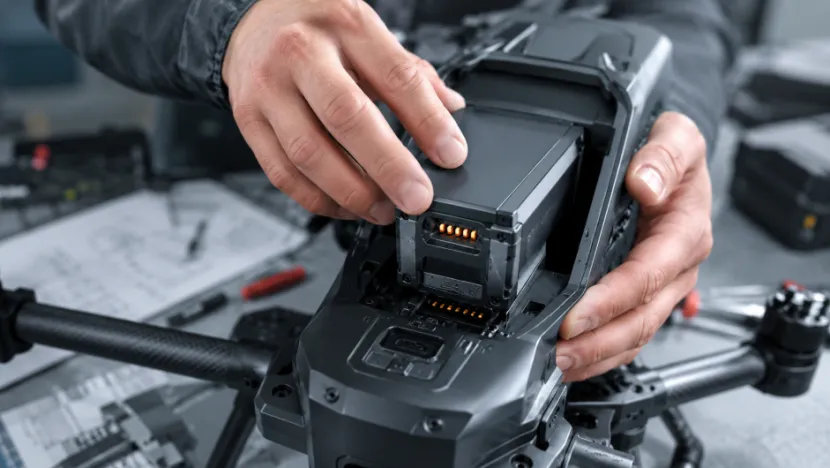
Delivery Drones Need Payload Efficiency and Range
Delivery drones create a hard tradeoff. Every gram used by the battery is one gram that cannot be used for cargo. At the same time, a small pack may limit the route. A drone delivery battery must balance energy density, UAV battery capacity, safety, and return distance.
Battery Demand for Delivery Routes
A last-mile delivery drone battery needs high energy density because the aircraft must carry goods, not just fly itself. Medical delivery, rural delivery, and emergency supply routes often need more range and fewer battery changes. In this case, a high energy density battery for delivery drones can improve payload efficiency for delivery drones by lowering battery weight while keeping useful flight time.
For long range delivery drone battery projects, many buyers review 12S and 14S UAV battery options because these platforms can fit larger industrial UAV designs. Still, the right choice depends on the motor system, payload target, and route distance.
How Shengya Electronic Fits Industrial UAV Battery Procurement
Shengya Electronic is a focused UAV battery manufacturer for buyers who care about practical flight performance, not just catalog numbers. Its product range includes high energy density UAV battery series from 275Wh/kg to 350Wh/kg, with options for 6S, 7S, 12S, and 14S platforms. The High Energy Density 330Wh/kg Series includes 10000mAh UAV battery, 27000mAh drone battery, 33000mAh UAV battery, and 36000mAh drone battery choices, giving drone makers room to match capacity, voltage, and aircraft size.
For industrial UAV battery procurement, this matters because a custom UAV battery or custom drone battery pack must fit the real mission. Agriculture may need a high capacity UAV battery. Mapping may need a lightweight high energy density battery. Inspection may need safety and stable discharge.
Delivery may need a long endurance UAV battery solution. As an industrial drone battery supplier, Shengya Electronic gives you several routes instead of forcing one fixed answer.
FAQ
Q1: What Battery Capacity Is Best for Agricultural Drones?
A: Battery capacity for agricultural drones depends on the payload. Crop monitoring can use medium-capacity packs, while crop spraying drone battery projects often need a high capacity drone battery with stable discharge.
Q2: Why Do Mapping Drones Need High Energy Density Batteries?
A: A mapping drone battery must support long routes without adding too much weight. A high energy density UAV battery helps extend flight time while keeping the aircraft easier to manage.
Q3: Are 12S and 14S Batteries Better for Industrial Drones?
A: A 12S drone battery or 14S UAV battery is often better for heavier industrial UAVs, but the final choice depends on UAV battery voltage, motor design, and payload.
Q4: What Matters More for Delivery Drones, Capacity or Energy Density?
A: A delivery drone battery needs both, but energy density is critical. A high energy density battery for delivery drones can improve payload and flight range at the same time.
Q5: How Do You Choose an Industrial Drone Battery Supplier?
A: Look for an industrial drone battery supplier that offers real capacity data, voltage options, batch consistency, safety support, and custom drone battery pack services for bulk drone battery order needs.


