
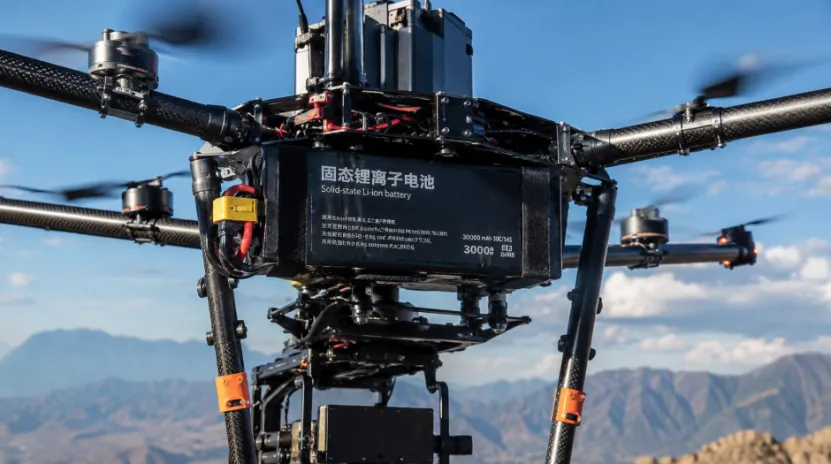
Checking the drone battery C-rating is a critical first step when designing a UAV power system. High-power drone motors will underperform if the battery cannot supply sufficient current. Inadequate discharge capability leads to voltage sag, battery overheating, and ESC stress, all of which directly impact flight stability and system reliability.The craft feels sluggish, despite amazing motor sheets.
Shengya Electronic is a professional UAV battery manufacturer specializing in high-performance lithium battery solutions for drones.They build semi-solid and solid-state lithium-ion soft pack cells and battery packs. Their product portfolio includes high energy density battery series ranging from 275Wh/kg to 340Wh/kg, designed for long-endurance UAV applications.They support multiple UAV voltage platforms, including 6S, 7S, 12S, 14S, and 18S configurations, ensuring compatibility with various drone systems.They also offer high-rate options and long cycle life. You can request custom pack work. This covers connector type, cable outlet position, logo, and pack configuration. This makes the battery a core component of the UAV system, rather than a simple power module.
What Is Drone Battery C-Rating?
It shows how rapidly a pack pushes safe current against its capacity. This seems like a tiny label fact. However, it dictates if motors pull enough juice during takeoff, climbs, braking, and sharp turns.
Basic Formula
The standard calculation formula is:
Maximum Discharge Current = Battery Capacity in Ah × C-Rating
For example, a 22000mAh battery is 22Ah. If it is rated at 10C, the theoretical maximum discharge current is:
22Ah × 10C = 220A
This is why battery discharge rate must match total drone motor current. A large mAh number alone does not prove the pack can handle a high-load flight.
Why Does Low C-Rating Starve Drone Motors?
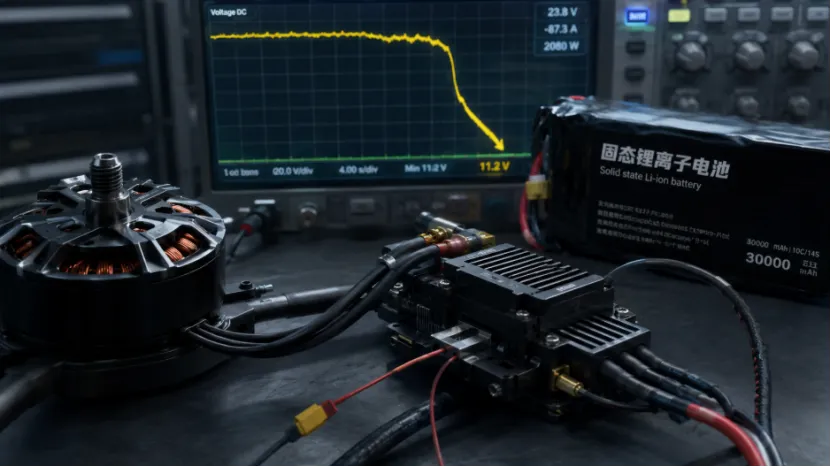
A low C-rating limits current output capability. When your motors demand more current than the battery can provide, the voltage drops. This is voltage sag. In flight, this results in reduced lift, slow throttle response, and unstable flight control,slow throttle response, or unstable attitude correction.
Typical UAV Symptoms
You may see strong thrust on a bench test, then poor behavior during real flight. A six-rotor agricultural drone carrying liquid, for example, may need high current at takeoff and again during sharp height correction. If the battery discharge rate is too low, heat builds up inside the pack and the ESC works harder. That is not a small issue. It can shorten battery life and reduce mission safety.
How Do You Calculate the Required Drone Battery C-Rating?
Proper calculation starts with actual motor current requirements, not battery marketing specifications. You need the maximum current of each motor under the same voltage and propeller size used on the aircraft. A safety margin should be added to account for wind conditions, payload variation, battery aging, and high ambient temperatures.
Step-by-Step Example
Assume your UAV has six motors. Each motor can draw 35A at peak load.
35A × 6 = 210A
Add a 25% safety margin:
210A × 1.25 = 262.5A
If your battery is 22000mAh, convert it to 22Ah.
262.5A ÷ 22Ah = 11.9C
So the minimum continuous C-rating is about 12C. In real procurement, you may choose a high discharge lipo battery rated above that value, because field conditions rarely match clean lab numbers. Dust, heat, and a slightly tired pack all matter.
What Is the Difference Between Continuous C-Rating and Burst C-Rating?
Continuous C-rating is the current a battery can provide during normal flight load. Burst C-rating is only for short peaks, often just a few seconds. For UAV power management, continuous C-rating usually carries more weight.
Key Procurement Considerations
A battery label may show an attractive burst number, but your drone does not fly on burst current for ten minutes.When selecting a UAV battery, always request: the continuous C-rating, the burst C-rating duration, discharge curve, temperature rise, and test room temperature. Shengya Electronic lists high-rate UAV battery options, including a 25C max high-rate series for strong instant power output, which can be useful for power-hungry drone platforms.
How Does Internal Resistance Affect UAV Power Management?
Internal resistance converts electrical energy into heat, causing voltage drop and efficiency loss under load and voltage loss. Lower resistance helps the battery hold a steadier voltage under load. This is one reason a high discharge UAV battery should be checked through real discharge data, not only through capacity.
What Data Should You Ask For?
Ask for voltage curves at target current, internal resistance range, surface temperature after discharge, and batch consistency. For a bulk drone battery order, these records help reduce strange fleet problems, such as one drone landing two minutes earlier than the others.
When Should You Request a Free Technical Review From Shengya Electronic?
Shengya Electronic offers a free technical review to help optimize your UAV battery selection before sampling or mass production or bulk purchasing. At that stage, changes are still cheap. After the battery case, cable, plug, and aircraft bay are fixed, power mistakes become much harder to correct.
What Information Should You Provide?
Send your ESC and motor specs, propeller size, motor count, voltage platform, payload, battery compartment size, target flight time, and expected order quantity. Shengya Electronic engineers can review the required Drone battery C-rating, check whether you need a high discharge lipo battery, and help match the pack to your UAV power management needs. Its product pages show UAV capacities from smaller packs to large options such as 50000mAh, 66000mAh, 70000mAh, and 78000mAh across several S-count platforms, which gives engineers more room to match current output and endurance.
FAQ
Q1: What Drone Battery C-Rating Do You Need?
A: The required drone battery C-rating is calculated by dividing total motor current by battery capacity (Ah), then adding a safety margin, then add a safety margin.
Q2: What Happens If the Battery Discharge Rate Is Too Low?
A: A low battery discharge rate can cause voltage sag, weak lift, slow throttle response, overheating, and shorter battery life.
Q3: Is a Higher C-Rating Always Better for UAV Power Management?
A: Not always. UAV power management must balance C-rating, weight, energy density, heat, price, and flight time.
Q4: What Is the Difference Between Continuous C-Rating and Burst C-Rating?
A: Continuous C-rating covers normal flight load. Burst C-rating covers short current peaks during takeoff, climbing, or sudden throttle change.
Q5: Can Shengya Electronic Help Match a High Discharge Lipo Battery With ESC and Motor Specs?
A: Yes. You can request a free technical review by sending your ESC and motor specs, propeller size, voltage, payload, target flight time, and order quantity.


