
Thermal Runaway in Enterprise Drones: Mitigating Catastrophic Failures with Solid-State Tech
Enterprise drones handle tough jobs today. They tackle inspection, mapping, emergency response, agriculture, and infrastructure work. These tasks require longer flight time and heavier payloads. They also demand repeated battery cycles. Because of this heavy use, battery safety is a major business concern. It is much more than a tiny engineering detail.
The biggest worry is thermal runaway. Let’s say a damaged cell gets too hot. It releases more heat than it can naturally shed. When this happens, the bad reaction can quickly move through the entire battery pack. This may lead to rapid power loss and potential in-flight failure. This can result in equipment loss, and it creates a severe fire risk near crowds and buildings. Solid-state batteries for drones provide a fresh way to cut down this danger. At the same time, they still power intense flight schedules.
Why Is Thermal Runaway in Enterprise Drones a Fleet-Level Risk?
Thermal runaway almost never gives you a loud warning. Instead, it starts quietly. A crushed cell or an internal short circuit can kick it off. Overcharging and trapped heat inside a poorly vented case also cause it. The threat multiplies once a single weak cell hurts the cells right next to it.
What Starts the Chain Reaction?
Standard lithium-ion batteries rely on a liquid electrolyte. This fluid catches fire easily if it faces high heat or a short circuit. During lithium-ion thermal runaway, cell temperature increases rapidly. Gas fills up the casing. Then, pressure builds, and soon the cells sitting nearby fail exactly the same way.
A battery pack might look perfectly fine on your workbench. Yet, it could hide severe damage right after a rough landing. Because of this, simple visual checks fail to tell the whole story. You really need battery cell monitoring. Charge history, internal resistance readings, and temperature data hold the real truth.
Why Do Enterprise Missions Raise the Stakes?
Commercial flights usually run on very tight schedules. A mapping crew might only get a couple of hours to check a bridge, power line, or remote construction site. One battery fault shuts the whole job down. It pushes back reports and puts field workers in needless danger. Fleet leaders face additional challenges with repeated charging.
Heavy daily use drives up the cycle count. On top of that, bad storage habits age the packs much faster. Genuine drone battery safety has to manage the entire lifespan. This means watching everything from initial charging and transport, right through to field deployment and eventual retirement.
How Does Solid-State Battery Technology Change the Safety Equation?
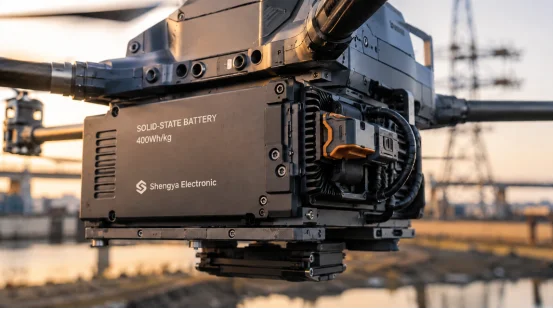
Solid-state battery technology swaps out the risky liquid electrolyte for a solid electrolyte. This does not eliminate all risks. However, it heavily slows down fire spread and boosts thermal stability. Looking at solid-state use in drones shows a clear path toward safer power inside small aircraft frames.
Why Does a Solid Electrolyte Matter?
A solid electrolyte rarely leaks or turns to vapor. It also fights off burning much better than normal liquid fluid. This grants hardware engineers extra space to control heat inside a tight drone body. This matters deeply for units flying near dry brush, fuel tanks, or indoor areas. Even if a breakdown happens, the battery heats up much slower. It carries a smaller fire risk compared to standard liquid models.
Can Solid-State Cells Improve Payload and Flight Time?
Safety makes up just one part of the puzzle. Commercial flyers also demand a high-energy-density drone battery. They need to lift cameras, lidar, gas sensors, and radios without dragging the craft down with extra weight. Solid-state cells often pack more usable energy into a tiny footprint. That extra power means longer flight time.
It allows for heavier payloads and cuts down on battery swaps. Still, real-world results rely on cell chemistry, pack design, and local weather. Test data always beats flashy marketing claims.
What Should You Pair with Solid-State Batteries?
Even the safest cell fails if the overall system design is poor. The battery, charger, software, and daily maintenance must link together perfectly. This specific step is where flight teams either build trust or silently gather fatal risks.
How Does a Battery Management System Help?
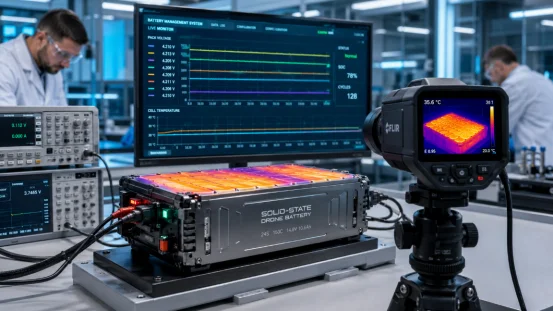
A battery management system (BMS) constantly watches voltage, current, and temperature. It checks the state of charge and cell balance. It detects abnormal operating conditions long before the pack hits a danger zone.
For professional fleets, the BMS must log past events instead of just flashing a battery percentage. Helpful warnings include a sudden voltage drop or weird heat spikes. Overcurrent and excessive charge time matter too. These logs help your team decide if a pack needs a deep check, a controlled drain, or permanent retirement.
Why Is Thermal Management Still Necessary?
Solid-state batteries drop the fire threat, yet thermal management stays critical. Trapped heat still degrades power output. It ruins materials and destroys flight stability. Engineers must build clear cooling paths and solid mounts. They need to put sensors right next to known hot spots. Charging docks require strong airflow and physical gaps between units.
Always follow one simple rule: never charge a warm battery right after it lands. Let it cool down completely first.
How Can You Deploy Safer Drone Battery Programs?
Advanced tech shines when daily routines are strict. A solid setup mixes incoming inspection with abuse testing. It adds controlled charging and preventive maintenance. Your plan must also map out exactly what to do when a pack acts weird.
Screen Every Pack Before Flight
Look closely for casing damage, swelling, or worn connectors. Check for moisture and odd smells. Always review the past flight and charge log. If a unit took a hard hit, isolate it immediately. Keep it away until an expert looks inside. Abuse testing during early checks should involve heavy vibration, crush, and puncture tests.
You must run overcharge, heat, and drop trials. Lab tests won’t catch every single field accident. However, they expose hidden flaws before clients find them the hard way.
Track Aging, Not Just Cycle Count
Two batteries showing the exact same cycle count might have totally different health levels. High-current trips, hot storage rooms, and deep power drains age a pack terribly fast.
Rely on battery cell monitoring to trace capacity loss and resistance growth. Watch the temperature spread closely. You should retire packs based on physical facts, not just a random date on a calendar. Doing this boosts drone fleet reliability and stops nasty surprises.
Prepare an Emergency Landing Protocol
Every pilot must know the drill if a temperature alarm or smoke warning goes off. An emergency landing protocol has to protect people first. After that, it guides the drone to a safe, empty spot. Once grounded, never carry a smoking pack through your truck or office. Drag it straight to an isolated zone using safe steps. Always write down the flight phase, weather, payload, and battery ID. Log the alert history and how the pack looked at the end.
A Practical Path to Safer Fleet Batteries
When your safety rules are locked in, picking components gets much easier. Shengya Electronic helps directly with battery-related parts and strong manufacturing skills built for tough power jobs. You can judge their gear by enclosure fit and connector reliability. They focus heavily on thermal paths and pack integration, offering way more than a basic catalog. For any aviation project, you must ask if a vendor adapts to your real-world limits.
Shengya Electronic will talk through cell configuration and protection features. They cover monitoring interfaces and production consistency for all kinds of unmanned aerial systems (UAS). Their engineering team gives you a massive head start before you even begin formal lab tests. The greatest success usually springs from teamwork. You define the mission profile together.
Then, you test the pack under real stress, check the failure data, and draw hard lines for success. This method tackles aviation safety compliance cleanly. It skips all the useless fluff.
FAQ
Q1: What is thermal runaway in enterprise drones?
A: It is a self-heating battery failure. One cell dumps enough heat to trigger nearby cells. This can quickly cause fire, smoke, or rapid power loss.
Q2: Are solid-state batteries completely immune to fire?
A: No. Solid-state battery technology lowers flammable materials and slows failure spread. However, severe damage, overheating, and poor pack design can still create hazards.
Q3: How does a BMS improve drone battery safety?
A: A battery management system (BMS) tracks voltage, current, temperature, and cell balance. It logs or reports odd conditions long before they turn dangerous.
Q4: When should an enterprise drone battery be retired?
A: You should retire it based on measured capacity loss, rising resistance, weird temperature spread, or physical damage. Do not rely on cycle count alone.
Q5: Can solid-state batteries increase payload and flight time?
A: They often provide higher usable energy and lighter pack weight. Still, your final result depends heavily on aircraft design, mission load, temperature, and validated cell performance.


